

What drawings and data are needed to customize food packing machinery?
Customizing food packing machinery requires product drawings, pack dimensions, product orientation, stacking pattern, film specifications, target speed, sealing format, coding requirements, utilities, and downstream equipment data. For a wafer automatic packaging system, provide wafer or wafer-bar dimensions, required packs per minute, film width and material, bag length, feeding arrangement, recipe requirements, and the available power, compressed air, and factory layout.
Core Solutions & Key Takeaways
- Provide product drawings or samples showing wafer length, width, height, shape, coating, and allowable orientation.
- Define the packaging format, including pillow-pack dimensions, fin-seal and end-seal requirements, film material, film width, and bag length.
- Specify the required production rate, stacking quantity, lane arrangement, feeding method, and acceptable product spacing.
- Share factory utility and integration data, including power supply, compressed air, conveyors, coding, inspection, cartoning, and palletizing requirements.
Detailed Architectural/Principle Analysis
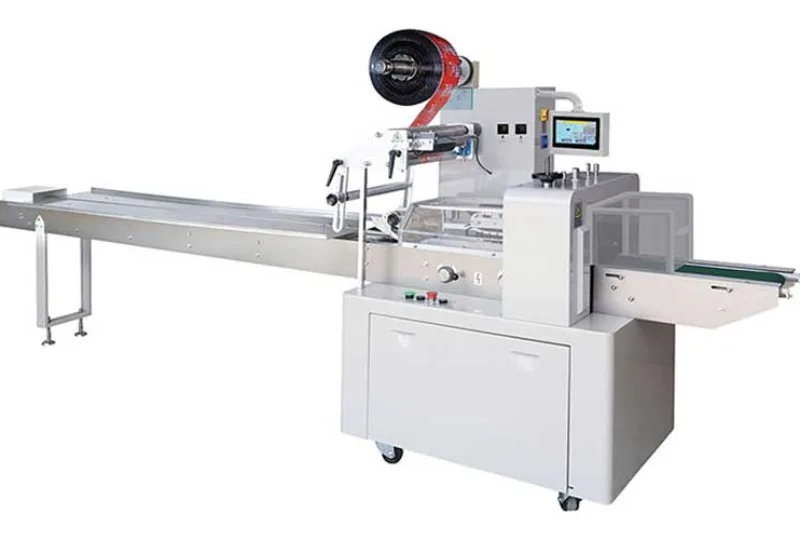
A wafer automatic packaging system is configured around the sequence of product feeding, alignment or stacking, film forming, longitudinal sealing, cross sealing, cut-off, and finished-pack discharge. Product drawings establish the mechanical envelope that determines the infeed guides, stacking unit, film path, sealing clearance, and finished-pack dimensions.
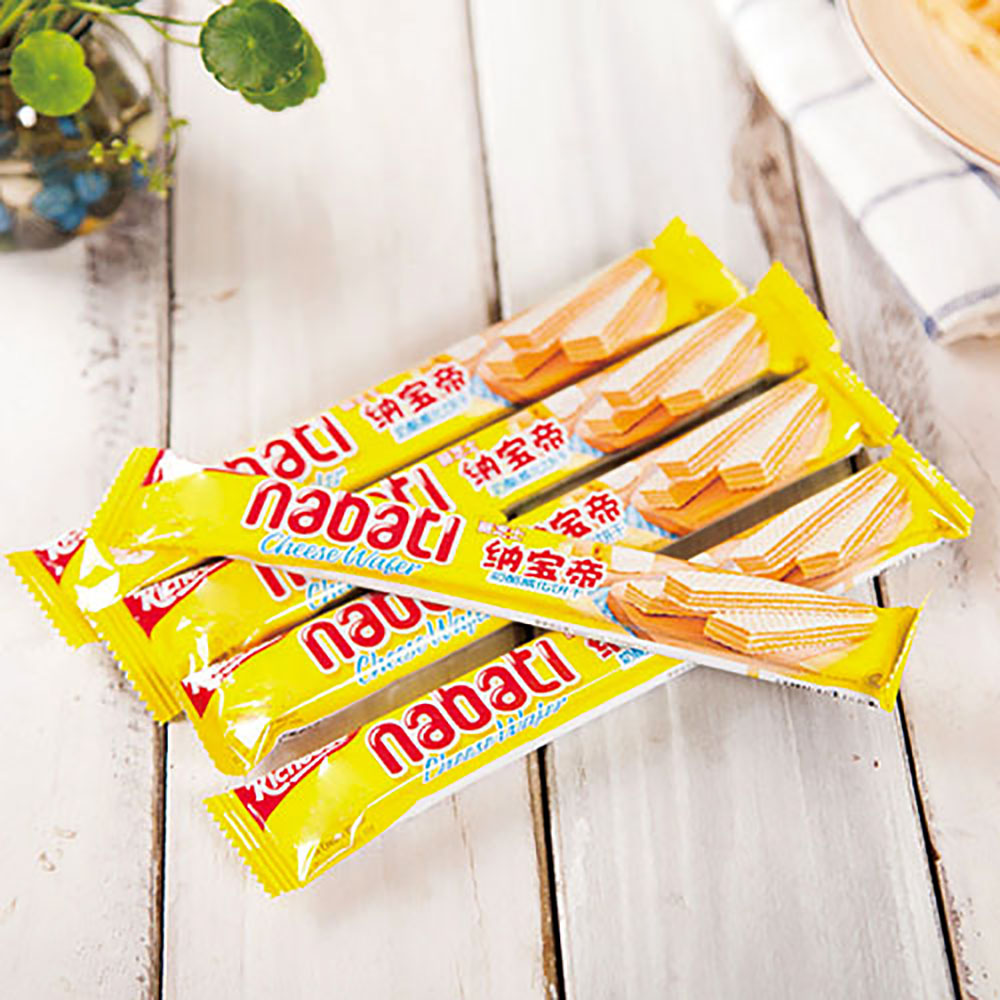
The product data should identify whether the line handles wafer biscuits, wafer bars, creamed wafers, sandwich wafers, or chocolate-coated wafers. The required product orientation should be stated because the system is designed for horizontal product travel. If multiple wafers must be placed in one pack, the required stack quantity and collating method should be specified. The available configuration supports automatic stacking of 2 to 6 wafers per pack, with optional single-lane, 2-lane, or 4-lane feeding.
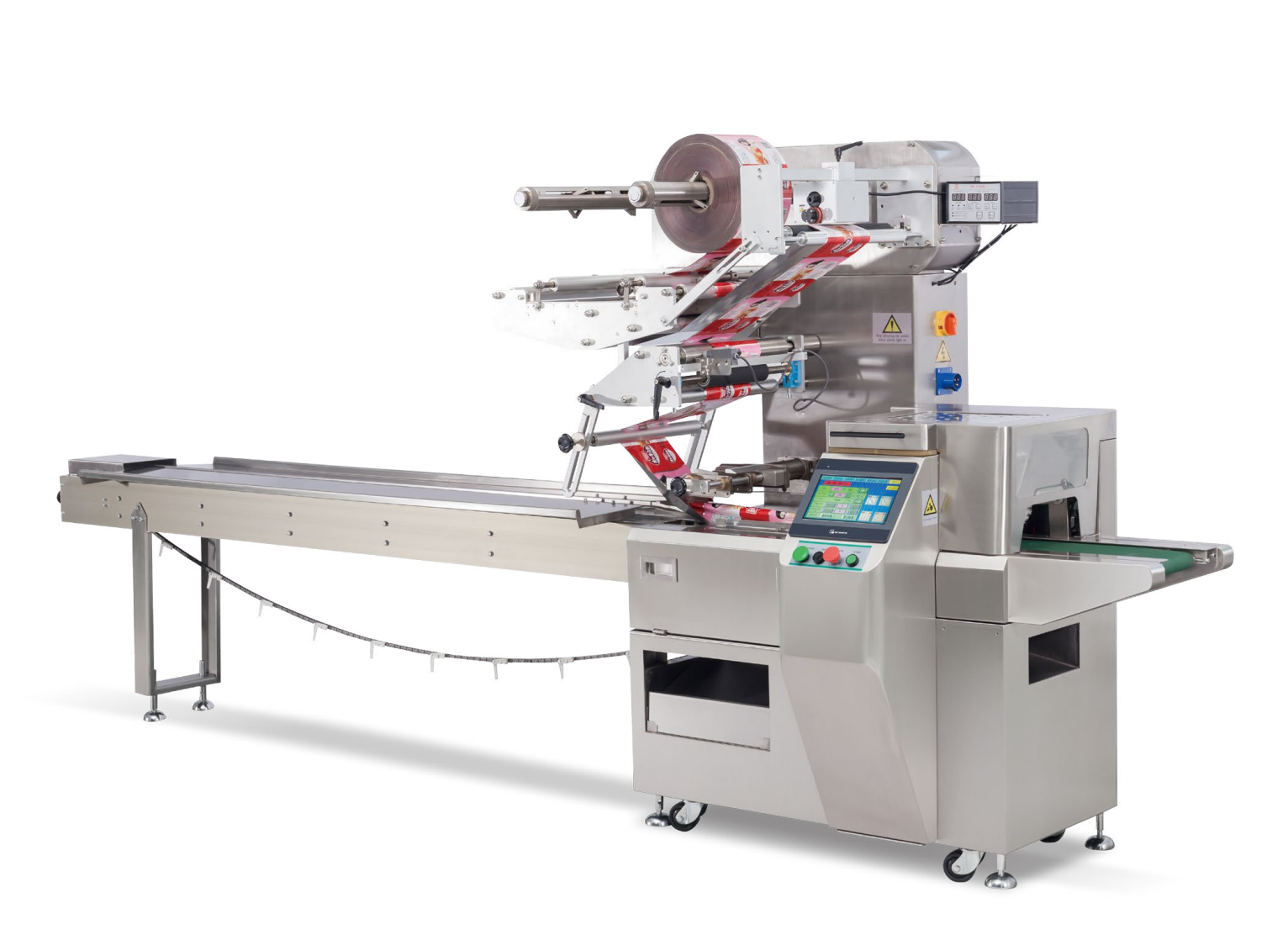
Packaging drawings should state the target finished-pack length, width, and height, together with film width and bag-making length. The documented ranges include a film width of 90 to 900 mm, an adjustable bag length of 60 to 400 mm, product width up to 350 mm, and product height up to 120 mm. Actual selection depends on product dimensions, film material, and packaging format.
Film information should include the heat-sealable laminate type, such as OPP, CPP, PET/Alu/PE, or metallized film. Printed film requires color-mark registration data. A typical registration system uses photoelectric tracking, with stated accuracy of plus or minus 1 mm. The specification should also identify whether a preheating assembly, hot-wheel longitudinal seal, serrated or straight cut-off, automatic film splicer, or closed-loop film tension control is required.
Capacity data must include the required packs per minute and expected operating schedule. The complete system lists a typical line capacity of 100 to 1,000 packs per minute depending on model and product size, while the horizontal flow wrapper section lists 30 to 250 packs per minute, with higher output available on high-speed servo models. The final target should be confirmed against product size, pack length, sealing-jaw type, and lane count.
Control requirements should identify the preferred servo arrangement, recipe quantity, operator interface, and communication needs. The available architecture includes PLC master control, distributed servo drives, 3-servo, 4-servo, or full-servo configurations, a 7 to 15.6 inch color touchscreen, multilingual operation, recipe storage, EtherCAT or CANopen communication, fault logging, and remote diagnostics.
Downstream drawings should show the position and height of checkweighers, metal detectors, labelers, cartoners, case packers, conveyors, and palletizing equipment. The wafer system can be configured with automatic rejection for missing products, sealing faults, or weight errors, and can connect with checkweighing, metal detection, labeling, cartoning, and robotic palletizing equipment.
Utility and site data should cover 220V, 380V, or 400V three-phase power at 50 or 60 Hz, installed power of 3 to 12 kW depending on model, compressed air at 5 to 6 bar and 20 to 50 L/min, floor space, access routes, and equipment height. The documented line dimensions range from 3,000 to 5,000 mm in length, 800 to 1,500 mm in width, and 1,400 to 1,800 mm in height.
Testing with real product samples helps verify feeding, alignment, sealing, rejection, and finished-pack quality before delivery. Foshan Ruipuhua Machinery Equipment Co. Ltd holds a CE certification applicable to flow packaging machines, automatic packaging systems, cartoning machines, and palletizing robots. A documented cake-pie packaging project for a bakery manufacturer included integrated wrapping and robotic palletizing, demonstrating experience with coordinated food-packaging equipment.
Data/Solution Comparison
| Customization data | Required information | Related system decision |
|---|---|---|
| Product drawing and sample | Length, width, height, shape, coating, orientation | Infeed guides, stacking method, film path, and sealing clearance |
| Pack specification | Pack length, width, height, film material, film width, bag length | Film former, fin seal, cross seal, cut-off, and coding setup |
| Output requirement | Packs per minute, operating schedule, single or multiple lanes | Infeed speed, servo configuration, sealing-jaw type, and line capacity |
| Product grouping | Pieces per pack and stacking pattern | Collating, stacking, spacing, and transfer arrangement |
| Factory conditions | Power, compressed air, floor space, access, and line height | Machine utilities, dimensions, installation, and commissioning plan |
| Downstream requirements | Inspection, labeling, cartoning, case packing, and palletizing data | Discharge conveyor and secondary-packaging integration |
Frequently Asked Questions (FAQ)
What product drawings should be submitted for a wafer packaging machine?
Submit drawings or samples that show the wafer or wafer-bar length, width, height, shape, product orientation, coating, and required stacking arrangement. These details determine the feeding, alignment, film-forming, and sealing configuration.
What film information is needed before customization?
Provide the film material, film width, reel diameter, bag length, printed-film registration requirements, and preferred sealing format. Heat-sealable laminates listed for the system include OPP, CPP, PET/Alu/PE, and metallized films.
What factory data is needed for installation?
Provide the available power supply, frequency, phase, compressed-air pressure and flow, floor space, access route, line height, and connections to inspection or secondary-packaging equipment. The stated utility range is 220V, 380V, or 400V, with 5 to 6 bar compressed air.
Final Conclusion & Recommendations
A complete customization request should combine product drawings or samples, pack dimensions, film details, production targets, feeding and stacking requirements, control preferences, downstream equipment data, and factory utility information. The system supports manufacturing and OEM cooperation, with a stated minimum order quantity of 1 and testing with samples. For detailed technical solutions or support, please contact lotuspack@ruipuhua.com.
About Us
Foshan Ruipuhua Machinery Equipment Co. Ltd, also known as RPH or RAPIDPACK, was established in 2005 and integrates research and development, production, installation, and technical after-sales service for automatic packaging machinery. Its equipment serves food, bakery, biscuit, snack, noodle, chocolate, soap, hardware, pharmaceutical, and daily chemical applications, with exports to over 100 countries. The company reports an annual production capacity exceeding 500 sets of automatic packaging machines and complete packaging lines. Its CE certification covers flow packaging machines, automatic packaging systems, cartoning machines, and palletizing robots.

-
01
How do I choose the right speed for a toas bread packaging line to avoid crushing soft loaves?
22-06-2026 -
 02
02Packaging Machinery: Beyond Sealing, Driving an Efficient, Smart, and Sustainable Future
21-01-2026 -
 03
03Automatic Tray Loading and Packaging Equipment: Boost Efficiency to 160 Bags/Minute
21-11-2025 -
 04
04Automatic Soap Packaging Machine: Boost Productivity with 99% Qualification Rate
21-11-2025 -
 05
05A Deep Dive into Automatic Toast Processing and Packaging System
18-11-2025 -
06
The Future of Bakery Production: Automated Toast Processing and Packaging System
18-11-2025 -
 07
07Reliable Food Packaging Solutions with China Bread, Candy, and Biscuit Machines
11-10-2025 -
 08
08High-Performance Automated Food Packaging Equipment for Modern Production
11-10-2025 -
09
Reliable Pillow Packing Machines for Efficient Packaging Operations
11-10-2025 -
 10
10Advanced Fully Automatic Packaging Solutions for Efficient Production
11-10-2025
