

How Vegetable Flow Packaging Equipment Handles Fresh Produce Without Bruising
Fresh vegetables arrive at processing facilities in bulk. They leave in sealed bags, uniform and protected. Between those two states lies a mechanical challenge that has shaped an entire category of packaging machinery.
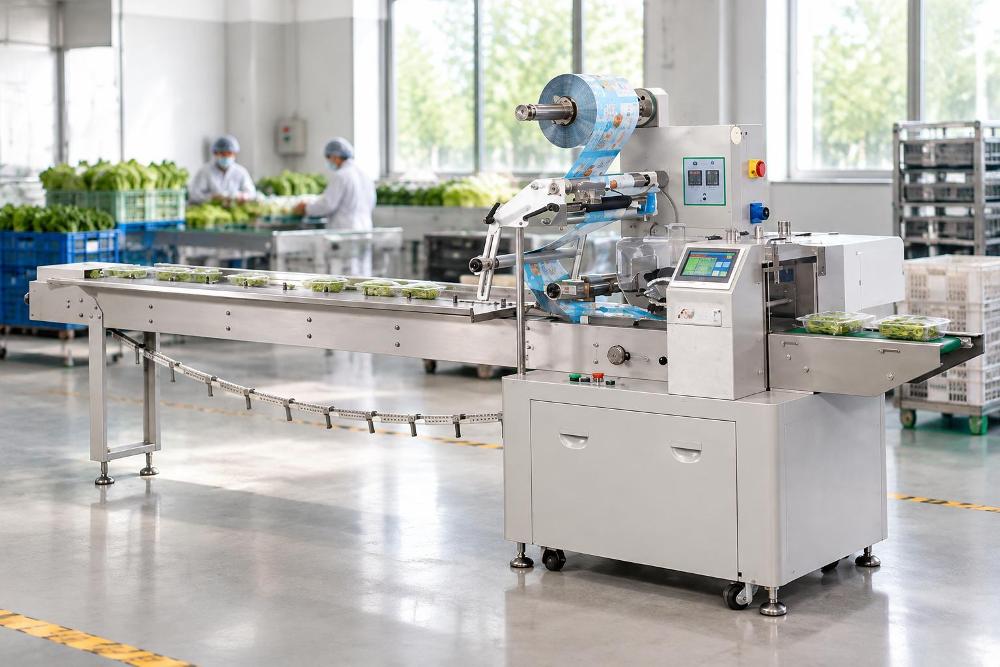
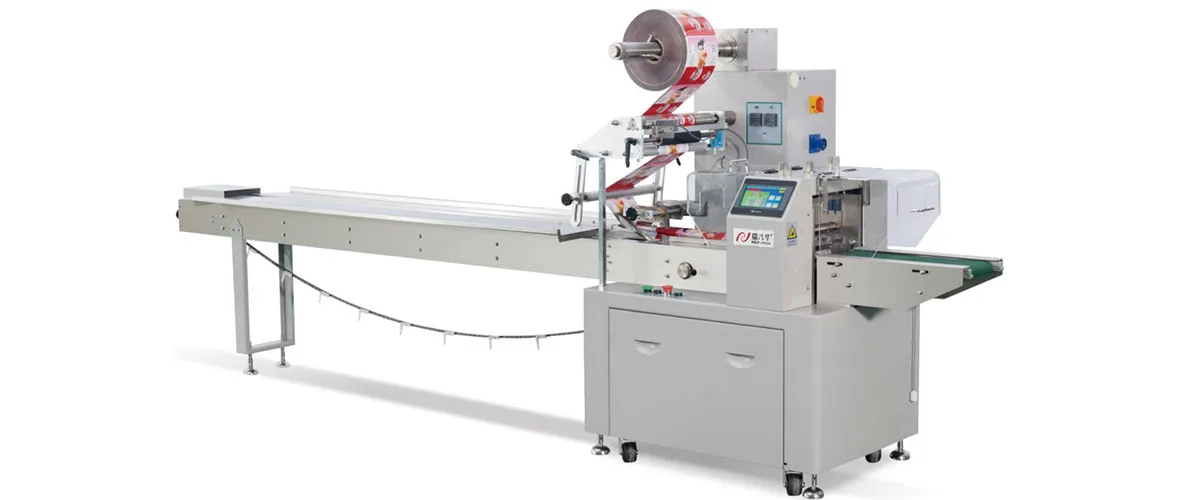
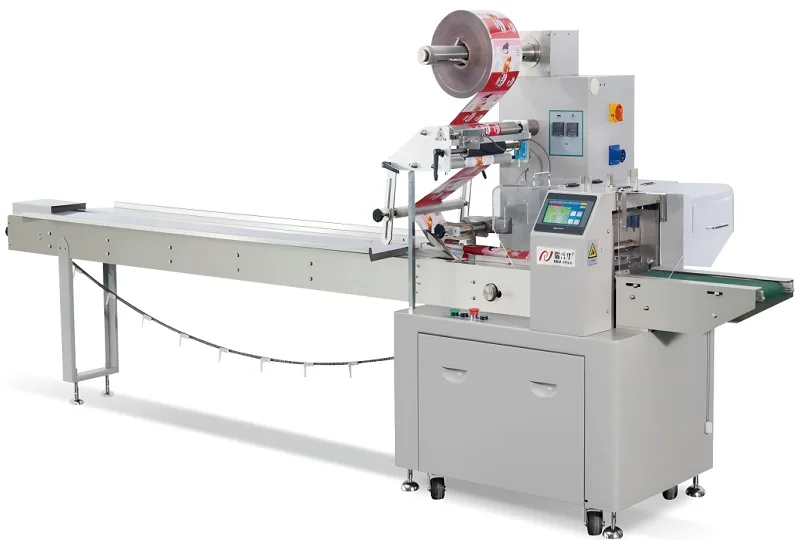
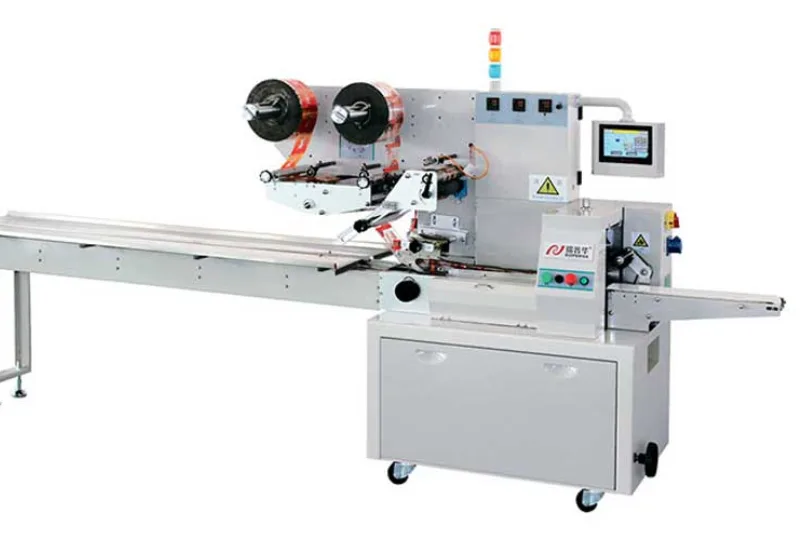
Vegetable flow packaging equipment bridges the gap between harvest and retail shelf. These systems move delicate produce through feeding, forming, filling, and sealing operations at speeds that manual labor cannot match. The core mechanism—horizontal form-fill-seal technology combined with belt-type infeed—emerged from a simple requirement: package fresh items quickly without damaging them.
Why Belt-Type Infeed Systems Exist
Traditional vibratory feeders work well for rigid products. Nuts, bolts, and hard candies tolerate the shaking. Leafy greens and soft fruits do not.
Belt conveyors solve this by replacing vibration with continuous linear motion. Products rest on a moving surface rather than being jostled toward the packaging zone. The belt speed synchronizes with the film advance rate, creating a smooth handoff from infeed to sealing jaw.
This matters most for items with irregular shapes. A head of lettuce does not flow like pellets through a chute. It needs a flat surface and controlled velocity to maintain orientation as it enters the film tube.
The Mechanics Behind Horizontal Form-Fill-Seal
The packaging process starts with a roll of flat film. The film unwinds and passes over a forming collar, which shapes it into a tube. A vertical sealer bonds the overlapping edges, creating a continuous sleeve.
Product enters this tube from the infeed belt. As each item reaches the sealing position, horizontal jaws compress the film above and below it. Heat activates the sealant layer in the film, forming a seal. A cutting blade separates the finished bag from the tube.
Servo motors control each movement independently. One motor drives the film feed. Another operates the horizontal sealer. A third manages the vertical sealer. This separation allows the machine to adjust timing for different bag lengths without mechanical reconfiguration.
Speed and Product Protection Trade-Offs
A typical system runs between 35 and 80 bags per minute. The range exists because different products impose different constraints.
Small items like cherry tomatoes pack faster. They have consistent size and shape, allowing tight timing windows. Large or irregular items—cauliflower, cabbage, broccoli crowns—require slower cycles to prevent jamming at the film former.
Speed also depends on seal quality requirements. Thicker films need longer dwell time at the sealing jaws. Multi-layer barrier films, which extend shelf life by blocking oxygen and moisture, absorb more heat than single-layer polyethylene. Machines must adjust jaw temperature and pressure accordingly.
Film Selection and Barrier Properties
Not all plastic films perform the same function. The material choice determines how long the packaged product stays fresh.
| Film Type | Structure | Oxygen Barrier | Moisture Barrier | Typical Use |
|---|---|---|---|---|
| OPP/CPP | Biaxially oriented polypropylene with cast polypropylene | Moderate | Low | Short-term storage, dry produce |
| PT/PE | Polyester with polyethylene | High | Moderate | Extended shelf life, moisture-sensitive items |
| KOP/CPP | Nylon-coated polypropylene | High | High | Respiratory produce, humidity control needed |
Oxygen permeability matters for cut vegetables and salad mixes. These products continue metabolic activity after harvest. Excess oxygen accelerates browning and wilting. Too little oxygen triggers anaerobic respiration, producing off-flavors.
Modified atmosphere packaging adjusts the gas ratio inside the bag. This requires film with specific transmission rates, which the packaging equipment must seal completely. A single pinhole negates the barrier.
Sensor Systems and Detection Logic
Modern vegetable flow packaging equipment uses multiple sensor types to monitor the process.
Photoelectric sensors detect product presence on the infeed belt. When the beam breaks, the system knows an item has reached the pickup point. If no product appears within a set interval, the film feed pauses to prevent empty bag formation.
Encoder feedback tracks film position with sub-millimeter accuracy. The controller compares actual film movement to commanded movement, adjusting motor speed to compensate for slippage or tension variations.
Temperature sensors monitor the sealing jaws. Film requires a narrow temperature window to bond properly. Too cold, and the seal fails. Too hot, and the film burns through. The system maintains jaw temperature within a few degrees of the setpoint.
Bag Dimensions and Film Width Constraints
The ZP-3000S handles film widths from 90mm to 360mm. This range accommodates most single-serve vegetable portions and family-size bags.
Bag length adjusts automatically based on product size. The system measures the item as it passes the sensor and calculates the required film length. For a 150mm cabbage, the machine might set a 180mm bag to allow clearance for sealing.
Minimum bag height is 35mm. Below this, the film tube collapses before the product enters. Maximum height reaches 140mm, limited by the forming collar diameter.
Gusset depth—the expansion space at the bag sides—affects how much volume the package can hold. A flat pouch works for thin items like scallions. Bulkier produce needs a gusset to prevent film stretching and seal failure.
Control Interface and Recipe Storage
The touch screen interface stores parameter sets for different products. An operator can switch from packaging spring onions to packaging bell peppers by loading the saved recipe.
Each recipe includes:
- Film advance speed
- Sealing jaw temperature
- Horizontal seal dwell time
- Vertical seal pressure
- Bag length offset
This eliminates manual adjustment and reduces changeover time. The machine recalls all settings in under 30 seconds.
The interface also displays fault codes when sensors detect an anomaly. If the film tracking sensor loses the edge, the system stops and shows the error location. This reduces troubleshooting time compared to machines with indicator lights only.
Material Waste Reduction Algorithms
Empty bag formation wastes film and increases per-unit costs. The anti-aircraft bag algorithm addresses this by stopping the film feed when no product appears at the infeed sensor.
The system maintains a buffer count. If the sensor detects three consecutive empty cycles, the machine pauses until product flow resumes. This prevents long stretches of unsealed film from running through the system.
The anti-cutting algorithm works similarly. It prevents the horizontal sealer from actuating unless product is present in the sealing zone. This avoids creating sealed tubes without contents.
These features become relevant during manual loading operations. A worker feeding the belt by hand may have irregular timing. The machine adapts rather than running continuously and producing defective packages.
Integration With Upstream Processes
Vegetable flow packaging equipment rarely operates in isolation. It connects to washing lines, cutting stations, or weighing systems.
The infeed belt can accept product from a multi-head weigher. The weigher drops a precise portion—say, 500 grams of green beans—into a bucket that tips onto the belt. The packaging machine seals this portion without rechecking the weight.
For leafy greens, an air knife may precede the belt to remove surface water. Excess moisture inside the package promotes bacterial growth and reduces shelf life. The air knife sits between the washing station and the packaging machine, with the belt carrying product through both zones.
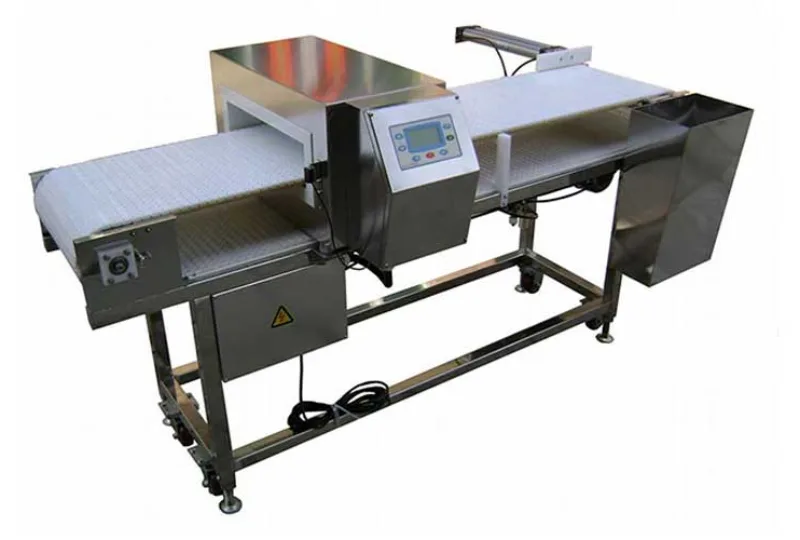
Some lines include metal detectors or X-ray inspection before sealing. These systems identify foreign objects—stones, metal fragments, insects—that entered during harvesting or processing. Rejected items divert before reaching the packaging stage.
Maintenance Access and Cleaning Protocols
Food safety regulations require frequent cleaning. Equipment design affects how easily operators can reach contaminated areas.
The ZP-3000S uses stainless steel for all product-contact surfaces. The belt removes without tools for washing. The forming collar lifts out of the frame. Sealing jaws pivot open for inspection.
Lubrication points sit outside the packaging zone. This prevents food-grade grease from contacting produce or film. Sealed bearings reduce the frequency of lubrication intervals.
Drive components mount on the machine’s rear or underside, away from wash-down spray. This separation extends electrical component life in humid environments.
Power Consumption and Production Economics
Total power draw for the ZP-3000S is 6.3 kW. Heat accounts for 3.8 kW, with motors using 2.5 kW. This splits the energy budget between sealing and mechanical motion.
Running 8 hours per day at 60 bags per minute produces 28,800 packages. Daily energy use is approximately 50 kWh. At industrial electricity rates, this adds a small fraction to per-bag costs compared to film and labor.
Labor reduction justifies the equipment investment more than energy savings. A manual bagging line requires at least two workers—one to fill, one to seal. The automated system needs one operator to load the infeed and monitor operation. High-volume lines with automated feeding eliminate even that role.
Common Failure Modes and Diagnostic Steps
Film jams occur when tension drops or the edge tracking sensor loses alignment. The machine stops immediately to prevent film bunching inside the forming collar.
Resolution involves checking the unwind dancer arm position. If the arm sits at its lower limit, the roll has run out or the splice failed. If the arm is mid-range, the edge sensor may need recalibration.
Seal failures show up as open bags exiting the machine. Causes include:
- Jaw temperature below the film’s sealing threshold
- Contamination on the jaw surface preventing contact
- Insufficient dwell time for the film thickness
- Worn sealing wire that no longer applies even pressure
Temperature checks come first. If the gauge shows correct temperature but bags still fail, the jaws need inspection and possibly replacement.
Packaging for Different Distribution Channels
Retail supermarkets demand specific package appearances. Bags must sit upright on shelves with labels facing forward. This requires tight length control and consistent product placement inside the film.
Food service distribution cares less about aesthetics. Bulk bags of pre-cut vegetables go into boxes for shipping to commercial kitchens. These packages prioritize seal strength and film durability over visual presentation.
Export markets add another layer. Some countries regulate bag size, film thickness, or labeling content. The machine must accommodate these requirements without extensive reconfiguration.
Ruipuhua systems support this flexibility through recipe storage and adjustable parameters. A single machine can run retail packs in the morning and food service packs in the afternoon by loading different settings.
Scalability Across Production Volumes
Small processors may start with a single packaging line running one shift. As volume grows, they face a choice: add a second shift on the existing machine or install a second line.
The decision depends on whether production volume doubles or triples. Doubling often justifies a second shift. Tripling requires additional equipment because running three shifts leaves no maintenance window.
The ZP-3000S footprint—4000mm length, 950mm width—fits most facility layouts. Multiple machines can run in parallel with shared infeed conveyors and common film stock.
This modularity lets processors scale incrementally rather than committing to a massive system redesign. Each line operates independently, so a breakdown on one machine does not halt the entire facility.
Real-World Application Across Produce Types
Leafy vegetables like spinach and lettuce compress under their own weight. Belt infeed prevents this by maintaining a single-layer product flow. Items do not stack or crush each other before entering the film tube.
Root vegetables—carrots, radishes, beets—have rigid structure but irregular shapes. The belt accommodates varying product heights without adjustment. The forming collar diameter provides clearance for the tallest items.
Delicate produce such as mushrooms or tomatoes benefits from the gentle handling. No drop, no vibration, no impact. The product travels horizontally from belt to bag at constant velocity.
For us, these applications represent the core use cases that drove development of belt-type systems. Customers across more than 100 countries run vegetable flow packaging equipment in conditions ranging from small co-ops to industrial processing plants.
-
01
How do I choose the right speed for a toas bread packaging line to avoid crushing soft loaves?
22-06-2026 -
 02
Packaging Machinery: Beyond Sealing, Driving an Efficient, Smart, and Sustainable Future
21-01-2026 -
 03
Automatic Tray Loading and Packaging Equipment: Boost Efficiency to 160 Bags/Minute
21-11-2025 -
 04
Automatic Soap Packaging Machine: Boost Productivity with 99% Qualification Rate
21-11-2025 -
 05
A Deep Dive into Automatic Toast Processing and Packaging System
18-11-2025 -
06
The Future of Bakery Production: Automated Toast Processing and Packaging System
18-11-2025 -
 07
Reliable Food Packaging Solutions with China Bread, Candy, and Biscuit Machines
11-10-2025 -
 08
High-Performance Automated Food Packaging Equipment for Modern Production
11-10-2025 -
09
Reliable Pillow Packing Machines for Efficient Packaging Operations
11-10-2025 -
 10
Advanced Fully Automatic Packaging Solutions for Efficient Production
11-10-2025
