

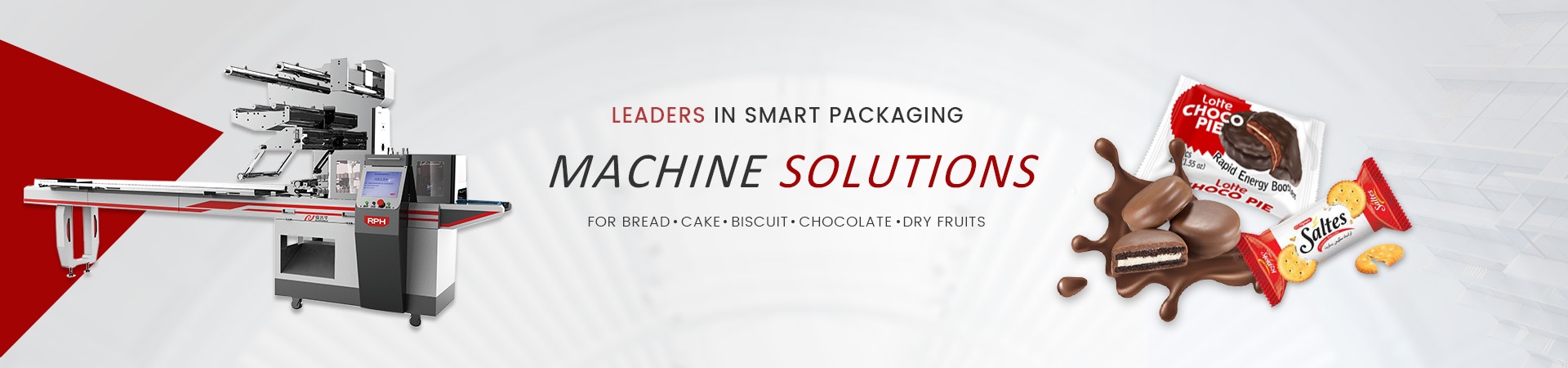
Practical 2027 Tips to Improve Flow Wrapper Efficiency and Reduce Packaging Costs
—
## **1. Optimize Flow Wrapper Setup and Calibration for Instant Performance Gains**
### Core Summary: Correct initial setup and regular, precise calibration minimize downtime and material waste in **flow wrapper** operations.
A poorly configured **flow wrapper** can cause up to 30% of daily downtime, per 2027 Interpack packaging automation efficiency reports. Delays stem from misaligned forming boxes, incorrect film tension, and uncalibrated sensors—leading to frequent film breaks, product jams, and defective packages.
Key actionable steps:
– Complete a 10-point pre-shift check (aligned forming collar, clean sensors, proper film tension, adjusted seal jaws, etc.) in under 5 minutes.
– Use digital pressure and temperature gauges for seal jaw calibration instead of manual dials, cutting setup errors by 45%.
– For multi-SKU facilities, install quick-change (QC) forming box and jaw modules to reduce switchover time from 15–20 minutes to 3–5 minutes.
– Regularly verify film edge guides’ alignment with sensors to avoid off-center packaging and film overlap waste.
—
## **2. Select and Manage Flow Wrapper Packaging Materials Strategically**
### Core Summary: Choosing the right film type and optimizing its handling reduces material costs and improves **flow wrapper** performance.
Packaging material costs make up roughly 50–60% of total flow-wrapped product expenses, so this area offers the biggest cost-reduction impact. In 2027, advances in recyclable, lightweight stretch films and sustainable paper-based options compatible with some **flow wrapper** models deliver significant savings without sacrificing package integrity.
Key actionable steps:
– Partner with film suppliers to test lightweight (12–15 microns) recyclable PE films, which lower material costs by 10–20% per linear meter while maintaining seal strength and puncture resistance.
– Use pre-printed or colored films only when necessary; unprinted transparent films are cheaper per unit and eliminate registration alignment issues.
– Implement film roll inventory management software that tracks usage, monitors thickness consistency, and alerts staff to reorder before rolls run out, avoiding emergency downtime.
– Install film scrap collection and recycling systems to shred and reuse clean scrap for secondary packaging or supplier recycling programs, cutting waste disposal costs by 25%.
—
## **3. Upgrade Flow Wrapper Automation and Sensor Technology**
### Core Summary: Integrating 2027 automation and AI-powered sensors with **flow wrappers** reduces manual labor, detects errors early, and boosts production speed.
Manual labor and human error are top efficiency killers in traditional **flow wrapper** lines. Modern upgrades like robotic product infeed, AI-powered vision inspection, and predictive maintenance sensors solve these issues effectively.
Key actionable steps:
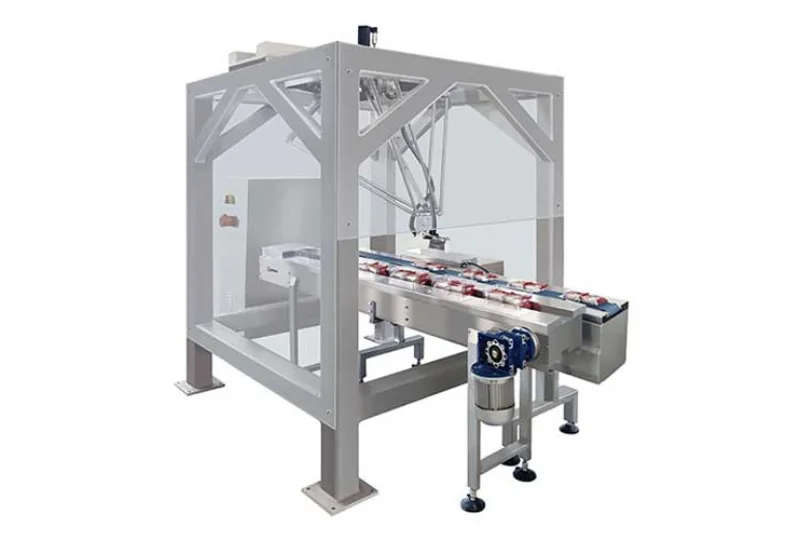
– Add a robotic product infeed system to replace manual placement, increasing production speed by 30–40% and eliminating jams from misaligned items.
– Install AI-powered vision inspection systems that detect 99.9% of defective packages (missing seals, film tears, product misplacement) in real time and reject them immediately.
– Use predictive maintenance sensors to monitor **flow wrapper** components (motor bearings, seal jaws, film tension rollers) for wear, alerting staff 24–48 hours before potential failure to avoid unplanned downtime.
– Connect **flow wrappers** to an IoT platform to track real-time performance metrics (OEE, production speed, material waste) and spot areas for further optimization.
—
## **4. Train Staff to Operate and Maintain Flow Wrappers Effectively**
### Core Summary: Well-trained operators and maintenance technicians can maximize **flow wrapper** uptime, reduce material waste, and extend equipment lifespan.
Even the most advanced **flow wrapper** technology underperforms without skilled personnel. 2027 packaging industry standards recommend at least 40 hours of initial training and 8 hours of annual refresh training for all **flow wrapper** staff.
Key actionable steps:
– Develop a comprehensive training program covering pre-shift checks, setup/calibration, SKU switchover, basic troubleshooting (film breaks, jams, seal failures), and maintenance procedures.
– Use VR simulation tools for initial training, letting operators practice complex tasks like forming box alignment in a safe, risk-free environment.
– Create a dedicated maintenance team with packaging automation certifications, focusing on preventive and predictive maintenance.
– Encourage operators to report minor issues immediately via a digital system to track trends and identify root causes of recurring problems.

—
## **5. Monitor and Optimize Flow Wrapper Film Tension and Seal Quality Continuously**
### Core Summary: Consistent film tension and high-quality seals are critical for **flow wrapper** efficiency and product protection, minimizing waste and recalls.
Too-tight or too-loose film tension causes frequent breaks and wrinkled packages, while poor seals lead to product spoilage and costly recalls. 2027 digital tension control and seal quality monitoring systems simplify continuous optimization.
Key actionable steps:
– Upgrade to a digital film tension control system with automatic feedback, keeping tension within ±1% of the optimal setting.
– Conduct regular seal quality tests (heat seal strength, peelability, integrity) using a digital seal tester to meet 2027 food safety and packaging standards.
– Adjust seal jaw pressure and temperature based on film thickness and material type: thicker films need higher settings, while thinner films require lower ones.
– Use nitrogen flushing only for products needing extended shelf life, adjusting the rate to minimize nitrogen waste and package bulging.
—
## **6. Calculate and Improve Flow Wrapper OEE (Overall Equipment Effectiveness) Regularly**
### Core Summary: Tracking OEE, the gold standard for measuring **flow wrapper** efficiency, helps identify specific bottlenecks and quantify optimization impact.
OEE combines three metrics: availability (uptime), performance (speed), and quality (defect rate), with a perfect score of 100%. The average OEE for **flow wrappers** in 2027 is 65%, leaving significant room for improvement.
Key actionable steps:
– Calculate OEE daily via an IoT dashboard or manual logbook, breaking down each metric to spot bottlenecks (e.g., 20% downtime from seal jaw failures, 15% speed loss from manual placement, 5% defects from misaligned sensors).
– Set realistic improvement goals (e.g., 65% to 75% in 6 months, 85% in 12 months).
– Implement targeted strategies based on bottleneck analysis (e.g., predictive maintenance for seal jaws, robotic infeed for manual placement, sensor alignment checks for defects).
– Celebrate small wins with staff to boost morale and encourage continuous improvement.
—
## Final Thoughts: Achieve Sustainable Efficiency and Cost Reduction with Flow Wrappers in 2027
By applying the practical tips above, packaging facilities can drastically improve **flow wrapper** efficiency, cut material and labor costs, and extend equipment lifespan in 2027. The key is continuous improvement—leveraging modern automation, strategic material management, and effective staff training. With a proactive approach, facilities can reach OEE scores of 85% or higher, translating to lower costs, higher profitability, and a more sustainable packaging operation.

-
01
How do I choose the right speed for a toas bread packaging line to avoid crushing soft loaves?
22-06-2026 -
 02
02Packaging Machinery: Beyond Sealing, Driving an Efficient, Smart, and Sustainable Future
21-01-2026 -
 03
03Automatic Tray Loading and Packaging Equipment: Boost Efficiency to 160 Bags/Minute
21-11-2025 -
 04
04Automatic Soap Packaging Machine: Boost Productivity with 99% Qualification Rate
21-11-2025 -
 05
05A Deep Dive into Automatic Toast Processing and Packaging System
18-11-2025 -
06
The Future of Bakery Production: Automated Toast Processing and Packaging System
18-11-2025 -
 07
07Reliable Food Packaging Solutions with China Bread, Candy, and Biscuit Machines
11-10-2025 -
 08
08High-Performance Automated Food Packaging Equipment for Modern Production
11-10-2025 -
09
Reliable Pillow Packing Machines for Efficient Packaging Operations
11-10-2025 -
 10
10Advanced Fully Automatic Packaging Solutions for Efficient Production
11-10-2025
