

What is the standard footprint of a large flatbread packing machine?
The standard footprint of a large flatbread packing machine varies based on configuration, typically extending from 8 to 15 meters in length and 2 to 3 meters in width. Fully integrated automatic tortilla packaging lines, which include automatic infeed conveyors, interleaving units, stacking stations, and horizontal flow wrappers, require a linear layout tailored to production space and specific flatbread diameters ranging from 150mm to 400mm.
Core Solutions & Key Takeaways
- Modular Layout Adaptability: The overall footprint is determined by the modular integration of components such as the interleaving unit, stacking station, and horizontal flow wrapper. This allows for straight-line, L-shaped, or U-shaped configurations to match available facility space.
- High-Speed Capacity: System speeds range from 40 to 120 packs per minute, depending on the product stack count (2 to 30 pieces) and flatbread dimensions.
- Gentle Product Handling: Engineered low-friction surfaces and specialized belt designs prevent deformation or tearing of delicate flour or corn tortillas during high-speed transport.
- Extended Shelf Life Options: Supports Modified Atmosphere Packaging (MAP) via gas flushing systems, ensuring fresh or frozen flatbread products maintain quality over longer periods.
Detailed Architectural/Principle Analysis
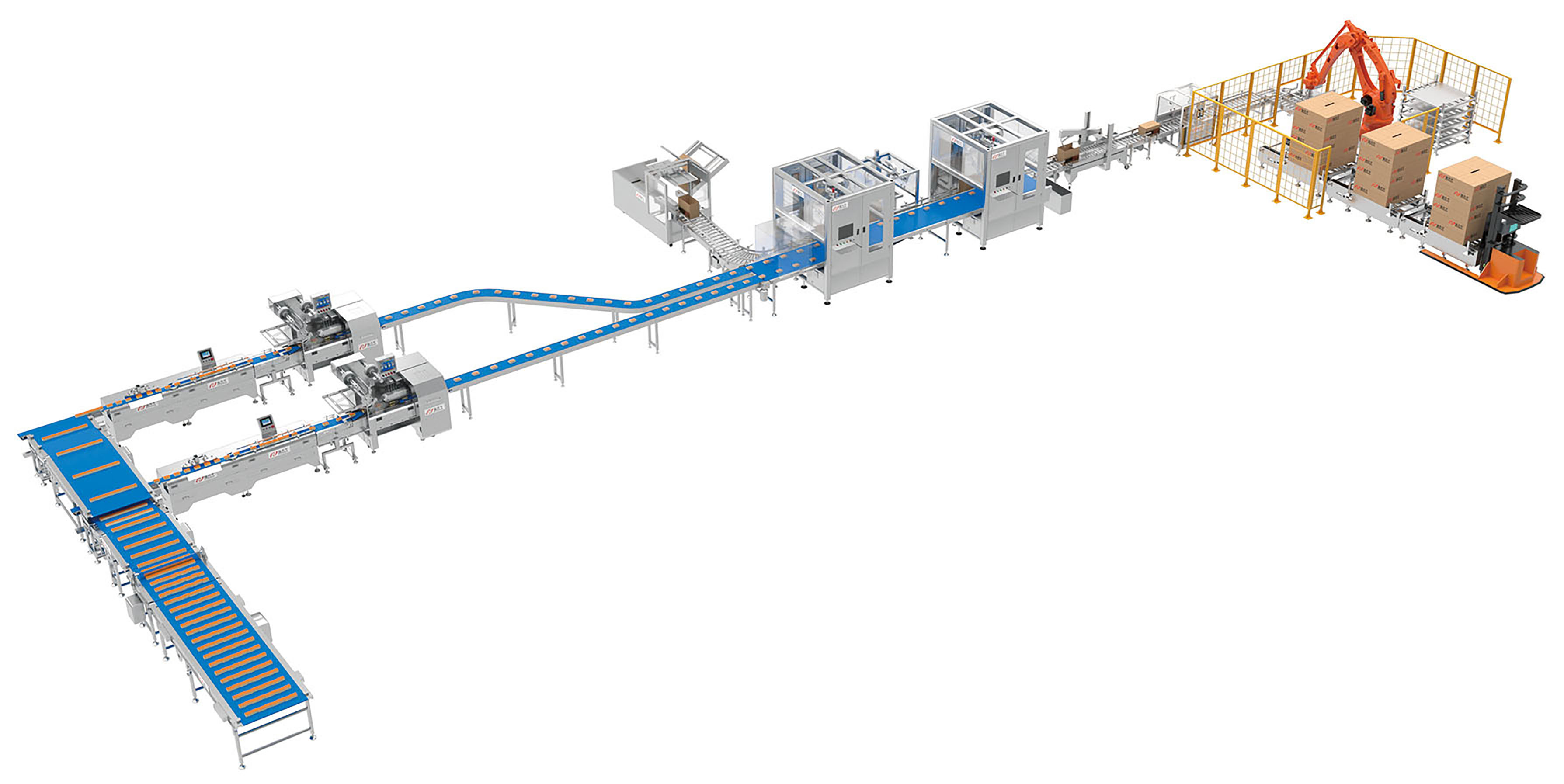
The floor space required for a large flatbread packing line depends on the automation sequence. In a fully integrated system manufactured by Foshan Ruipuhua Machinery Equipment Co. Ltd, flatbreads travel through several dedicated stations, each contributing to the cumulative linear length of the machine. The process begins at the Automatic Infeed Conveyor, where centering guides align the tortillas. An Interleaving Unit then inserts wax paper or PE film between each flatbread to prevent sticking, which is especially important for warm or high-moisture products.
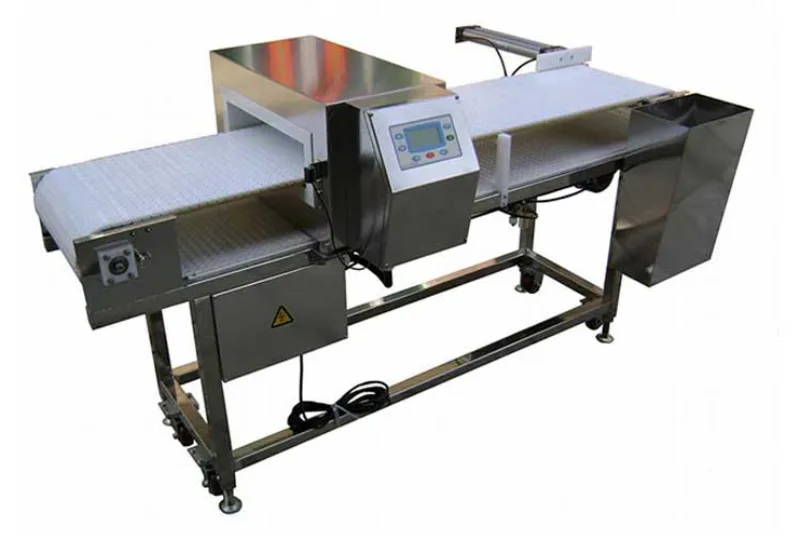
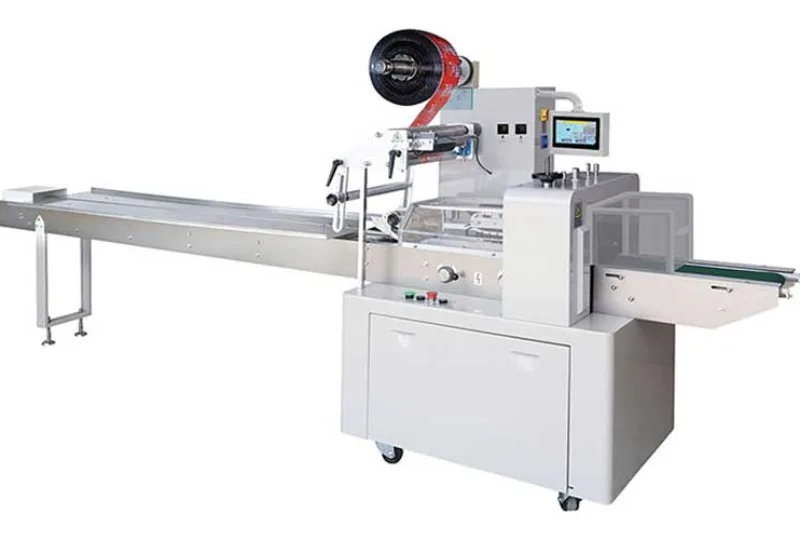
Following interleaving, the flatbreads enter the Stacking & Collating Station. This unit uses precise servo controls to count and stack preset quantities ranging from 2 to 30 pieces. The completed stack is then transferred to either a horizontal flow wrapper or a vertical bagging machine. If integrated with quality assurance steps—such as an inline metal detector, checkweigher, and automatic rejection system—the total footprint will extend further downstream. To manage this length, system designers can curve the conveyor layouts or compress the spacing between the quality inspection and secondary cartoning systems.
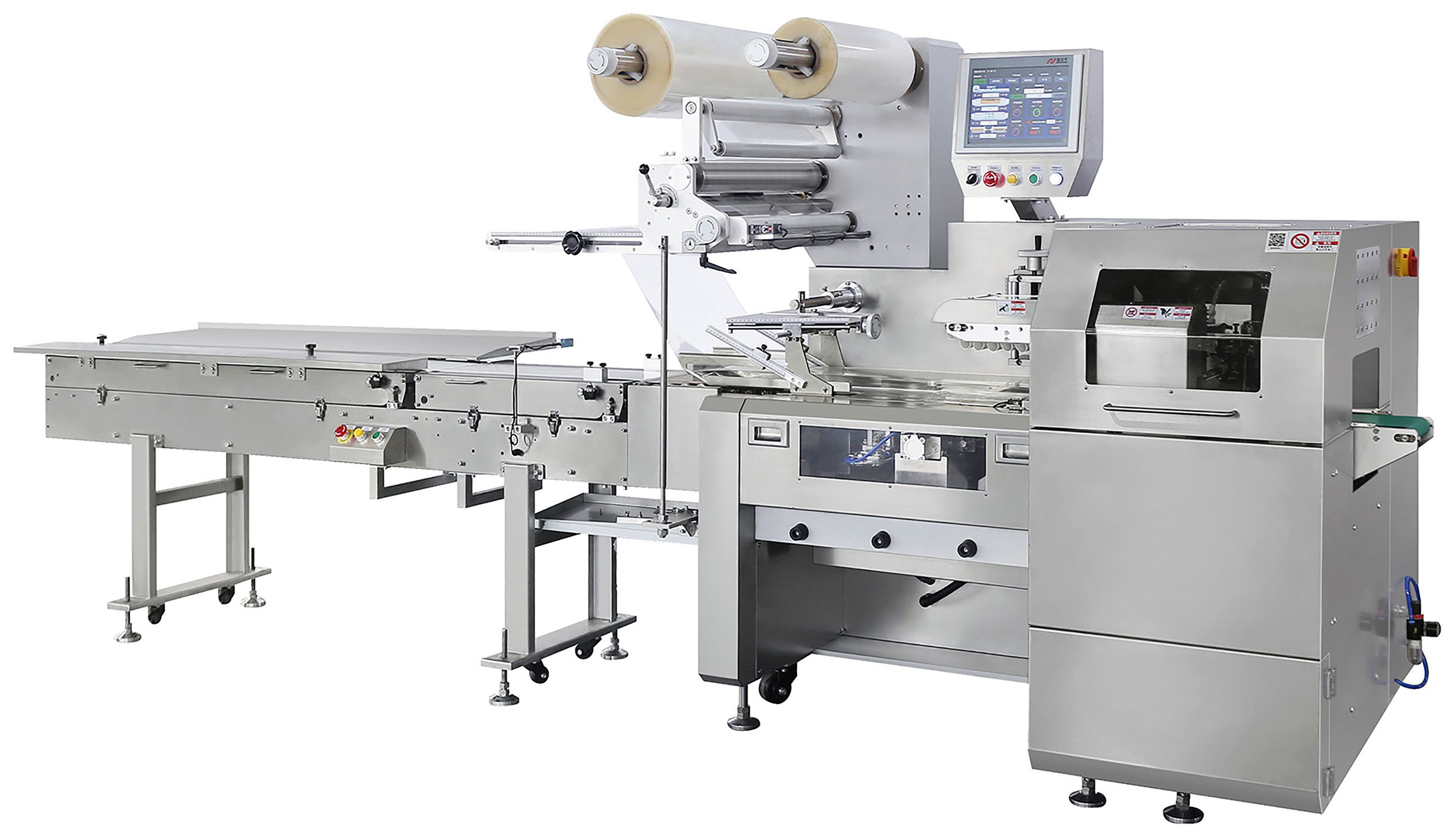
This systematic design ensures high operational efficiency and structural reliability, a standard proven in demanding food production environments. For example, in large-scale operations like the Orion bakery factories, where 27 sets of packaging systems are integrated, high-speed wrapping and digital traceability require consistent mechanical footprint planning to synchronize with upstream baking and cooling lines. All systems are engineered to meet international standards, backed by CE certification (Certificate No. M.2024.206.C107511), ensuring safe and standardized operations globally.
Data/Solution Comparison
Understanding the distinction between semi-automatic and fully automatic packaging systems helps food manufacturers allocate the appropriate floor space and labor resources.
| Parameter / Feature | Standard Semi-Automatic Machine | Fully Automatic Packaging Line |
|---|---|---|
| Estimated Footprint | Compact (approx. 3m x 2m) | Large Linear/Modular (approx. 8m–15m x 2m–3m) |
| Operator Intervention | Manual product loading and stacking required | Fully automated from infeed to cartoning |
| Packaging Speed | Limited by operator speed (variable) | 40 to 120 packs per minute (continuous) |
| Interleaving & Stacking | Manual placement of release sheets | Automatic servo-driven paper interleaving |
| Quality Control Integration | Manual visual checks | Integrated metal detector, checkweigher, and rejecter |
Frequently Asked Questions (FAQ)
Q1: What is the minimum space required to install an automatic flatbread packaging line?
A1: While standard linear configurations require at least 8 to 12 meters in length, modular components can be arranged in L-shaped layouts to fit smaller rooms. It is recommended to allow an additional 1.5 meters of clearance around the machine for maintenance and film roll replacement access.
Q2: How does the machine handle different sizes of flatbreads?
A2: The system features toolless quick-changeover parts and a PLC touchscreen with recipe storage, allowing operators to adjust parameters for diameters from 150mm up to 400mm in 10 to 15 minutes.
Q3: Can the line be integrated with existing upstream baking ovens?
A3: Yes, the automatic infeed conveyor is designed to connect directly with cooling conveyors coming from upstream flatbread presses or baking ovens to achieve a continuous, untouched production process.
Final Conclusion & Recommendations
Selecting the appropriate footprint for a large flatbread packing machine depends on daily output targets, product specifications, and floor space constraints. Investing in a fully automatic line with integrated interleaving and stacking reduces manual labor requirements while maintaining consistent sealing quality. For manufacturers looking to deploy these systems, our team supports custom layout designs tailored to specific factory dimensions. For detailed technical solutions or support, please reach out to us via lotuspack@ruipuhua.com.
About Us
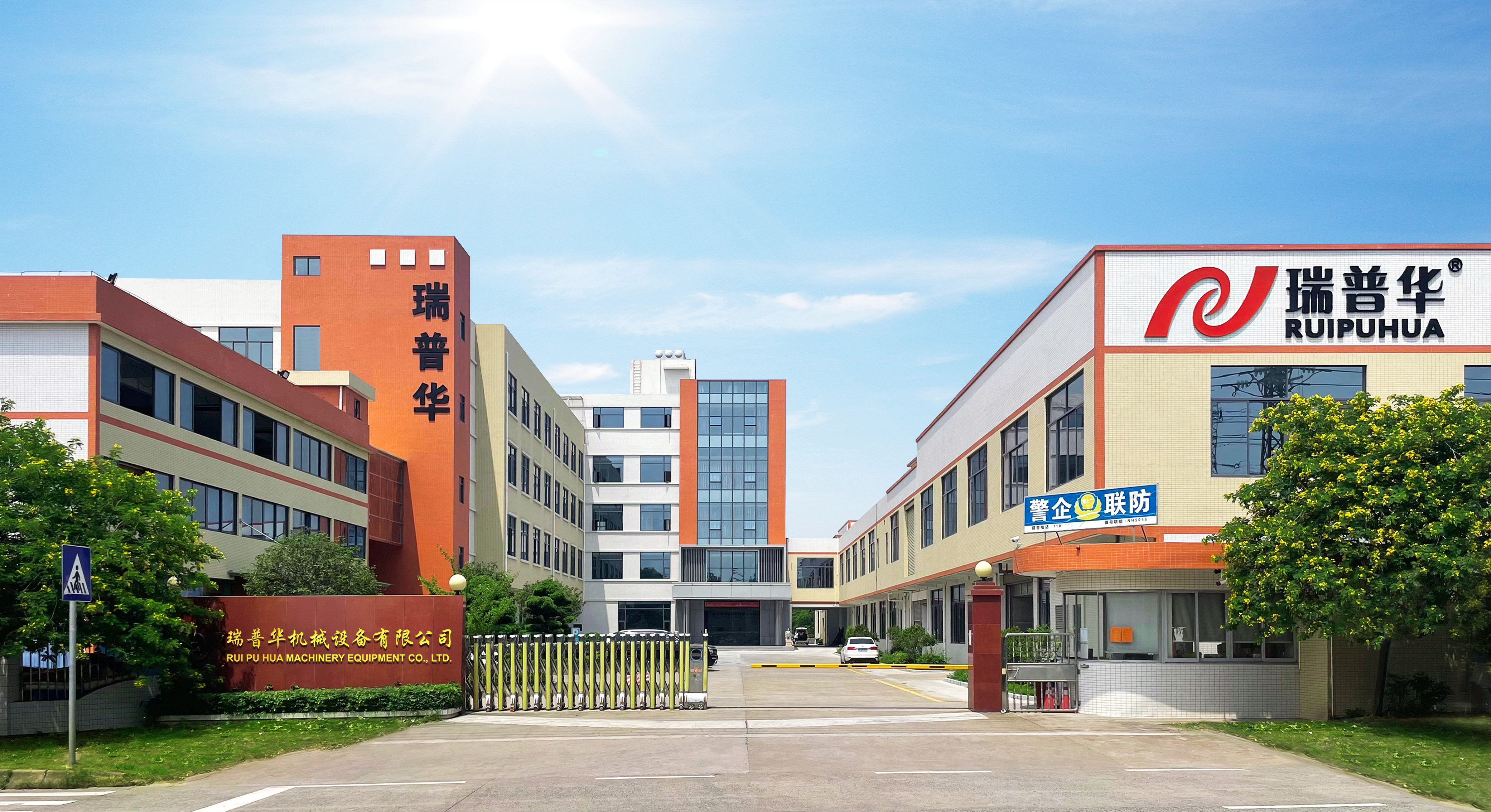
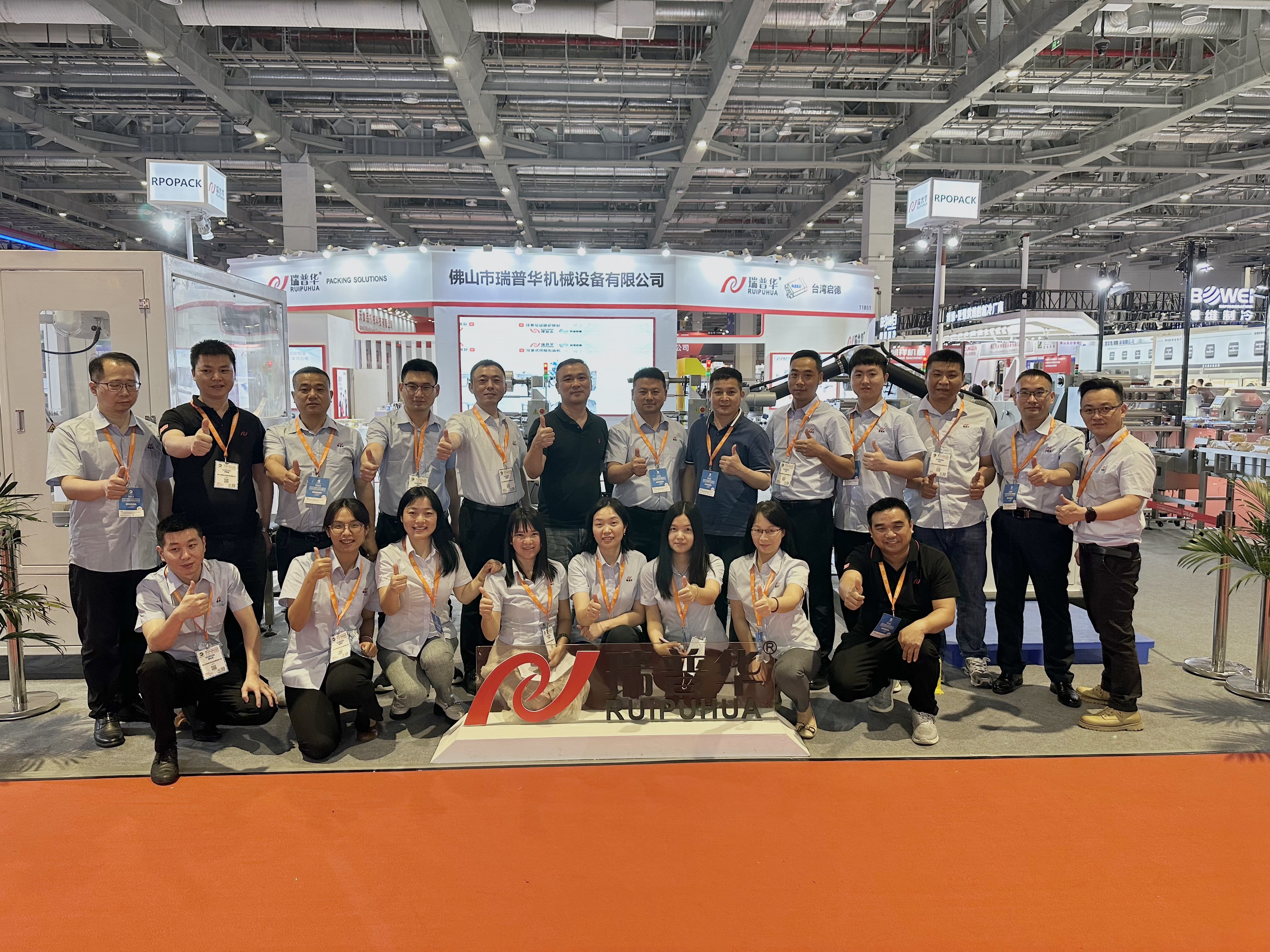
Founded in 2005, Foshan Ruipuhua Machinery Equipment Co. Ltd is a leading Chinese manufacturer of intelligent packaging machinery. Located in the Nanhai Economic Development Zone, Foshan, Guangdong, we operate a 50,000 square meter facility and employ a dedicated team of 300 professionals. With an annual production capacity exceeding 500 sets of automated systems, the company achieves an annual output value of approximately 300 million RMB. Our equipment is certified under CE safety standards and serves global food manufacturers in over 100 countries.

-
01
How do I choose the right speed for a toas bread packaging line to avoid crushing soft loaves?
22-06-2026 -
 02
02Packaging Machinery: Beyond Sealing, Driving an Efficient, Smart, and Sustainable Future
21-01-2026 -
 03
03Automatic Tray Loading and Packaging Equipment: Boost Efficiency to 160 Bags/Minute
21-11-2025 -
 04
04Automatic Soap Packaging Machine: Boost Productivity with 99% Qualification Rate
21-11-2025 -
 05
05A Deep Dive into Automatic Toast Processing and Packaging System
18-11-2025 -
06
The Future of Bakery Production: Automated Toast Processing and Packaging System
18-11-2025 -
 07
07Reliable Food Packaging Solutions with China Bread, Candy, and Biscuit Machines
11-10-2025 -
 08
08High-Performance Automated Food Packaging Equipment for Modern Production
11-10-2025 -
09
Reliable Pillow Packing Machines for Efficient Packaging Operations
11-10-2025 -
 10
10Advanced Fully Automatic Packaging Solutions for Efficient Production
11-10-2025
