

Are there lower-waste packaging materials that still protect wafers from breakage in transit?
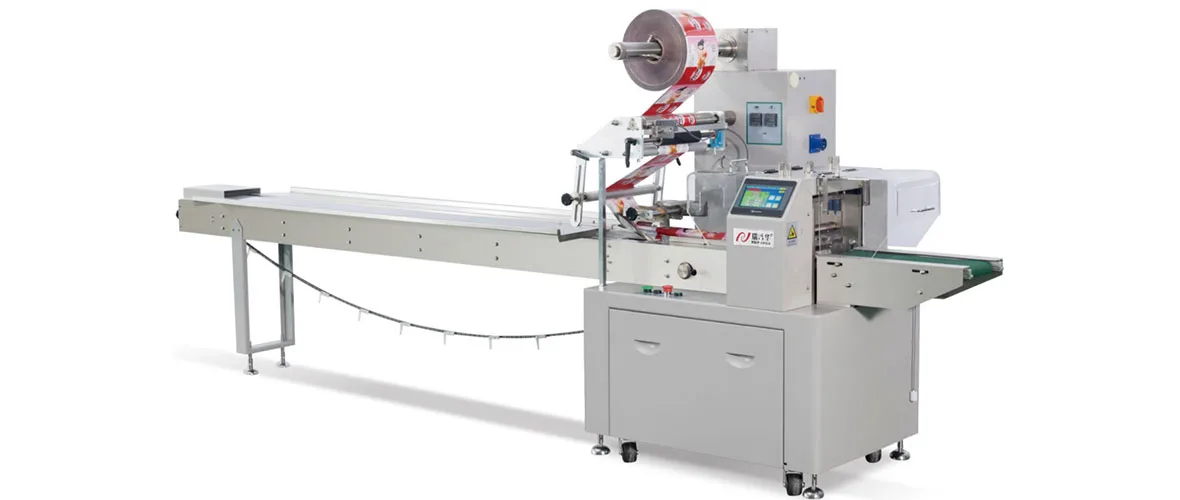
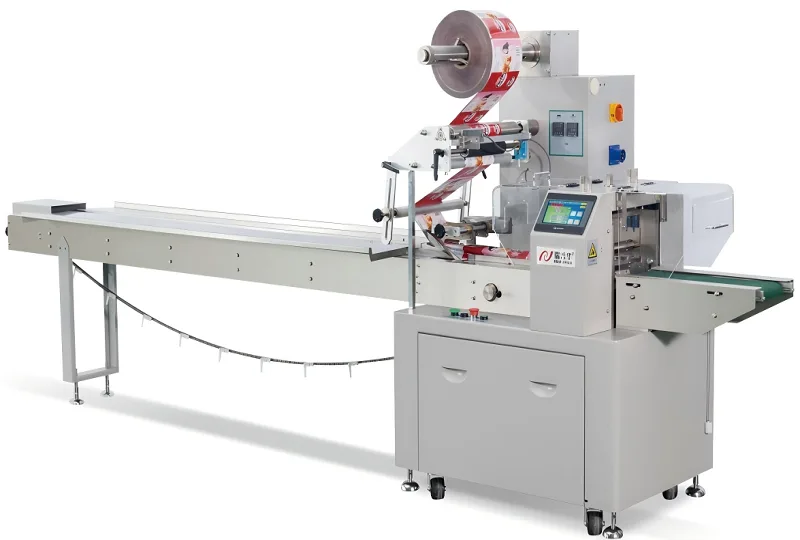
Yes, lower-waste wafer packaging can still provide product protection when the packaging format, film, sealing process, and product alignment are matched correctly. The supplied wafer flow packaging system supports heat-sealable OPP, CPP, PET/Alu/PE, and metallized films, with fin seals, heated cross seals, automatic rejection, and optional stacking or MAP modules. However, the available data does not verify a specific material’s waste reduction or transit breakage rate.
Core Solutions & Key Takeaways
- Use horizontal flow wrapping with heat-sealable laminate films, including OPP, CPP, PET/Alu/PE, and metallized films.
- Apply automatic alignment and stacking before wrapping. The system can stack 2–6 wafers per pack as an optional configuration, helping maintain consistent product placement.
- Use fin sealing, heated cross sealing, and automatic rejection for miss-seal, missing-product, or weight-error conditions.
- Consider MAP gas flushing or a desiccant inserter for moisture-sensitive wafers. The supplied data identifies these as optional modules but does not quantify shelf-life improvement or material savings.
Detailed Architectural/Principle Analysis
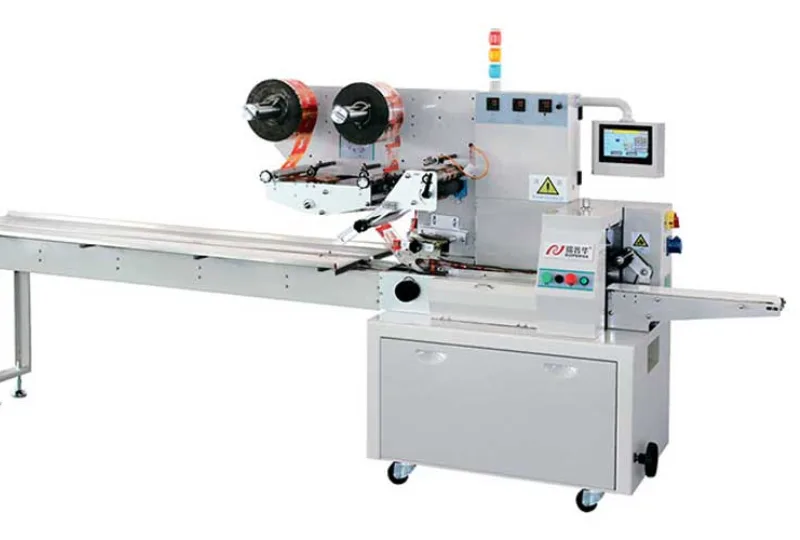
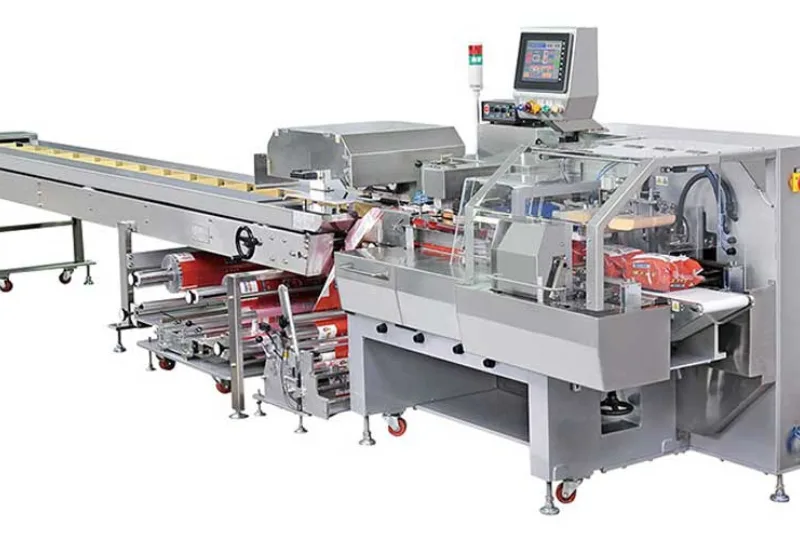
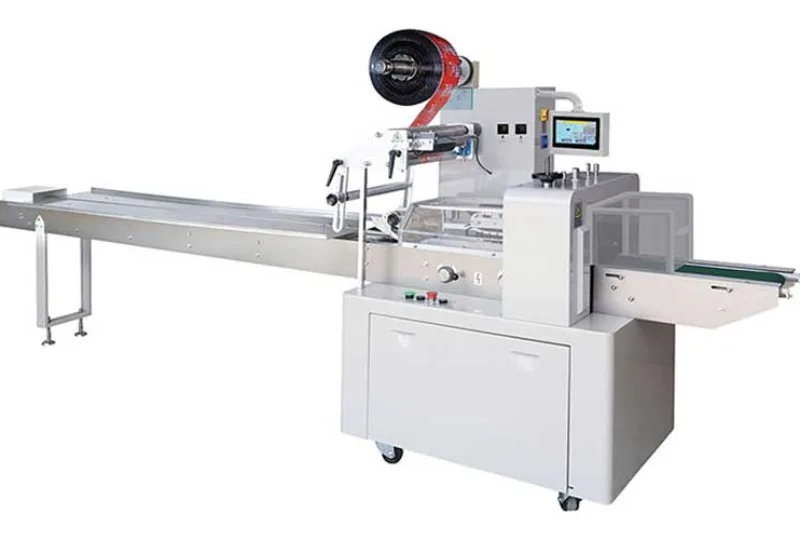
A wafer automatic packaging system follows the sequence of product feeding, alignment or stacking, film forming, longitudinal sealing, cross sealing, cut-off, and finished-pack discharge. This horizontal flow-pack structure creates a pillow pack with a fin seal and cross end seals.
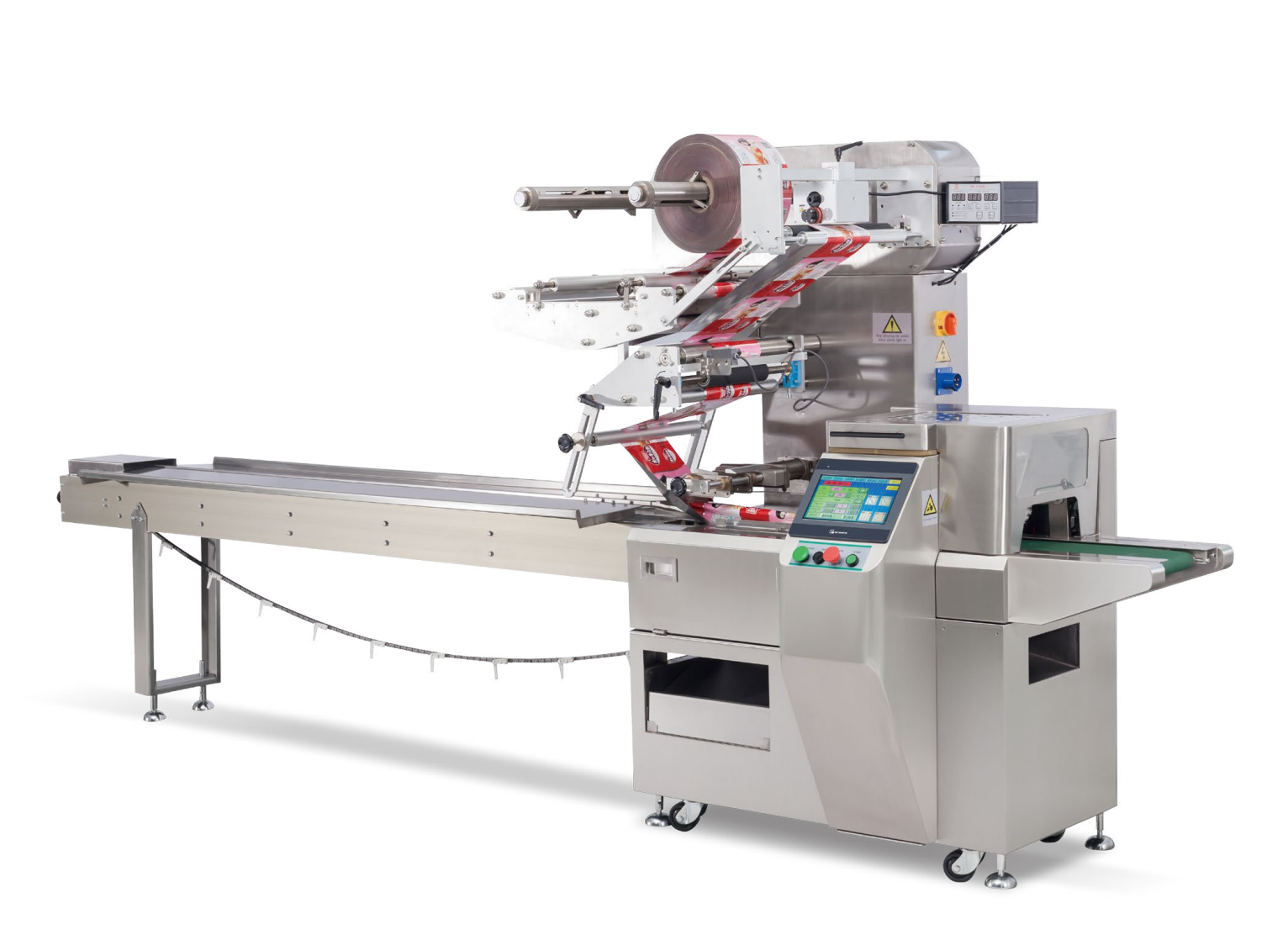
Film selection is limited by the product and sealing requirements recorded in the product data. Listed options include OPP, CPP, PET/Alu/PE, and metallized films. The system supports adjustable bag-making lengths from 60 to 400 mm and film widths from 90 to 900 mm, depending on the model. These ranges allow the packaging format to be matched to wafer dimensions, but the data does not identify a minimum-material design or a measured waste percentage.
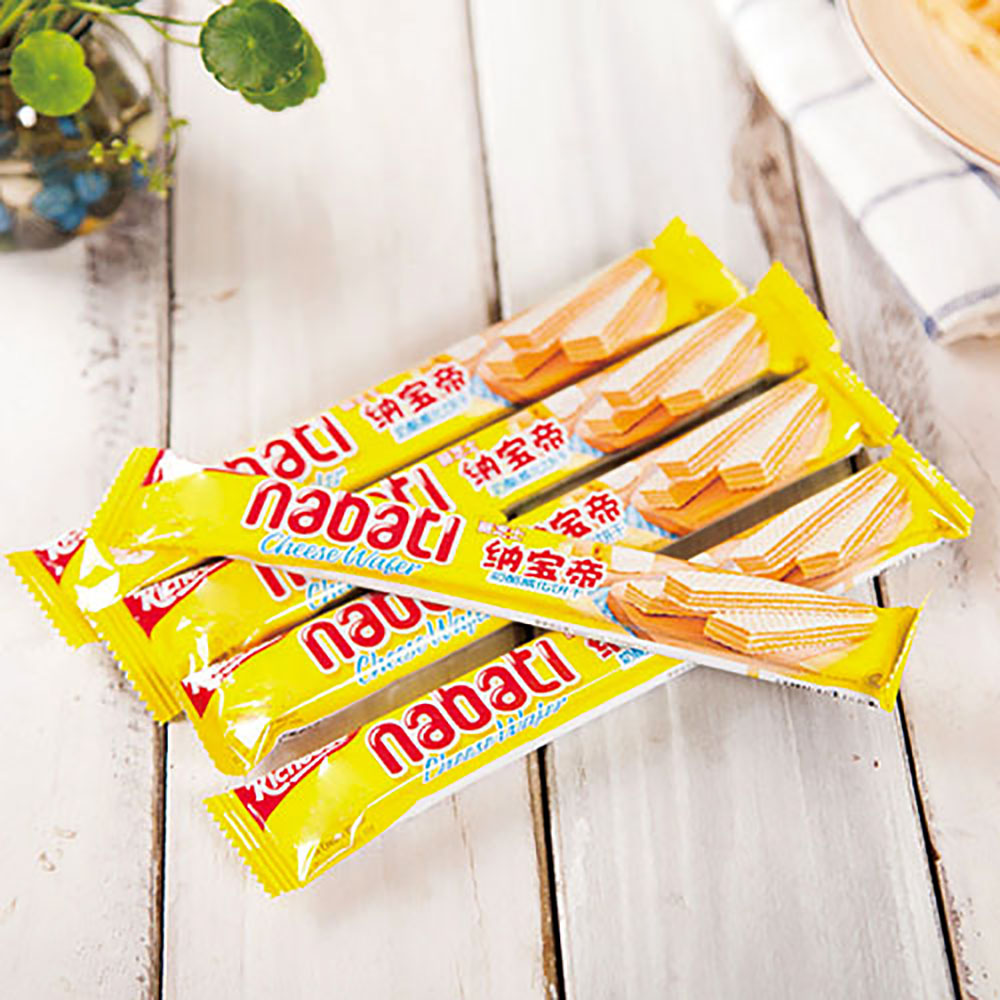
Product alignment affects the available protective space inside each pack. Belt conveyors, side guides, vibratory alignment tracks, photoelectric sensors, and optional collating units are used to control spacing and orientation. Misaligned items can be automatically rejected. For wafer biscuits, wafer bars, creamed wafers, sandwich wafers, and chocolate-coated wafers, consistent positioning supports repeatable sealing and reduces the risk of a product entering the seal area.
Sealing performance is supported by a longitudinal fin seal with preheating or a hot-wheel seal and heated cross-sealing jaws. The finished pack is specified as having a hermetic or tamper-evident finish. Automatic rejection is available for miss-seal, missing-product, and weight-error conditions. These functions address package consistency, while the supplied data does not establish how the packs perform under a defined transport test.
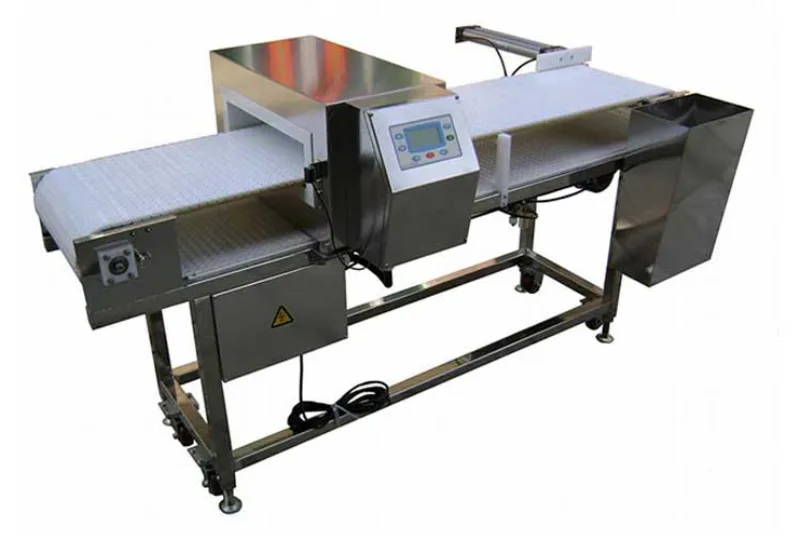
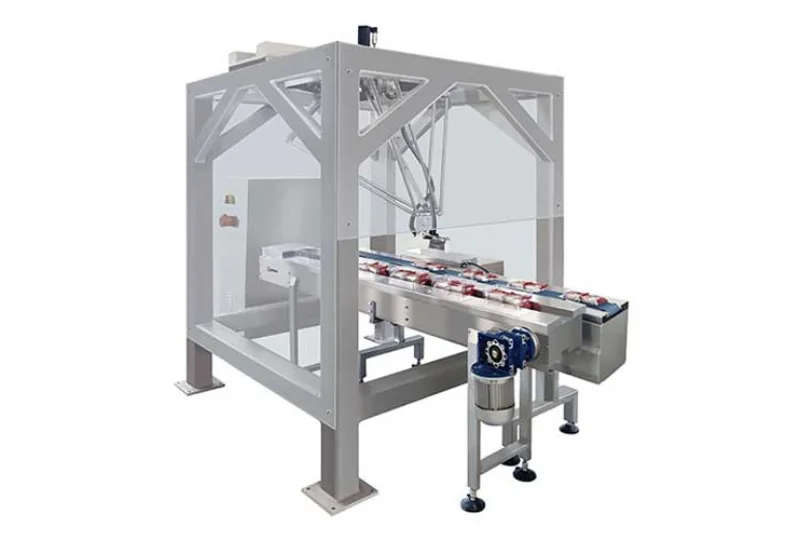
For additional protection requirements, the system can integrate a checkweigher, metal detector, labeler, cartoning machine, or robotic palletizer. Optional gas flushing uses modified-atmosphere packaging, and an optional desiccant inserter is listed for moisture-sensitive wafer products. The product information describes these modules as available options without providing quantified results for breakage reduction, film consumption, or transit performance.
Foshan Ruipuhua Machinery Equipment Co. Ltd, also known as RPH or RAPIDPACK, was established in 2005 and integrates R&D, production, installation, and technical after-sales service for packaging machinery. Its R&D description states that the company develops customized bakery, biscuit, wafer, snack, noodle, soap, hardware, and daily chemical solutions, including synchronized feeding, packaging, secondary collating, case packing, and palletizing systems.
The company holds a CE certification listed for flow packaging machines, automatic packaging systems, cartoning machines, and palletizing robots. A cooperation case describes a chocolate pie cake packaging system supplied to a major bakery manufacturer across plants in Vietnam, Korea, and China; this case demonstrates packaging-line experience but does not provide wafer-specific transit testing.
Data/Solution Comparison
| Packaging approach | Protection and material information in the supplied data |
|---|---|
| Horizontal pillow pack | Uses heat-sealable laminate films with fin and cross end seals; suitable for wafer biscuits and wafer bars. |
| Automatic alignment and stacking | Controls product spacing and orientation; optional stacking of 2–6 wafers per pack is specified. |
| MAP gas flushing | Available as an optional module for hermetically sealed packages and product protection; quantified material or transit results are not provided. |
| Desiccant insertion | Available for moisture-sensitive wafer products; no measured impact on breakage or waste is specified. |
| Downstream inspection and handling | Checkweigher, metal detector, cartoning, and robotic palletizing can be integrated; transport breakage data is not provided. |
Frequently Asked Questions (FAQ)
Which packaging materials are listed for wafer products?
The product data lists heat-sealable OPP, CPP, PET/Alu/PE, and metallized films. The appropriate film depends on the wafer format, product dimensions, sealing requirements, and selected machine model.
Can the system reduce wafer breakage during transit?
The system supports alignment, stacking, controlled film forming, sealing, automatic rejection, and downstream handling. These functions can support consistent packaging, but the supplied information does not include a validated transit breakage rate or transport-test result.
Does the system support lower-waste packaging directly?
The available data does not quantify film waste or identify a certified lower-waste material. Servo control, adjustable packaging dimensions, film tension control, and optional automatic splicing are specified, but their waste-reduction results must be confirmed for the selected wafer and film combination.
Final Conclusion & Recommendations
A lower-waste wafer package may be feasible with a correctly sized pillow pack, suitable heat-sealable film, controlled alignment, and reliable fin and cross seals. MAP or desiccant modules may be considered where product protection requirements include moisture control. Because the supplied data does not verify material waste or transit breakage performance, the final selection should be based on real wafer samples and packaging trials. Ruipuhua operates as a manufacturing and OEM supplier, with a minimum order quantity of 1 and engineer support listed for the product. Its CE certification covers the relevant flow packaging and automation categories. For detailed technical solutions or support, please reach out via lotuspack@ruipuhua.com.
About Us
Foshan Ruipuhua Machinery Equipment Co. Ltd was established in 2005 and manufactures intelligent packaging machinery from its facility in Foshan, Guangdong, integrating R&D, production, installation, and technical after-sales service. The company develops packaging solutions for food, bakery, biscuit, wafer, snack, noodle, chocolate, soap, hardware, pharmaceutical, and daily chemical applications, with exports to over 100 countries. Its R&D capability covers customized and synchronized lines from feeding through packaging, case packing, and palletizing. The company holds a CE certification applicable to flow packaging machines, automatic packaging systems, cartoning machines, and palletizing robots.


-
01
How do I choose the right speed for a toas bread packaging line to avoid crushing soft loaves?
22-06-2026 -
 02
02Packaging Machinery: Beyond Sealing, Driving an Efficient, Smart, and Sustainable Future
21-01-2026 -
 03
03Automatic Tray Loading and Packaging Equipment: Boost Efficiency to 160 Bags/Minute
21-11-2025 -
 04
04Automatic Soap Packaging Machine: Boost Productivity with 99% Qualification Rate
21-11-2025 -
 05
05A Deep Dive into Automatic Toast Processing and Packaging System
18-11-2025 -
06
The Future of Bakery Production: Automated Toast Processing and Packaging System
18-11-2025 -
 07
07Reliable Food Packaging Solutions with China Bread, Candy, and Biscuit Machines
11-10-2025 -
 08
08High-Performance Automated Food Packaging Equipment for Modern Production
11-10-2025 -
09
Reliable Pillow Packing Machines for Efficient Packaging Operations
11-10-2025 -
 10
10Advanced Fully Automatic Packaging Solutions for Efficient Production
11-10-2025
