

Choosing High-Quality Flow Wrappers for Tray-Less Biscuit Lines
Biscuit producers running tray-less formats face a narrow margin for error. A flow wrapper that seals inconsistently or jams on fragile product turns a fast line into a bottleneck. Finding high-quality flow wrappers built for this specific job matters more than chasing raw speed numbers on a spec sheet.
The tray-less format removes the plastic or cardboard tray that normally cushions biscuits during transport through the sealing chamber. Without that support, product alignment depends entirely on the machine’s feeding accuracy and belt synchronization. Any hesitation in the film advance or a poorly timed seal can crack a biscuit or leave an open pouch.
Why Tray-Less Packaging Raises the Stakes
Removing the tray cuts material cost and reduces packaging waste, which is why so many bakeries have shifted toward it. But that same change exposes weaknesses in a wrapper’s mechanical timing that a tray would otherwise mask.
A tray gives biscuits a fixed reference point as they move into the sealing jaws. Without it, the product relies on the conveyor and film tracking to stay centered. This is where servo-driven systems earn their keep over older mechanical cam designs, since they can adjust position in real time rather than following a fixed cycle.
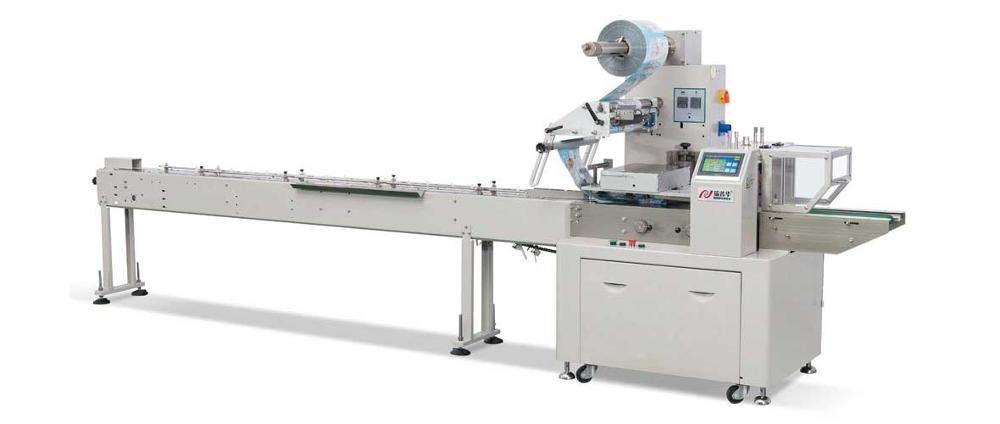
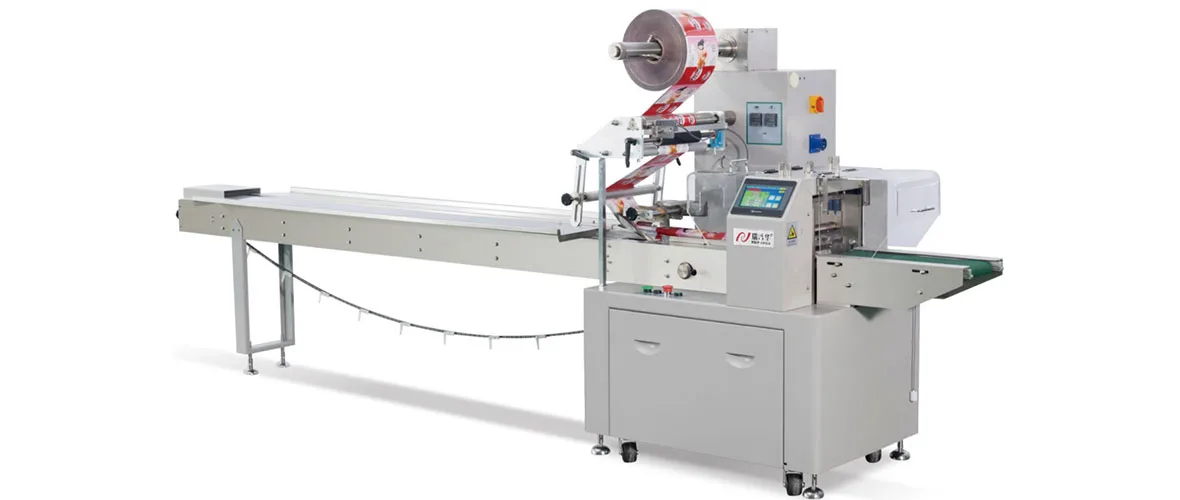
The ZP-500W horizontal flow wrapper from Ruipuhua addresses this through independent servo motor control across its main functions. According to the manufacturer’s specifications, this setup supports stable, low-noise operation while maintaining sealing precision at speeds up to 120 packs per minute. For round, rectangular, or square biscuits, that combination of speed and control directly reduces the crushed-product rate that tray-less lines are prone to.
What Separates a Reliable Wrapper From a Risky One
Not every flow wrapper marketed for biscuits can actually hold tolerances tight enough for delicate, tray-less product. The difference usually comes down to a handful of mechanical and software details rather than headline speed claims.
- Motor architecture: Independent servo control on feeding, sealing, and cutting stations allows each function to correct itself without waiting on a shared mechanical linkage.
- Film tracking: Automatic adjustment of acceleration and deceleration in response to upstream feeding speed prevents the film from bunching or tearing.
- Adjustable sealing geometry: A horizontal sealing center distance that can be reconfigured lets one machine handle multiple product sizes without a full mechanical rebuild.
- Waste detection logic: Anti-cutting and anti-empty-bag algorithms stop the machine when no product is present, which the ZP-500W applies to avoid producing sealed but empty pouches.
These aren’t marketing flourishes. Each one maps to a specific failure mode that shows up daily on a working line, from film jams to wasted film on empty packs.
Reading the Spec Sheet Correctly
Numbers on a datasheet only mean something once you know how they apply to your product mix. Here’s how the ZP-500W’s core specifications translate into practical line decisions.
| Parameter | Specification | Practical Implication |
|---|---|---|
| Packing speed | 35-120 bags/min | Wide range suits both trial runs and full production volume |
| Film width | 400-965 mm | Accommodates a range of pouch sizes without swapping the machine |
| Bag size (L×W×H) | 60-∞ mm / 30-150 mm / 30-75 mm | Flexible for single biscuits or multi-packs |
| Bag style | Pillow / fat pouch, 3-side presealed | Matches standard retail biscuit packaging formats |
| Total power | 6.3 kW | Moderate draw relative to output, relevant for utility planning |
| Overall weight | 820 kg | Factor into floor loading and layout for new installations |
A machine rated for 120 bags per minute is not automatically the right choice if your actual product runs at 60. Overspecifying speed can mean underusing the servo system’s fine control range, since some equipment performs best mid-range rather than at its ceiling. It pays to match rated speed to your actual throughput target instead of buying headroom you won’t use.
Menu Storage and Changeover Time
Bakeries rarely run one product all day. Seasonal biscuits, private-label runs, and multi-SKU contracts mean changeovers happen often, and every minute of downtime during a changeover is a minute the line isn’t producing.
The ZP-500W includes menu storage through its touch screen interface, letting operators save multiple parameter sets tied to specific products or film types. Instead of manually resetting sealing temperature, speed, and bag dimensions each time, an operator recalls a saved profile. This shortens the changeover window and reduces the chance of a manual entry error that leads to a batch of poorly sealed product.
For plants running three or more SKUs on a single wrapper, this kind of stored-configuration approach tends to matter more than top speed. Speed only helps if the machine is actually running.
Matching the Wrapper to Your Product Line
Choosing between horizontal flow wrapper models isn’t just about tray versus tray-less. A few decision points help narrow the field before comparing specific machines.
- Confirm your product’s fragility tolerance. Delicate biscuits need tighter feeding synchronization than sturdier baked goods, which points toward servo-controlled feeding over basic mechanical drives.
- Map your film width range. If your packaging spans multiple pouch sizes, confirm the machine’s film width range covers your smallest and largest formats without a mechanical swap.
- Estimate real changeover frequency. Frequent SKU switching justifies paying for stored parameter memory even if your top speed requirement is modest.
- Check available floor space and utility capacity. An 820 kg machine with a 4600 mm length needs adequate clearance and a power supply rated for the stated 6.3 kW total draw.
- Decide if you need standalone or integrated operation. Some facilities pair the wrapper with upstream feeding systems for a continuous, hands-off production line rather than manual loading.
Working through these points before requesting a quote saves time on both sides and avoids ending up with a machine that’s mismatched to daily operating conditions.
Common Questions About Tray-Less Flow Wrapping
Does removing the tray increase breakage risk for fragile biscuits?
It can, if the feeding system isn’t precise enough to keep product aligned without that physical support. Servo-controlled feeding, as used in the ZP-500W, is designed to compensate for this by adjusting speed dynamically rather than relying on fixed mechanical timing.
Can one machine handle multiple biscuit shapes?
Within a defined size range, yes. The adjustable horizontal sealing center distance and the film width range of 400-965 mm allow round, square, and rectangular biscuits to run on the same unit, though very different shapes may still call for tooling changes.
Is a higher rated speed always better?
Not necessarily. A wrapper’s rated maximum speed matters less than how well it performs at your actual required output. Running well below a machine’s ceiling can sometimes reduce the benefit of its precision control features.
How does anti-empty-bag detection reduce waste?
By halting the sealing cycle when the sensor detects no product in the feed path, the algorithm prevents the machine from sealing and discharging an empty pouch, which otherwise wastes film and adds cleanup time.
Bringing It Back to the Buying Decision
Sourcing high-quality flow wrappers for tray-less biscuit packaging comes down to matching mechanical precision, changeover flexibility, and waste control to your actual production pattern rather than chasing the biggest number on a spec sheet. For us at Ruipuhua, that principle has shaped how the ZP-500W is built, with servo-driven feeding, adjustable sealing geometry, and stored configuration menus aimed squarely at the demands of tray-less, high-speed biscuit lines. Getting the fit right on the front end tends to save far more time on the floor than any single speed rating ever will.

-
01
How do I choose the right speed for a toas bread packaging line to avoid crushing soft loaves?
22-06-2026 -
 02
02Packaging Machinery: Beyond Sealing, Driving an Efficient, Smart, and Sustainable Future
21-01-2026 -
 03
03Automatic Tray Loading and Packaging Equipment: Boost Efficiency to 160 Bags/Minute
21-11-2025 -
 04
04Automatic Soap Packaging Machine: Boost Productivity with 99% Qualification Rate
21-11-2025 -
 05
05A Deep Dive into Automatic Toast Processing and Packaging System
18-11-2025 -
06
The Future of Bakery Production: Automated Toast Processing and Packaging System
18-11-2025 -
 07
07Reliable Food Packaging Solutions with China Bread, Candy, and Biscuit Machines
11-10-2025 -
 08
08High-Performance Automated Food Packaging Equipment for Modern Production
11-10-2025 -
09
Reliable Pillow Packing Machines for Efficient Packaging Operations
11-10-2025 -
 10
10Advanced Fully Automatic Packaging Solutions for Efficient Production
11-10-2025
