

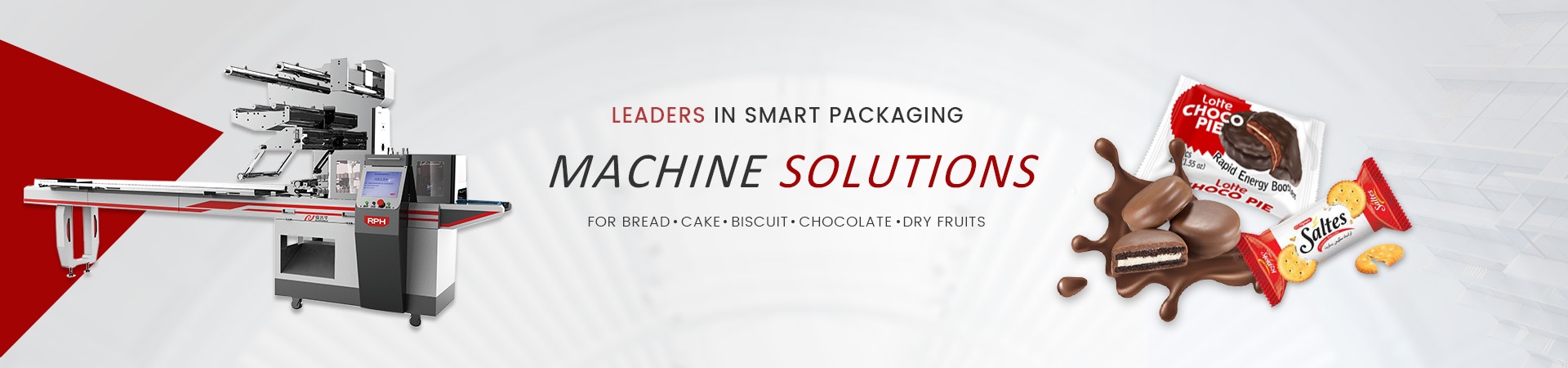
Hotel Disposable Items Packaging Equipment: Selection and Application in Modern Food Production
The hospitality and food service industries face mounting pressure to balance operational efficiency with consistent product quality. Hotels, bakeries, and food manufacturers increasingly turn to hotel disposable items packaging equipment to streamline their workflows while maintaining hygiene standards. Whether packaging moon cakes for hotel gift shops, wrapping pastries for in-room service, or preparing bread products for mass distribution, the right equipment determines both productivity and customer satisfaction.
Understanding Hotel Disposable Items Packaging Equipment
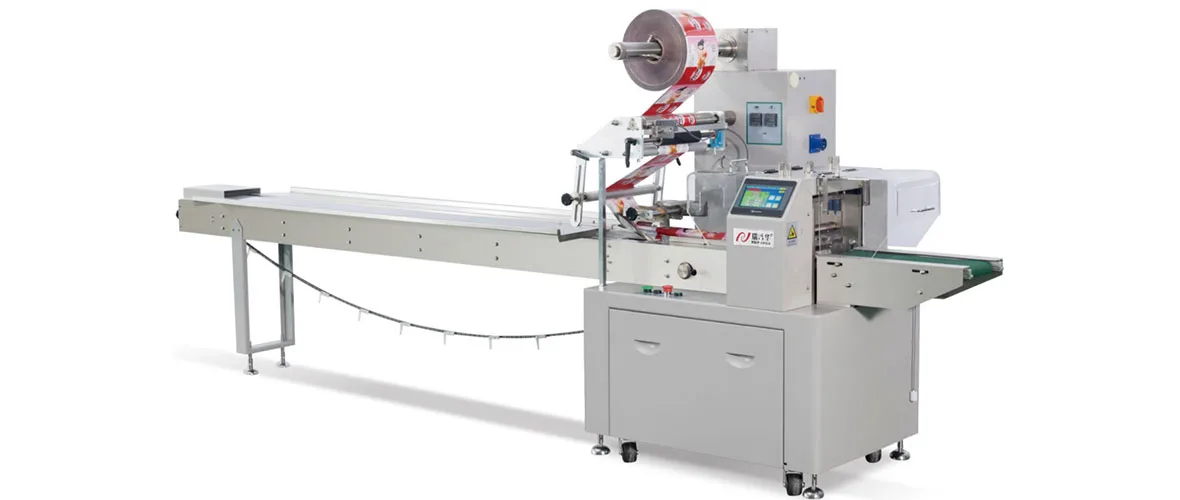
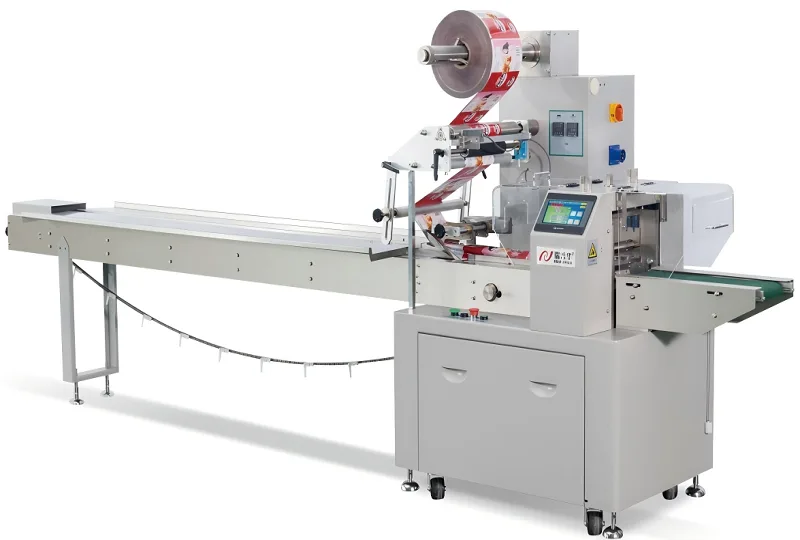
Hotel disposable items packaging equipment refers to automated systems designed to package food products into individual servings or gift sets using disposable materials. These machines handle products already placed in disposable trays or containers, automating the wrapping process to create market-ready packages. Unlike manual packaging, which demands consistent labor and introduces variability, automated solutions deliver uniform results at industrial speeds.
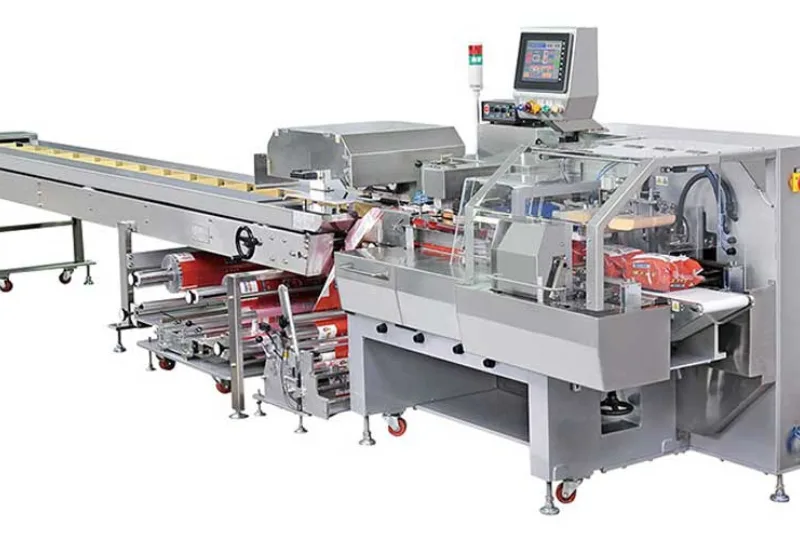
The scope extends beyond simple wrapping. Modern hotel disposable items packaging equipment integrates multiple functions: tray feeding, product positioning, film application, sealing, and cutting. This integration means a single operator can oversee production lines that would otherwise require five to ten manual workers, fundamentally changing the economics of small and medium-sized food operations.
Core Components and How They Work Together
An effective hotel disposable items packaging equipment system relies on several interdependent components working in synchronized harmony. Understanding these elements helps operators and procurement specialists evaluate whether a system fits their specific needs.
Tray Handling and Feeding Mechanisms
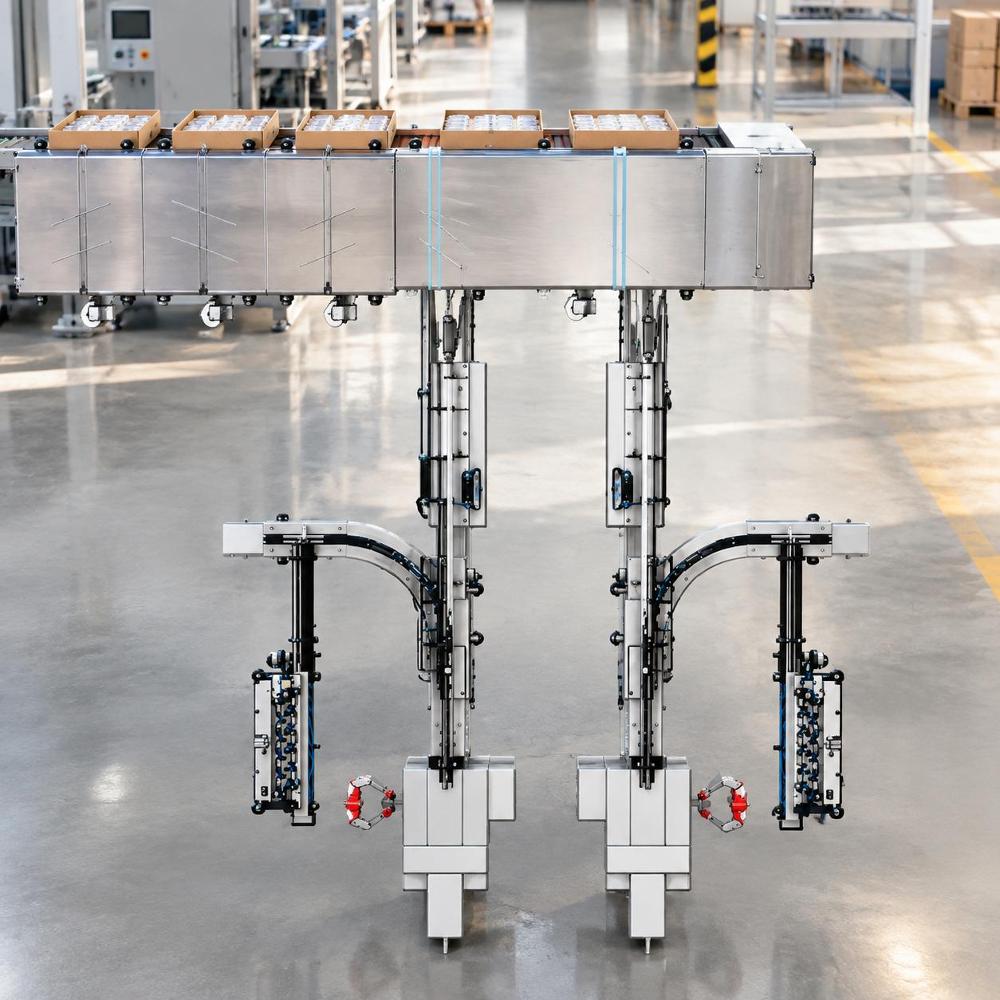
The system begins with automated tray suction units that grab pre-loaded trays from incoming conveyors. Vacuum cups lift trays without damaging delicate products, then positioning sensors determine exact placement for the next stage. This eliminates hand-sorting bottlenecks that plague manual operations.
Multi-sensor sorting units detect product flow in real time, adjusting feeding speeds dynamically to prevent jamming or gaps in the packaging line. When products arrive faster than the wrapping station can process them, the system throttles inbound speed automatically. This adaptive approach prevents the cascading failures that occur when one station backs up and disrupts the entire line.
Wrapping and Sealing Technology
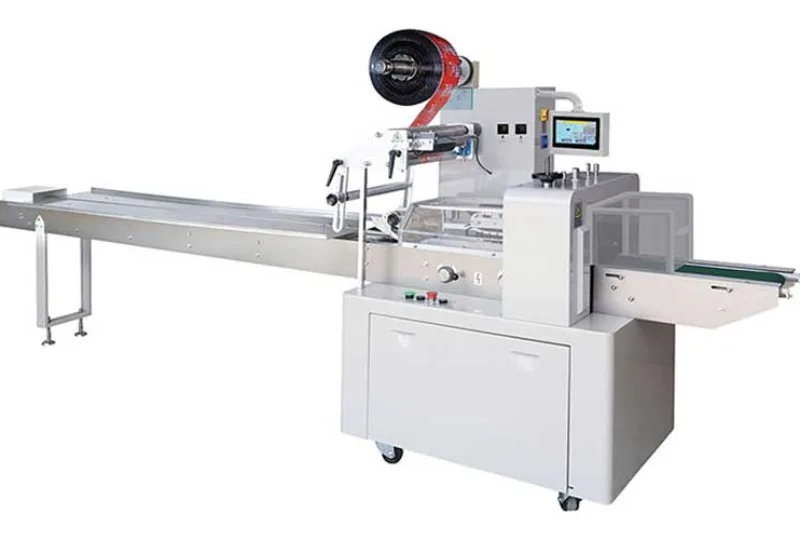
Once positioned, products move into the wrapping chamber where film feeds from large rolls. The equipment pulls film around the tray, creating a pillow-style package with three preseal edges. Heat sealing follows immediately, bonding the film layers and creating an airtight envelope that protects contents and extends shelf life.
The speed range varies by model—standard configurations achieve 100 to 160 bags per minute, while specialized versions reach up to 300 bags per minute for high-volume operations. This throughput directly impacts production schedules and labor allocation across shifts.
Optional Preservation Systems
Some hotel disposable items packaging equipment supports integrated feeders for deoxidizers or alcohol pads. These agents deploy automatically during packaging, eliminating manual insertion steps and ensuring consistent preservation across every package. For moon cakes, toast, and bakery goods prone to staleness or mold, this feature extends product shelf life.
Technical Specifications That Matter for Your Operation
Selecting the right equipment requires understanding how technical specifications translate into real-world performance. The following parameters shape whether a system matches your facility’s constraints and production goals.
| Parameter | Standard Range | Implication |
|---|---|---|
| Packing Speed | 100–160 bags/min | Determines hourly output; faster speeds require stable product supply and larger unwound film capacity |
| Packing Materials | OPP/CPP, PT/PE, KOP/CPP, ALU-FOIL | Film choice affects barrier properties, transparency, and cost; thicker films require stronger sealing pressure |
| Bag Style | Pillow type / Fat pouch (3-side presealed) | Presealing on three sides reduces handling and contamination risk during packaging |
| System Footprint | ~7 meters long × 7 meters wide | Requires careful floor layout planning; modular conveyors accommodate L-shaped or confined spaces |
| Power Supply | Single-phase 220V 50/60Hz | Matches standard industrial electrical in most facilities; no three-phase infrastructure needed |
| Air Pressure | 0.6 MPA | Pneumatic actuators drive tray suction and seal jaws; consistent pressure is critical for reliable operation |
| Machine Weight | 630–1000 kg (model dependent) | Affects installation logistics and whether reinforced flooring is necessary |
These specifications are not abstract numbers. A facility producing 150,000 units monthly needs equipment rated for at least 200 bags per minute to complete daily targets within a single shift. Undersizing leads to overtime expenses and worker fatigue.
Flexibility in Layout and Configuration
Food production facilities vary wildly in their spatial constraints. Some occupy compact urban locations with tight floor plans. Others have warehouse-scale spaces but irregular layouts requiring creative conveyor routing.
Hotel disposable items packaging equipment addresses this through optional 90-degree and 180-degree turning conveyors. These modular sections allow the packaging line to snake through available floor space rather than demanding a rigid straight line. A facility might position the infeed conveyor along one wall, turn 90 degrees into a second row, then rotate again to reach the output staging area. This flexibility often means the difference between implementing automation and accepting manual workflows as the only practical option.
Maintenance Simplicity Reduces Downtime
Unplanned equipment downtime destroys production schedules and strains team morale. The design of the PU belt system on modern hotel disposable items packaging equipment minimizes maintenance friction. The belt can be removed in under one minute without specialized tools—a crucial advantage during mid-shift cleaning or when switching between product types.
This tool-free removal matters more than it initially appears. When a facility processes both moon cakes and savory pastries across different runs, crumb buildup and oil residue accumulate quickly. Quick-access maintenance prevents product cross-contamination and eliminates the extended shutdowns that plague older designs requiring partial disassembly.
Application Scenarios Across Food Industries
Bakery and Pastry Operations
Bakeries represent a significant market for hotel disposable items packaging equipment. Moon cakes, mold cakes, and toast bread arrive from the oven or assembly line pre-positioned in clear plastic trays designed for direct retail sale. The automated packaging system wraps these trays at industrial speed, applies preservation agents if needed, and delivers market-ready packages to labeling or boxing stations downstream.
A mid-sized bakery processing 100,000 moon cakes during seasonal peaks cannot absorb this volume through manual wrapping. Automation reduces packaging labor requirements significantly. The consistency also matters—every package sealed at identical temperature and pressure reduces quality rejections at the distribution stage.
High-Volume Production Lines
Food manufacturing facilities requiring tray-based product handling benefit from integrated automatic tray loading and packaging equipment with existing conveyor systems. The smooth handoff between product preparation, positioning, wrapping, and final output creates a continuous flow that minimizes product contact with open air and human hands.
Large regional bakeries and commercial pastry manufacturers achieve substantial daily package outputs by running dual lines simultaneously. This scale demands equipment with proven reliability across extended shifts—the kind of durability that comes from thousands of installations across different climates and production environments.
Preservation-Focused Applications
Hotels and premium bakeries packaging products for extended storage or export rely on deoxidizer integration. Rather than trusting manual insertion to achieve consistent dosing, the equipment deploys agents automatically during the wrapping process. Products destined for extended shelf life or international shipment benefit from this precision, maintaining product quality and safety margins that manual methods cannot guarantee reliably.
Choosing Equipment for Your Facility: Key Decision Points
Evaluating hotel disposable items packaging equipment requires moving beyond headline specifications to understand your specific operational context. Several decisions determine whether a system delivers return on investment or becomes an expensive bottleneck.
Volume and Shift Structure
Calculate your actual packaging demand. If your facility runs a single 8-hour shift producing 50,000 units monthly, investing in equipment capable of 200 bags per minute is unnecessary—you’ll never approach that speed. Conversely, if you’re processing 300,000 units and currently employ multiple full-time packaging staff, the labor savings alone justify significant capital expense.
Factor in seasonal variation. Bakeries experience dramatic swings between peak holiday periods and slower summer months. Equipment sized for average demand will create bottlenecks during peaks, while oversized systems sit idle during valleys. Some facilities justify multiple smaller lines over a single massive one, allowing flexible staffing across production demand.
Product Characteristics and Film Requirements
Not all products wrap identically. Fragile pastries demand gentler handling through slower speeds and lower pressure settings. Dense bread products tolerate faster cycles. Some goods require moisture barriers; others prioritize oxygen exclusion or light protection.
The film material itself affects machine requirements. Metallized films and thick laminates demand higher sealing temperatures and more robust tension control than lightweight OPP films. Confirm your preferred materials are compatible with candidate equipment before committing—switching films mid-production is expensive and time-consuming.
Floor Space and Facility Constraints
A standard system footprint extends seven meters in length and width. Does your facility have a contiguous seven-by-seven-meter floor space available? If not, can the system be configured with turning conveyors to fit available geometry? Some older facilities cannot accommodate even compact systems without removing existing equipment or structural modifications that exceed the automation budget itself.
Integration with Existing Systems
Your facility likely has existing conveyors, product staging areas, and downstream equipment. The new packaging system must hand off products smoothly to whatever comes next—labeling machines, carton boxing, pallet stacking, or cold storage loading. Mismatches require custom adapter conveyors and synchronization work that adds weeks to implementation timelines and significant engineering costs.
Real-World Performance Expectations
Equipment ratings represent optimized conditions. In actual production, several factors reduce observed speed below the stated maximum.
Product variation affects pace. If incoming trays contain different product sizes or densities, the sorting sensors adjust feed rate to maintain alignment. This adaptive behavior prevents jams but means average speed often runs at levels below rated capacity during mixed-product runs.
Film roll changes interrupt continuous operation. Even with quick-change mechanisms, transitioning from one film type or width to another requires recalibration of tension and seal temperature. Facilities with diverse SKUs expect more frequent interruptions than those packaging identical products continuously.
Environmental conditions matter too. Ambient humidity affects static electricity and film tracking. Temperature swings alter sealing temperature effectiveness. Facilities with significant climate variation should expect consistency challenges compared to climate-controlled environments.
Long-Term Value Beyond First-Year Savings
The business case for hotel disposable items packaging equipment extends far beyond immediate labor cost reduction. Consider the strategic advantages across multiple dimensions.
Quality Consistency
Human operators vary in technique, attention, and fatigue level throughout shifts. Automated systems maintain identical sealing pressure, temperature, and film tension across every unit. This consistency reduces customer complaints, minimizes product returns, and protects brand reputation—benefits that don’t appear in the first-year ROI calculation but compound significantly over time.
Labor Flexibility
Instead of maintaining a dedicated packaging team, facilities redeploy staff to higher-value functions like quality inspection, maintenance, or product development. The retraining is modest, and the psychological benefit of moving workers away from repetitive manual tasks improves retention rates in competitive labor markets.
Scalability Without Proportional Labor Growth
Growth becomes feasible without hiring proportionally more packaging staff. A facility handling 200,000 units annually with manual methods needs additional dedicated staff. Scaling to 500,000 units would traditionally require additional labor. With automation, the same equipment and monitoring staff handle the larger volume. This scalability makes expansion financially viable for operations that would otherwise be constrained by labor availability or cost.
Implementation and Ongoing Support
Deploying hotel disposable items packaging equipment involves more than installation. Effective implementation requires attention to several phases.
During setup, equipment manufacturers conduct site surveys to assess floor conditions, electrical infrastructure, and existing equipment compatibility. This assessment identifies potential complications before equipment arrives, preventing costly delays. Factory training follows installation, ensuring operators understand control interface, maintenance protocols, and troubleshooting procedures.
Post-implementation support addresses the inevitable adjustment period. Initial runs reveal interface points that need tweaking—conveyor speeds that need recalibration, film tension that needs adjustment, or product positioning that needs refinement. Responsive technical support during this phase determines whether you reach full capacity within weeks or struggle for months.
Looking Forward with Confidence
Selecting hotel disposable items packaging equipment represents a significant capital commitment, but the evidence favors automation for most food operations exceeding modest volumes. The technology is mature, proven across thousands of installations globally, and continuously refined based on operator feedback from diverse applications.
The decision framework is straightforward: calculate your current and projected packaging labor costs, compare against equipment amortization, and assess your facility’s physical and operational constraints. For most mid-sized bakeries and food manufacturers, the numbers favor investment. The question is not whether to automate, but when to begin, and which system aligns best with your specific circumstances.
-
01
How do I choose the right speed for a toas bread packaging line to avoid crushing soft loaves?
22-06-2026 -
 02
02Packaging Machinery: Beyond Sealing, Driving an Efficient, Smart, and Sustainable Future
21-01-2026 -
 03
03Automatic Tray Loading and Packaging Equipment: Boost Efficiency to 160 Bags/Minute
21-11-2025 -
 04
04Automatic Soap Packaging Machine: Boost Productivity with 99% Qualification Rate
21-11-2025 -
 05
05A Deep Dive into Automatic Toast Processing and Packaging System
18-11-2025 -
06
The Future of Bakery Production: Automated Toast Processing and Packaging System
18-11-2025 -
 07
07Reliable Food Packaging Solutions with China Bread, Candy, and Biscuit Machines
11-10-2025 -
 08
08High-Performance Automated Food Packaging Equipment for Modern Production
11-10-2025 -
09
Reliable Pillow Packing Machines for Efficient Packaging Operations
11-10-2025 -
 10
10Advanced Fully Automatic Packaging Solutions for Efficient Production
11-10-2025
