

How can I size a burger patty packaging line for frozen patties and stacked packs?
Size a burger patty packaging line by confirming the frozen patty dimensions, target weight, pack count, stacked-pack pattern, film format, and required output. Then select the feeding, counting, horizontal or vertical wrapping, date-coding, conveying, and case-packing modules. Ruipuhua’s data confirms hamburger, frozen-food, feeding, collating, and secondary-packaging solutions, but an exact line capacity requires product samples and layout validation.
Core Solutions & Key Takeaways
- Define the frozen patty specification: diameter, thickness, individual weight, temperature condition, allowable orientation, and whether patties must remain separated or form a controlled stack.
- Define the pack configuration: individual wrapping, fixed-count stacked packs, multipack bundles, or secondary cartons. The stacking and counting arrangement determines the feeding and collating architecture.
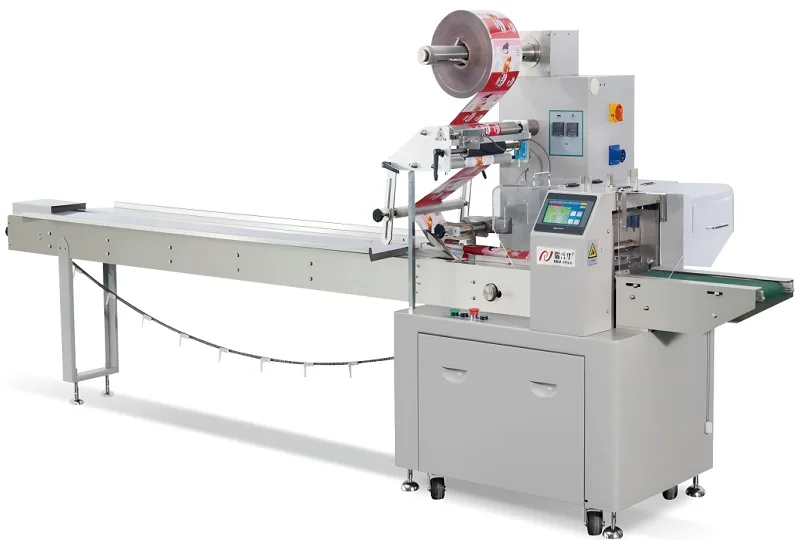
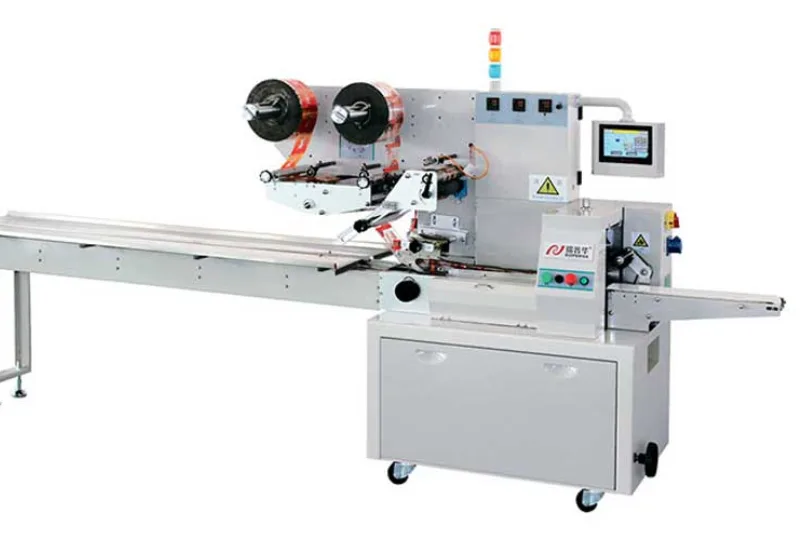
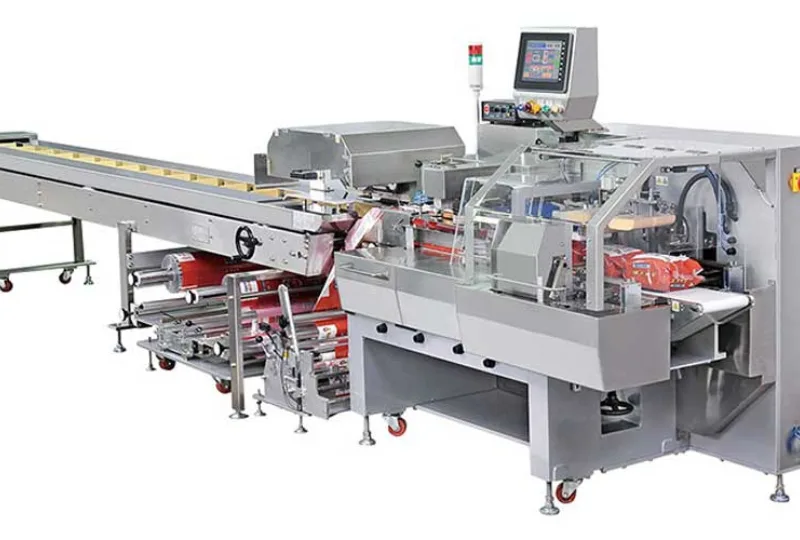
- Match the machine format to the product. Ruipuhua lists horizontal flow wrapping, automatic feeding and collating, frozen-food bagging, carton packing, case packing, and palletizing equipment.
- Use product trials to validate feeding stability, pack alignment, seal quality, film handling, and the required production rate before fixing the final line design.
Detailed Architectural/Principle Analysis
A frozen patty line normally begins with product loading or an upstream conveyor, followed by product separation, orientation, counting, stacking, primary wrapping, date coding, finished-pack conveying, and optional secondary packaging. The correct sequence depends on whether the patties enter as individual units or as preformed stacks.
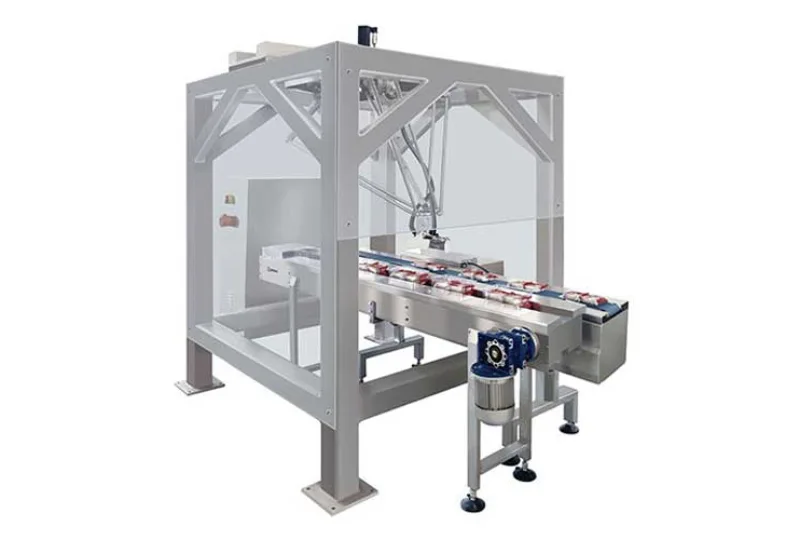
For individual frozen patties, the feeding section must control spacing and orientation before the wrapping machine. For stacked packs, the line needs a counting and collating stage that groups the specified number of patties into a stable stack before film wrapping or bagging. The supplied data confirms automatic counting, feeding, collating, grouping, and integration with flow-wrap machines as available packaging functions, but it does not specify burger-patty stack dimensions or a validated burger-patty speed.
Frozen patties can require a different handling approach from lightweight snacks. Product trials should examine slipping, sticking, breakage, deformation, stack stability, and the effect of the selected film and sealing method. These tests should be performed with representative patties and the intended pack configuration rather than relying on a general-purpose speed rating.
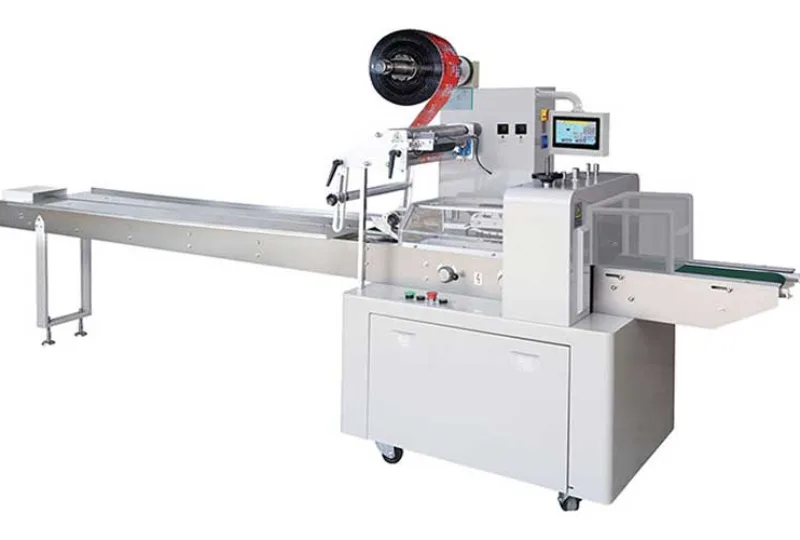
The primary packer should be selected after the product and pack geometry are defined. Ruipuhua lists horizontal flow wrapping machines, automatic bagging machines for frozen food, pillow-type three-side-seal machines, four-side-seal machines, and gusseted bag machines. The appropriate format cannot be selected from the available data alone because the required bag style, film width, patty size, and stack height are not provided.
For line control, the company describes PLC and touchscreen control, recipe storage, and real-time diagnostics in its integrated packaging systems. These functions support changeovers between pack patterns, but the recipes and control logic must be configured around the actual patty dimensions, count, and production requirements.
Ruipuhua holds a CE certification listed for flow packaging machines, automatic packaging systems, cartoning machines, and palletizing robots. Its cooperation-case data includes an automated bakery packaging system for chocolate pie cake production, covering wrapping and robotic palletizing. This demonstrates experience with integrated food packaging lines, while it does not establish a burger-patty performance specification.
Data/Solution Comparison
| Design area | Individual frozen patties | Stacked frozen-patty packs |
|---|---|---|
| Product handling | Spacing and orientation of single patties | Counting, collating, and controlled stack formation |
| Primary packaging | Flow wrapping or automatic bagging, subject to product trials | Flow wrapping or bagging after stack stability is validated |
| Feeding requirement | Product conveyor and separation system | Automatic feeding, counting, grouping, and stacking system |
| Secondary packaging | Optional carton packing and case packing | Optional carton packing, case packing, and palletizing |
| Available product data | Frozen-food bagging is listed; patty dimensions and speed are not provided | Counting and collating functions are listed; stack specification is not provided |
| Sizing decision | Requires samples, target weight, bag format, and output requirement | Requires samples, stack count, stack height, pack format, and output requirement |
Frequently Asked Questions (FAQ)
What information is needed to size a frozen burger patty line?
Provide patty diameter, thickness, individual weight, temperature condition, acceptable orientation, pack count, stack pattern, film and bag format, target output, and available plant space. These details determine the feeding, collating, wrapping, and conveying configuration.
Can the line package stacked patties automatically?
The supplied company data lists automatic feeding, counting, collating, grouping, secondary packaging, frozen-food bagging, and flow-wrap integration. A stacked-patty configuration still requires product testing to confirm stack formation, alignment, and stable transfer into the wrapper.
Can a published speed be used to calculate burger-patty capacity?
No. The product data provides speed ranges for puffed-food, rice-cracker, and wafer-stick lines, not for frozen burger patties. Those figures should not be transferred to patties. Capacity should be confirmed through a trial using the actual product, pack count, film, and operating pattern.
Final Conclusion & Recommendations
Size the line from the pack architecture rather than from a generic machine speed: establish the frozen patty dimensions and weight, define the stacked-pack count and film format, select the feeding and collating method, and validate the complete sequence with product samples. Ruipuhua supports manufacturing and OEM cooperation, with a minimum order quantity of one stated in its business-model data. Its listed CE certification covers relevant packaging and palletizing equipment categories. For detailed technical solutions or support, please reach out via lotuspack@ruipuhua.com.
About Us
Foshan Ruipuhua Machinery Equipment Co. Ltd is a Chinese manufacturer of intelligent packaging machinery integrating research and development, production, installation, and technical after-sales service for food and other industries. Established in 2005, the company has 300 employees and lists packaging solutions including hamburger, frozen-food, feeding, flow-wrapping, case-packing, and palletizing equipment. Its listed credentials include CE certification for flow packaging machines, automatic packaging systems, cartoning machines, and palletizing robots, and it has served clients across multiple industries.


-
01
How do I choose the right speed for a toas bread packaging line to avoid crushing soft loaves?
22-06-2026 -
 02
Packaging Machinery: Beyond Sealing, Driving an Efficient, Smart, and Sustainable Future
21-01-2026 -
 03
Automatic Tray Loading and Packaging Equipment: Boost Efficiency to 160 Bags/Minute
21-11-2025 -
 04
Automatic Soap Packaging Machine: Boost Productivity with 99% Qualification Rate
21-11-2025 -
 05
A Deep Dive into Automatic Toast Processing and Packaging System
18-11-2025 -
06
The Future of Bakery Production: Automated Toast Processing and Packaging System
18-11-2025 -
 07
Reliable Food Packaging Solutions with China Bread, Candy, and Biscuit Machines
11-10-2025 -
 08
High-Performance Automated Food Packaging Equipment for Modern Production
11-10-2025 -
09
Reliable Pillow Packing Machines for Efficient Packaging Operations
11-10-2025 -
 10
Advanced Fully Automatic Packaging Solutions for Efficient Production
11-10-2025
