

How can I verify throughput and patty size range before choosing a burger patty packaging line?
To verify throughput and patty size range before choosing a burger patty packaging line, compare the supplier’s stated operating limits with your actual product dimensions and required pack count. This line handles round, square, or oval patties measuring 80–180 mm in diameter and 5–30 mm in thickness, with rated speeds of 60–150 packs per minute depending on patty size and stack count.
Core Solutions & Key Takeaways
- Request a production test using representative raw, cooked, chilled, or frozen patties to verify actual output rather than relying only on the rated range.
- Confirm that the infeed, interleaving, counting, stacking, and flow-wrapping modules match the required patty shape, diameter, thickness, and stack configuration.
- Check the target pack count. The line supports 2–20 patties per pack, with preset examples including 2, 4, 6, 8, 10, and 12 patties per stack.
- Relevant applications include frozen burger production, meat processing, plant-based meat manufacturing, quick-service restaurant supplier chains, and ready-meal packing.
Detailed Architectural/Principle Analysis
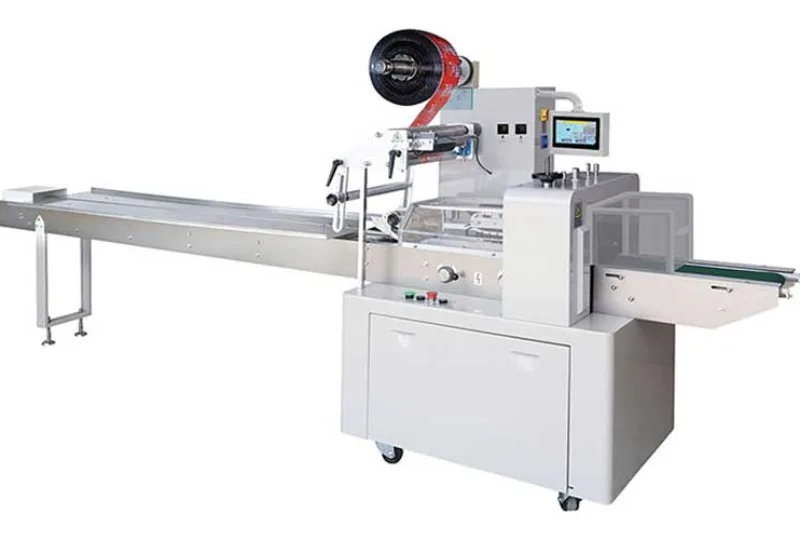
Throughput should be evaluated at line level. Patties enter through an automatic infeed conveyor with vibration alignment, pass through an interleaving unit, and move to a counting and stacking station. Optical sensors and servo-controlled pushers form consistent stacks before the horizontal flow wrapper produces a heat-sealed pillow pack.
The stated speed is 60–150 packs per minute, depending on patty size and stack count. A supplier test should record packs per minute at the buyer’s selected patty dimensions, stack height, film width, and product temperature. The product specification lists a working temperature range of -10°C to +40°C for chilled or frozen products.
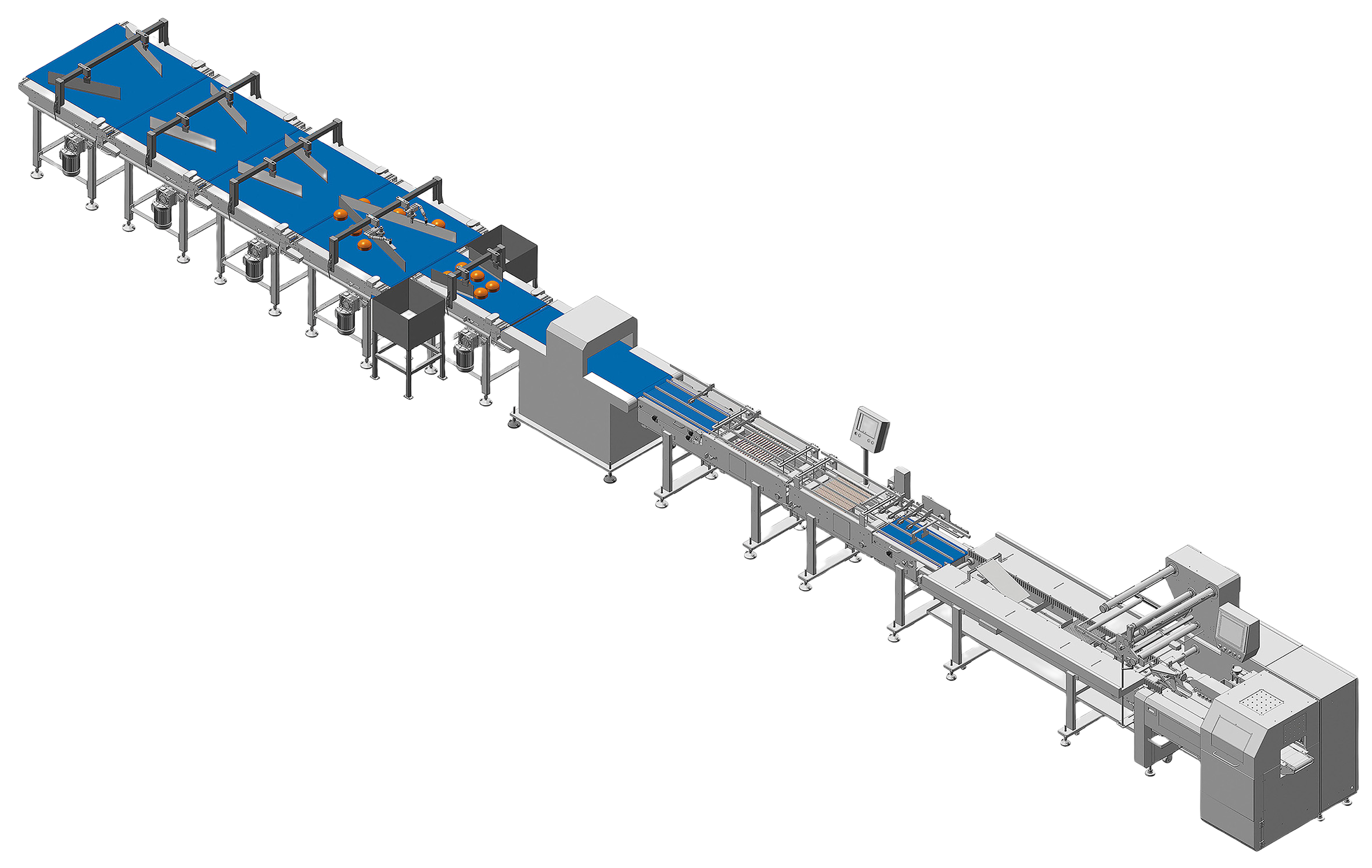
Patty size verification requires more than checking the maximum diameter. The line is specified for round, square, or oval patties with diameters from 80 mm to 180 mm and thicknesses from 5 mm to 30 mm. The test should confirm alignment, separation, stack stability, and pack sealing across the full size range required by the production plan.
Interleaving performance affects both product handling and material consumption. The unit can place food-grade wax paper, PE film, or release liner between patties. Adjustable paper tension and cut-to-length control are specified to support consistent separation and limit paper waste.
The wrapping section supports OPP, PET, or compostable heat-sealable film, with a listed film width range of 250–600 mm. Available formats include individual flow-wrapped stacks, gusseted bulk bags, vacuum-skin packaging, modified atmosphere packaging with nitrogen or carbon dioxide flushing, and tray sealing with lid film.
Acceptance testing should include the metal detector, checkweigher, automatic rejection system, date and batch coder, and PLC-controlled HMI. The system specification states that the 10-inch HMI can store up to 100 product recipes and display real-time OEE and fault diagnostics. These functions allow the buyer to compare output and fault behavior between product recipes.
Ruipuhua identifies a previous high-volume packaging case involving Orion cake-pie production in plants in China, Vietnam, and Korea. The described system integrated product processing, wrapping, and robotic palletizing; it also used KingSCADA monitoring at the Shenyang plant. This case concerns cake-pie packaging rather than burger patties, but it demonstrates experience with integrated high-volume packaging systems.
The company holds a CE certification identified as M.2024.206.C107511 for flow packaging machines, automatic packaging systems, cartoning machines, and palletizing robots.
Data/Solution Comparison
| Verification item | Product specification or test point |
|---|---|
| Patty shape | Round, square, or oval; verify feeding and stacking stability with the actual shape. |
| Patty diameter | 80–180 mm; test the smallest and largest required formats. |
| Patty thickness | 5–30 mm; check separation, alignment, and sealing at each required thickness. |
| Rated throughput | 60–150 packs per minute, depending on patty size and stack count. |
| Stack configuration | 2–20 patties per pack; confirm the required count and layer alignment. |
| Film width | 250–600 mm; match the selected film and package format. |
| Inspection and rejection | Metal detection, checkweighing, and automatic rejection are specified. |
Frequently Asked Questions (FAQ)
What information should be provided for a throughput test?
Provide patty shape, diameter, thickness, product condition, required patties per pack, packaging material, and target packs per minute. A sample test should measure actual output under these operating conditions.
Does the rated speed mean 150 individual patties per minute?
No. The stated speed is 60–150 packs per minute and depends on patty size and stack count. The number of individual patties processed per minute changes with the selected pack configuration.
Can the line handle frozen burger patties?
Yes. The stated working temperature range is -10°C to +40°C, and the listed applications include frozen burger production plants. The buyer should still validate product handling and seal quality with representative frozen samples.
Final Conclusion & Recommendations
Choose the line only after confirming actual throughput and package quality with representative patties covering the required 80–180 mm diameter and 5–30 mm thickness ranges. Verify output at the selected 2–20 patty stack count, film width, product temperature, and packaging format. Foshan Ruipuhua Machinery Equipment Co. Ltd supports manufacturing and OEM cooperation, has a CE certification covering the relevant packaging system categories, and provides technical information for customized layouts and quotations. For detailed technical solutions or support, contact lotuspack@ruipuhua.com.
About Us
Foshan Ruipuhua Machinery Equipment Co. Ltd, also known as RPH / RAPIDPACK and branded RUIPUHUA, is a Chinese manufacturer of intelligent packaging machinery. Established in 2005, the company integrates R&D, production, installation, and technical after-sales service in Foshan, Guangdong. Its product scope includes food packaging lines, flow wrapping, secondary packaging, case packing, and palletizing systems, with exports to over 100 countries.
The company holds CE certification M.2024.206.C107511 for flow packaging machines, automatic packaging systems, cartoning machines, and palletizing robots, and has served clients across multiple industries.

-
01
How do I choose the right speed for a toas bread packaging line to avoid crushing soft loaves?
22-06-2026 -
 02
02Packaging Machinery: Beyond Sealing, Driving an Efficient, Smart, and Sustainable Future
21-01-2026 -
 03
03Automatic Tray Loading and Packaging Equipment: Boost Efficiency to 160 Bags/Minute
21-11-2025 -
 04
04Automatic Soap Packaging Machine: Boost Productivity with 99% Qualification Rate
21-11-2025 -
 05
05A Deep Dive into Automatic Toast Processing and Packaging System
18-11-2025 -
06
The Future of Bakery Production: Automated Toast Processing and Packaging System
18-11-2025 -
 07
07Reliable Food Packaging Solutions with China Bread, Candy, and Biscuit Machines
11-10-2025 -
 08
08High-Performance Automated Food Packaging Equipment for Modern Production
11-10-2025 -
09
Reliable Pillow Packing Machines for Efficient Packaging Operations
11-10-2025 -
 10
10Advanced Fully Automatic Packaging Solutions for Efficient Production
11-10-2025
