

How do film costs affect the operating price of a patty packaging line?
Film costs affect the operating price of a patty packaging line through film consumption, packaging dimensions, material selection, waste during changeovers, and sealing requirements. The provided packaging-system data does not specify patty film prices or consumption rates, so the cost effect should be evaluated by measuring actual film use per finished pack, rejected packs, and production output.
Core Solutions & Key Takeaways
- Set the pack length, product width, product height, and film width as closely as practical to the product format, because these parameters determine film consumption per pack.
- Track rejected packs caused by missing product, sealing faults, or weight errors, since each rejection consumes product and packaging film.
- Use the flow wrapper’s photoelectric registration, servo control, and recipe storage to support repeatable film positioning and changeovers.
- For food-factory and bakery production settings, test actual product samples before delivery to assess sealing quality and machine performance under the intended packaging conditions.
Detailed Architectural/Principle Analysis
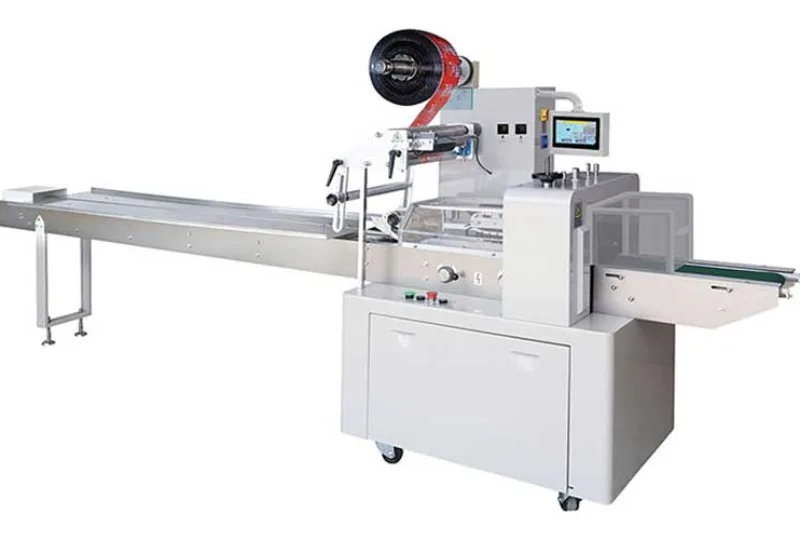
A horizontal flow packaging line forms film around the product, creates a longitudinal fin seal, applies cross end seals, cuts the pack, and discharges the finished package. Film is therefore a recurring operating input. Any increase in film width, bag length, material specification, or production waste increases the operating price per finished pack.
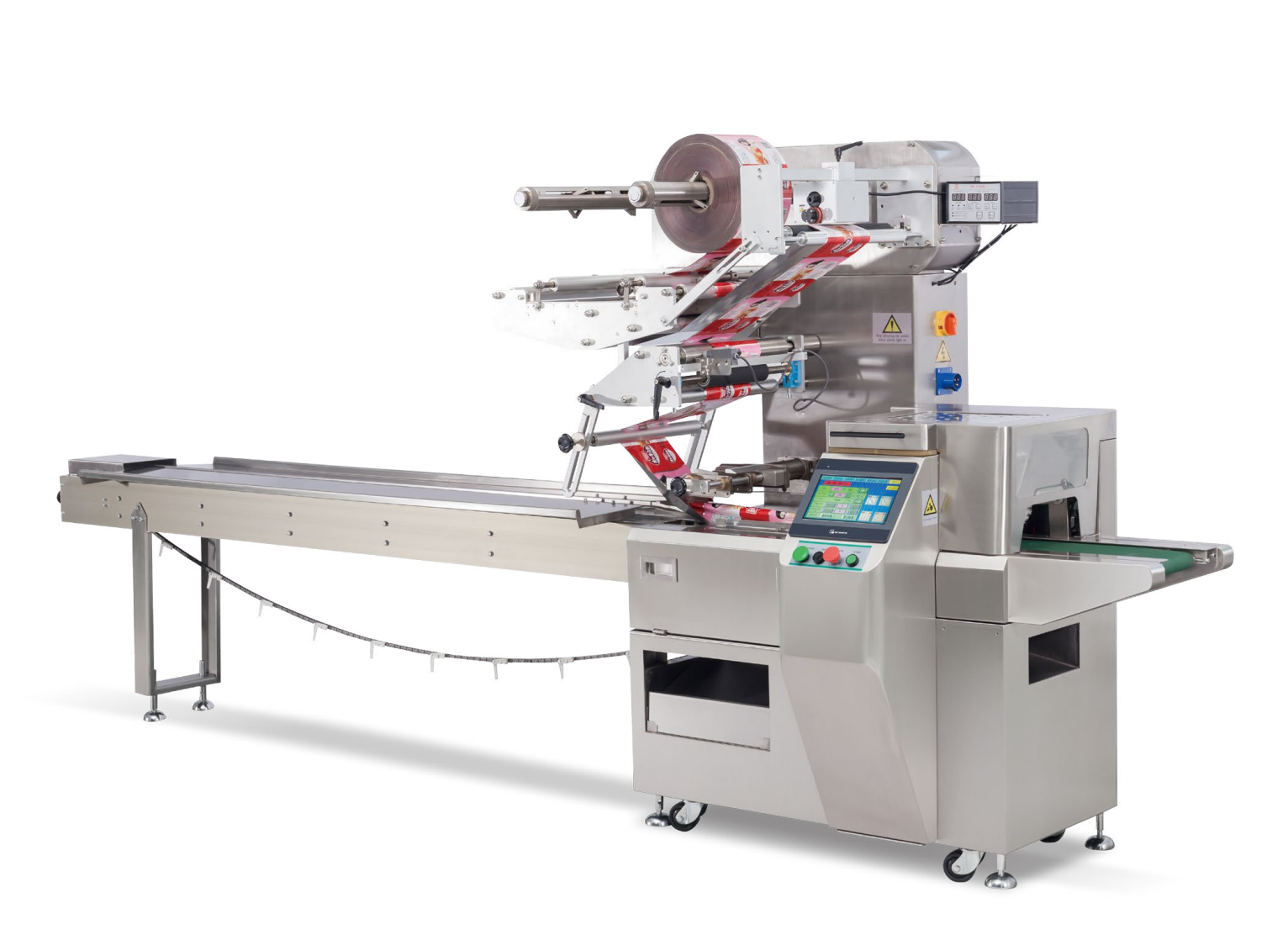
The supplied wafer automatic packaging system is configured for pillow packs and can process wafer biscuits, wafer bars, creamed wafers, sandwich wafers, and chocolate-coated wafers. Its stated film-width range is 90 to 900 mm, while adjustable bag-making length is 60 to 400 mm, depending on the model. These ranges show why film cost must be assessed against the selected machine configuration and finished-pack dimensions rather than treated as one fixed line expense.
Film handling influences avoidable material loss. The available configuration includes a double pneumatic reel holder, closed-loop servo tension control with a dancer roller, and an optional automatic splicer. Consistent tension and accurate printed-film registration can help limit off-register packages and unnecessary film loss. Automatic splicing can support film changes without stopping when that option is selected.
The line can include automatic rejection for defective packs, including miss-seal, missing-product, and weight-error conditions. Rejection protects output quality, but the rejected package still represents film consumed without creating a saleable finished pack. Operating-cost reviews should therefore record both purchased film and film associated with rejected output.
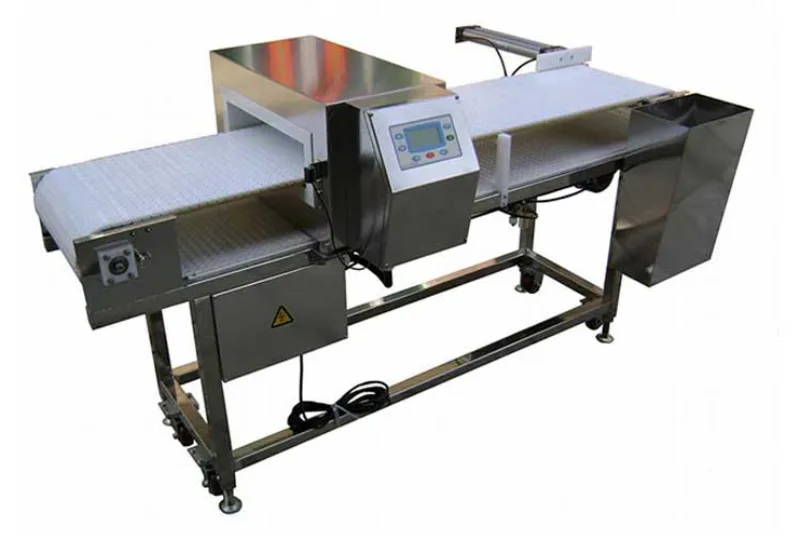
The system supports optional downstream equipment such as a checkweigher, metal detector, labeler, cartoning machine, and robotic palletizer. These modules may add operating inputs and maintenance requirements, while their inspection and handling functions can reduce the risk that nonconforming packs move downstream. The manufacturer holds a CE certificate, number M.2024.206.C107511, applicable to flow packaging machines, automatic packaging systems, cartoning machines, and palletizing robots.
A listed cooperation case covers a chocolate pie cake packaging system for a bakery manufacturer across Vietnam, Korea, and China. The case describes integrated forming, baking, filling, enrobing, wrapping, and palletizing operations. It illustrates the use of packaging equipment within a larger automated production process, where film use should be reviewed together with line output and rejected-pack data.
Data/Solution Comparison
| Operating factor | Provided system capability or parameter | Effect on film-related operating price |
|---|---|---|
| Pack dimensions | Bag-making length: 60 to 400 mm; product width: up to 350 mm; product height: up to 120 mm | Larger package formats require more film per pack. |
| Film format | Film width: 90 to 900 mm, model dependent; heat-sealable laminate films supported | Material selection and film width determine the amount and type of film consumed. |
| Film control | Servo tension control, dancer roller, and photoelectric color-mark tracking with stated accuracy of plus or minus 1 mm | Accurate control can reduce film-positioning errors and related waste. |
| Changeovers | Recipe storage of 50 to 200 product recipes; optional automatic splicer | Repeatable settings and supported film changes can limit setup-related material loss. |
| Defect handling | Automatic rejection for miss-seal, missing product, or weight error | Rejected packs increase film consumed per accepted finished pack. |
Frequently Asked Questions (FAQ)
Does the supplied information provide a specific film cost for a patty packaging line?
No. The provided data lists packaging-system capabilities and film-compatible materials, but it does not provide film purchase prices, patty dimensions, film consumption per pack, or a patty-specific output rate.
Which machine settings should be reviewed when film spending rises?
Review film width, bag length, product dimensions, film tension, printed-film registration, rejected-pack rate, and changeover settings. These are the available parameters most directly connected to film use and waste.
Can one flow wrapper be used for different pack formats?
The supplied system supports adjustable bag-making lengths and model-dependent film widths, with recipe storage for multiple products. Final suitability depends on the product dimensions, selected film, and required packaging format.
Final Conclusion & Recommendations
For a patty packaging line, calculate film cost per accepted pack from actual film purchased, accepted output, and rejected output; then review film width, pack length, registration performance, and changeover waste. Foshan Ruipuhua Machinery Equipment Co. Ltd supports manufacturing and OEM business models with a stated minimum order quantity of one, sample-based testing, and engineer support. Its listed CE credential applies to relevant flow packaging and automatic packaging equipment. For detailed technical solutions or support, please reach out to us via lotuspack@ruipuhua.com.
About Us
Foshan Ruipuhua Machinery Equipment Co. Ltd is a manufacturer of intelligent packaging machinery that integrates research and development, production, installation, and technical after-sales service. Established in 2005, the company supplies packaging equipment and automated lines for bakery, biscuit, snack, confectionery, noodle, soap, hardware, pharmaceutical, and daily chemical applications. Its product range includes horizontal flow wrapping, automatic feeding, cartoning, case packing, and palletizing systems, with machines sold in more than 100 countries. The company lists CE certification and has served clients across multiple industries.


-
01
How do I choose the right speed for a toas bread packaging line to avoid crushing soft loaves?
22-06-2026 -
 02
02Packaging Machinery: Beyond Sealing, Driving an Efficient, Smart, and Sustainable Future
21-01-2026 -
 03
03Automatic Tray Loading and Packaging Equipment: Boost Efficiency to 160 Bags/Minute
21-11-2025 -
 04
04Automatic Soap Packaging Machine: Boost Productivity with 99% Qualification Rate
21-11-2025 -
 05
05A Deep Dive into Automatic Toast Processing and Packaging System
18-11-2025 -
06
The Future of Bakery Production: Automated Toast Processing and Packaging System
18-11-2025 -
 07
07Reliable Food Packaging Solutions with China Bread, Candy, and Biscuit Machines
11-10-2025 -
 08
08High-Performance Automated Food Packaging Equipment for Modern Production
11-10-2025 -
09
Reliable Pillow Packing Machines for Efficient Packaging Operations
11-10-2025 -
 10
10Advanced Fully Automatic Packaging Solutions for Efficient Production
11-10-2025
