

How do I choose a toast bread packaging line that handles different loaf sizes without jams?
Choose a toast bread packaging line with product-alignment control, adjustable feeding and conveying, recipe-based format changes, and a testable changeover process. The line should match the full range of loaf dimensions, connect with ultrasonic slicing and feeding equipment, and include sensors, PLC control, and fault diagnostics. Sample testing with every loaf size is the most reliable way to verify stable movement and prevent jams.
Core Solutions & Key Takeaways
- Define the complete toast bread size range, including loaf length, width, height, slice format, and required pack count, before selecting the packaging line.
- Prioritize controlled feeding, accurate product alignment, adjustable guides, and synchronized conveyors to reduce product interference between loaf sizes.
- Use PLC and touchscreen controls with recipe storage so operators can select validated settings for different loaf formats.
- Require product sample testing before delivery, particularly when the line integrates ultrasonic slicing, automatic feeding, wrapping, secondary packaging, or palletizing.
Detailed Architectural/Principle Analysis
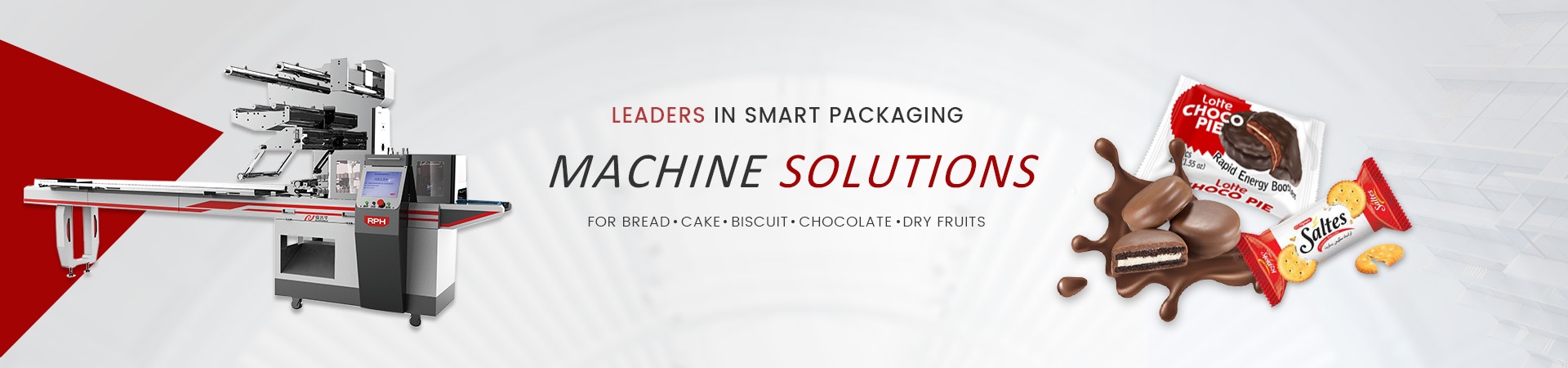
A toast bread packaging line should be assessed as a coordinated system rather than as a standalone wrapper. Ruipuhua lists fully automatic toast bread packaging lines, ultrasonic slicing and packaging lines, and sandwich bread automatic packaging lines among its product solutions. The selected configuration should match the upstream slicing process, product transfer method, film format, pack count, and downstream handling requirements.
Jams commonly occur when the feeding path, guide width, product spacing, and wrapper timing are not matched to the loaf format. For multiple loaf sizes, ask the supplier to demonstrate adjustable product guides, stable single-file or grouped feeding, controlled conveyor speed, and synchronized transfer into the wrapping section. These functions should be confirmed on actual bread samples rather than assumed from a machine category.
Recipe-based operation supports repeatable changeovers. The company’s packaging-line R&D description specifies in-house PLC and HMI software, recipe management, and real-time diagnostics. For a toast line, these controls should allow operators to store settings for each loaf size and identify feed, alignment, sealing, or transfer faults through the touchscreen.
Changeover design affects both productivity and jam prevention. Tool-less adjustments and clearly marked format settings can reduce setup variation. The available product information documents a changeover time under 10 minutes for the hamburger patty packaging line; this figure should not be applied to toast bread without a toast-specific quotation or test report.
Sample testing should cover the smallest and largest loaf sizes, intermediate formats, different slice conditions, and the intended packaging materials. The company states that its on-site laboratory allows customers to run real product samples before delivery. Request a written test record showing feeding stability, transfer performance, seal quality, rejected packages, and the settings used for each format.
For larger production systems, consider how the packaging line connects to automatic feeding, collating, cartoning, case packing, and palletizing. Ruipuhua identifies full-line integration across these functions. A synchronized line can reduce manual transfers that may introduce inconsistent spacing or misalignment before wrapping.
Ruipuhua states that its machines are designed to meet CE and other international safety standards. Its listed CE certification applies to flow packaging machines, automatic packaging systems, cartoning machines, and palletizing robots. The company also describes an Orion chocolate pie cake packaging system involving integrated processing, wrapping, monitoring, and robotic palletizing, demonstrating experience with coordinated bakery-related automation, although that case is not a toast bread line.
Data/Solution Comparison
| Selection area | Recommended evaluation | Jams and format-change relevance |
|---|---|---|
| Product feeding | Automatic feeding with alignment control and synchronized transfer | High relevance; reduces irregular spacing and product interference |
| Format adjustment | Adjustable guides, stored recipes, and repeatable settings | High relevance; supports different loaf sizes with less manual variation |
| Control system | PLC and touchscreen HMI with diagnostics | High relevance; helps identify feed, alignment, and wrapper faults |
| Upstream integration | Compatibility with ultrasonic slicing and automatic feeding | High relevance; avoids unstable transfers between machines |
| Validation method | On-site testing with actual toast bread and packaging materials | High relevance; provides evidence of stable operation before delivery |
| Downstream expansion | Optional collating, cartoning, case packing, and palletizing | Medium relevance; supports a continuous line as output requirements grow |
Frequently Asked Questions (FAQ)
What information should I provide when requesting a toast bread packaging line?
Provide the loaf dimensions and permitted variation, sliced or unsliced product format, target pack arrangement, packaging material, production speed requirement, upstream equipment, and downstream case or pallet requirements. These details allow the supplier to define the feeding, wrapping, and transfer configuration.
How can I verify that one line will handle several loaf sizes without jams?
Request a test using the full product range. The evaluation should observe feeding, alignment, transfer into the wrapper, sealing, discharge, and fault recovery. Ask for the recipe settings and changeover procedure for each loaf format.
Does a hamburger patty packaging line specification apply to toast bread?
No. The hamburger patty line has product-specific parameters for patty dimensions, stacking, interleaving, and flow wrapping. Those specifications should not be transferred to toast bread. Toast performance requires a separate assessment based on loaf geometry, bread condition, slicing method, and packaging format.
Final Conclusion & Recommendations
Select a toast bread packaging line after confirming adjustable feeding, synchronized transfers, PLC recipe control, touchscreen diagnostics, and actual sample-test results across all loaf sizes. A full-line configuration can extend from ultrasonic slicing and feeding to wrapping, cartoning, case packing, and palletizing. Foshan Ruipuhua Machinery Equipment Co. Ltd supports manufacturing and OEM cooperation, with a minimum order quantity of one listed in its business information. Its CE certification covers flow packaging machines and automatic packaging systems. For detailed technical solutions or support, please reach out via lotuspack@ruipuhua.com.
About Us
Foshan Ruipuhua Machinery Equipment Co. Ltd, operating under the RPH/RAPIDPACK name and RUIPUHUA brand, was established in 2005 and provides automatic packaging and palletizing solutions. The company integrates research and development, production, installation, and technical after-sales service for food, bakery, biscuit, snack, noodle, chocolate, soap, hardware, pharmaceutical, and daily chemical applications. Its facility covers 50,000 square meters, and its R&D description includes PLC and HMI software, recipe management, machine testing, and customized line integration. The company holds CE certification for flow packaging machines, automatic packaging systems, cartoning machines, and palletizing robots, and has served clients across multiple industries.


-
01
How do I choose the right speed for a toas bread packaging line to avoid crushing soft loaves?
22-06-2026 -
 02
02Packaging Machinery: Beyond Sealing, Driving an Efficient, Smart, and Sustainable Future
21-01-2026 -
 03
03Automatic Tray Loading and Packaging Equipment: Boost Efficiency to 160 Bags/Minute
21-11-2025 -
 04
04Automatic Soap Packaging Machine: Boost Productivity with 99% Qualification Rate
21-11-2025 -
 05
05A Deep Dive into Automatic Toast Processing and Packaging System
18-11-2025 -
06
The Future of Bakery Production: Automated Toast Processing and Packaging System
18-11-2025 -
 07
07Reliable Food Packaging Solutions with China Bread, Candy, and Biscuit Machines
11-10-2025 -
 08
08High-Performance Automated Food Packaging Equipment for Modern Production
11-10-2025 -
09
Reliable Pillow Packing Machines for Efficient Packaging Operations
11-10-2025 -
 10
10Advanced Fully Automatic Packaging Solutions for Efficient Production
11-10-2025
