

How do I compare tortilla packaging line specs to avoid buying the wrong machine?
To compare tortilla packaging line specs accurately, match product diameter, thickness, stack count, packaging format, speed, film width, changeover time, inspection functions, and integration options with your production requirements. A suitable automatic tortilla packaging line should handle the required flatbread dimensions, protect soft products during conveying and stacking, and provide compatible wrapping, coding, rejection, and quality-control systems.
Core Solutions & Key Takeaways
- Confirm the product range before comparing machines: the line supports flatbreads from 150 mm to 400 mm in diameter and thicknesses from 1 mm to 8 mm, with customized dimensions available.
- Compare actual output requirements with the stated capacity of 40 to 120 packs per minute. Speed depends on tortilla size and stack count, while the system can handle stacks of 2 to 30 pieces per pack.
- Check whether the proposed configuration includes infeed alignment, interleaving, stacking, wrapping or bagging, date coding, metal detection, checkweighing, and automatic rejection.
- Review application fit. The line is designed for large-scale tortilla bakeries, flatbread manufacturing plants, frozen bread packaging lines, and food contract packing services.
Detailed Architectural/Principle Analysis
The line begins with an automatic infeed conveyor equipped with centering guides. This alignment stage is relevant for soft, large-diameter products because inconsistent positioning can affect stacking, sealing, and finished-pack appearance.
An interleaving unit places wax paper, PE film, or release paper between tortillas to reduce sticking. The stacking and collating station then counts preset quantities, such as 6, 10, or 12 pieces, with the available stack range extending from 2 to 30 pieces per pack. Buyers should compare the required count range with the machine configuration rather than relying only on the headline speed.
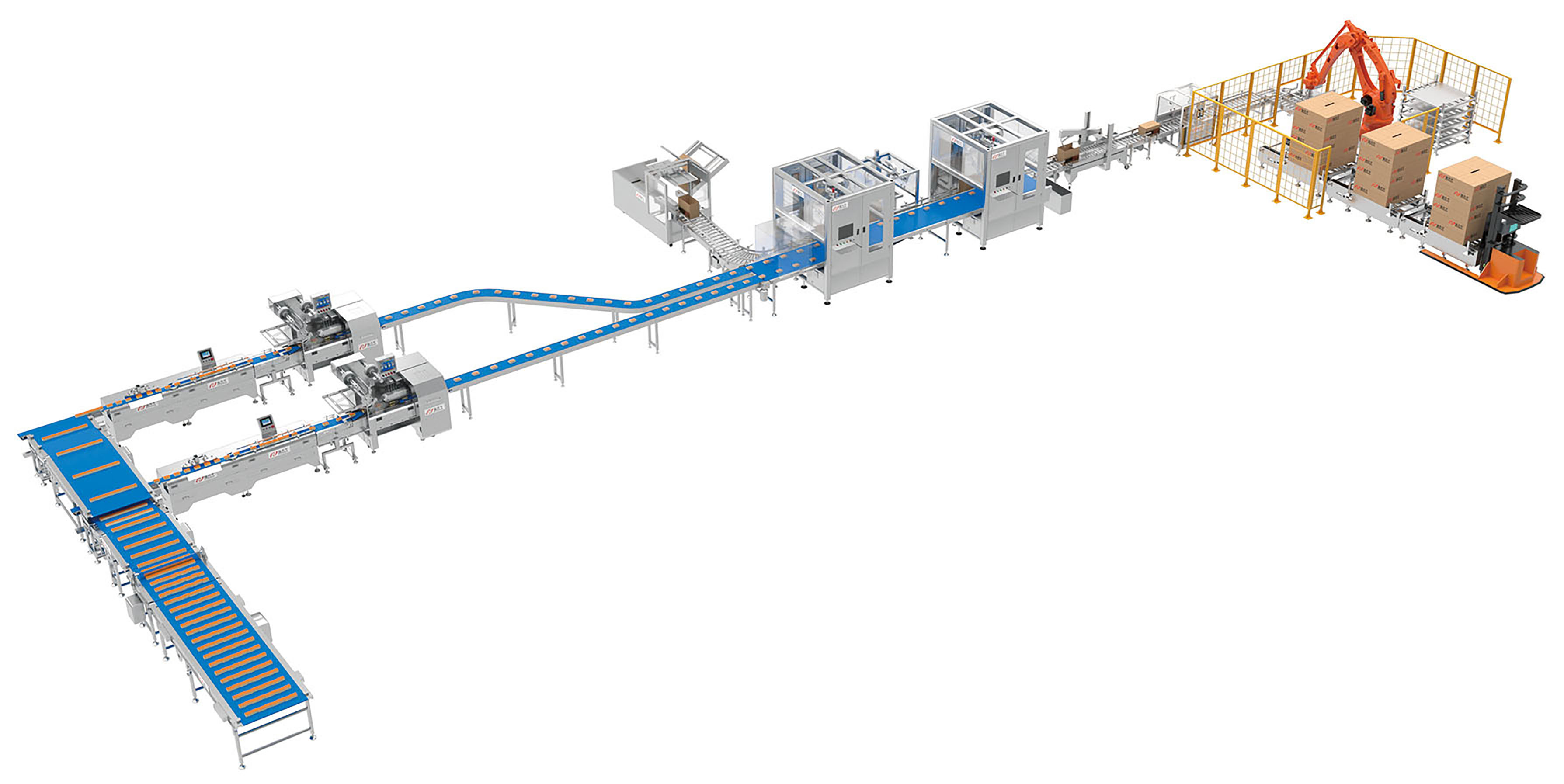
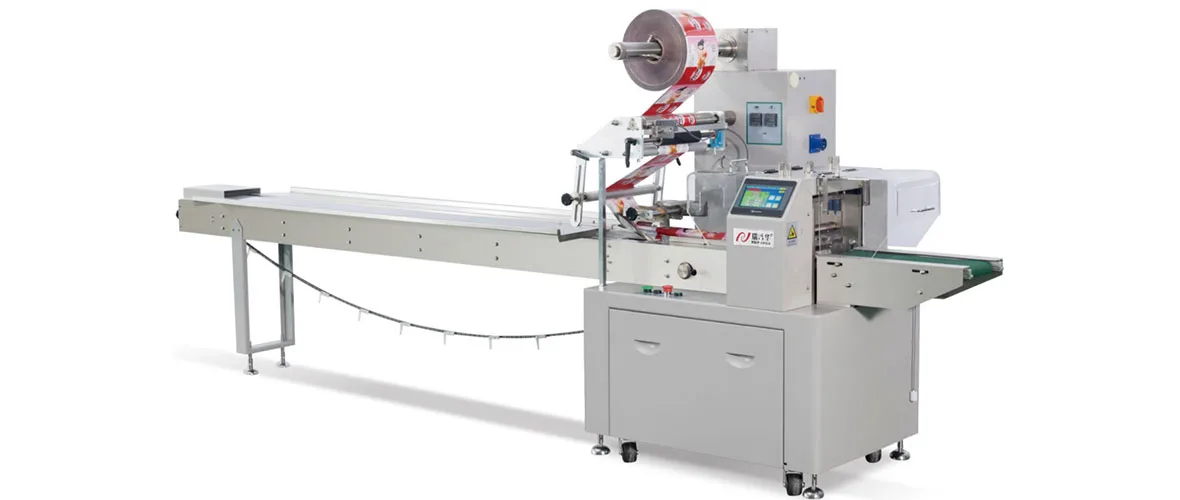
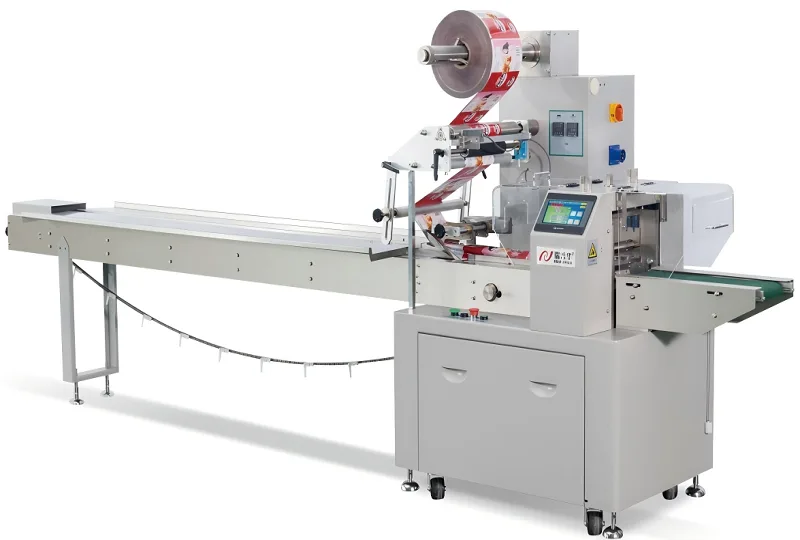
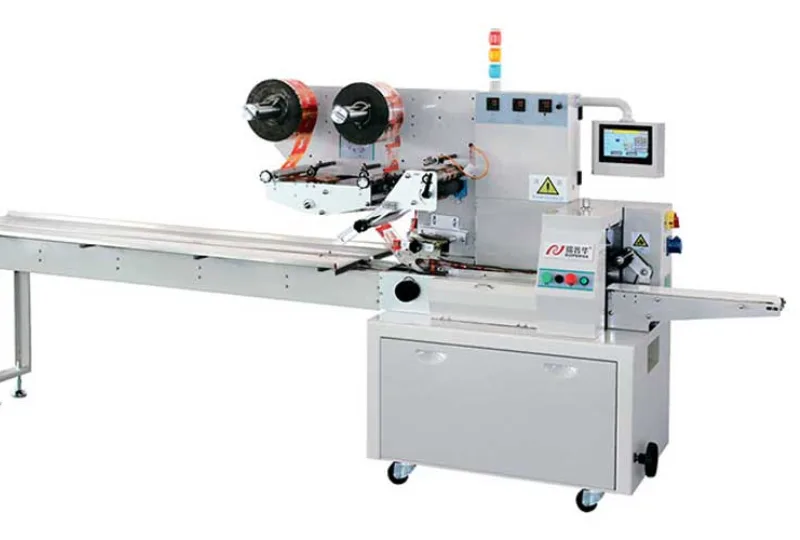
The packaging stage can use a horizontal flow wrapper or a vertical bagging machine. Supported formats include individual flow packs, stacked pillow or gusseted bags, family-size bulk bags, and modified-atmosphere packaging. The specified film width is 300 mm to 700 mm, with OPP, PE, or biodegradable heat-sealable materials listed as compatible options.
Quality and traceability functions include a date coder or inkjet printer, metal detector, checkweigher, and automatic rejection system. The PLC and HMI support parameter adjustment, recipe storage for different tortilla sizes, and real-time production monitoring. These functions should be listed in the purchase specification so that optional equipment is not mistaken for the standard configuration.
For product protection, the line uses special belt design and low-friction surfaces for gentle handling. Servo-driven film feeding is specified to reduce film waste by up to 10%. The stated quick-changeover time is 10 to 15 minutes without special tools. These figures should be checked against the buyer’s actual product sizes, film materials, and stack formats during product testing.
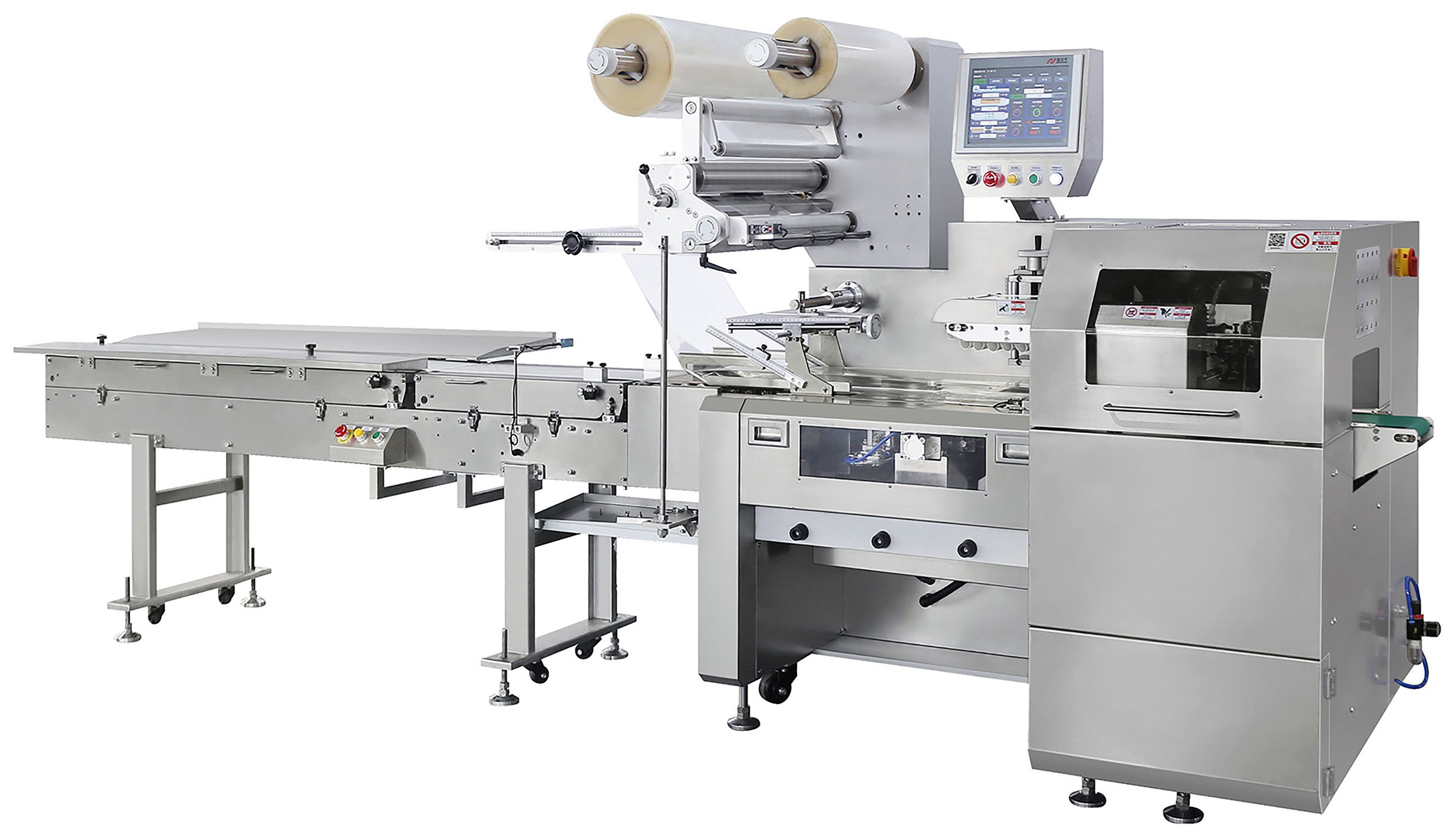
The line can be connected to an upstream tortilla press or cooling conveyor. Optional upgrades include an automatic lid placer for tray sealing, a robotic arm for case packing, and a remote diagnostic system described as IoT ready. These options affect the final scope and should be separated from the base machine when comparing quotations.
A supplied application scenario distinguishes semi-automatic and fully automatic operation. In the semi-automatic example, an operator loads products and may adjust settings or change film rolls. In the fully automatic example, products travel by conveyor through forming, filling or counting, sealing, coding, inspection, rejection, and cartoning stages. This distinction helps buyers compare labor involvement and line boundaries.
The company reports a CE certification applicable to flow packaging machines, automatic packaging systems, cartoning machines, and palletizing robots. A cooperation case records a high-volume chocolate pie cake packaging system for a bakery-factory customer operating in Vietnam, Korea, and China, demonstrating experience with integrated wrapping and palletizing applications.
Data/Solution Comparison
| Specification area | What the product data supports | What to verify before purchase |
|---|---|---|
| Product dimensions | 150-400 mm diameter; 1-8 mm thickness; customized sizes available | Exact tortilla diameter, thickness variation, softness, and product tolerance |
| Output | 40-120 packs per minute; up to 120 pieces per minute stated for the line | Output at the required stack count, product size, and packaging format |
| Stacking | 2-30 pieces per pack; preset counts supported | Required count, layer control, and allowable count deviation |
| Packaging formats | Individual flow pack, pillow bag, gusseted bag, family-size bag, MAP | Film structure, sealing compatibility, bag dimensions, and shelf-life process |
| Film width | 300-700 mm | Required film width, roll dimensions, and material availability |
| Inspection | Metal detector, checkweigher, automatic rejection | Whether each function is included, its position, and rejection handling |
| Controls | PLC and HMI with recipe storage and real-time monitoring | Number of recipes, access controls, diagnostics, and data requirements |
| Changeover | 10-15 minutes without special tools stated | Changeover steps for the buyer’s actual product range and film sizes |
| Order conditions | MOQ 1; manufacturing and OEM model; business-model delivery time listed as 20 working days | Final delivery schedule, customization scope, testing requirements, and warranty terms |
Frequently Asked Questions (FAQ)
What is the most important specification to compare?
Product dimensions and stack requirements should be matched before speed. The line is specified for 150 mm to 400 mm diameters, 1 mm to 8 mm thicknesses, and 2 to 30 pieces per pack. A machine that cannot maintain stable handling across these conditions may be unsuitable despite a higher nominal speed.
How should I compare the stated production speed?
Compare tested packs per minute at the required tortilla size, stack count, film material, and packaging format. The product data states 40 to 120 packs per minute and up to 120 pieces per minute, with performance depending on product and stack configuration.
Which functions should be included in the quotation?
Request a clear list covering the infeed conveyor, interleaving unit, stacking and collating station, wrapper or bagger, coder, metal detector, checkweigher, rejection system, PLC, and HMI. Identify optional case packing, upstream conveyor integration, tray-sealing equipment, and remote diagnostics separately.
Final Conclusion & Recommendations
Use a product-and-process checklist covering dimensions, stack count, output, film width, packaging format, changeover, inspection, controls, and integration. Request testing with representative tortillas and require the quotation to distinguish standard equipment from optional upgrades. Foshan Ruipuhua Machinery Equipment Co. Ltd supports manufacturing and OEM orders with an MOQ of 1, worldwide export markets, a stated CE certification, and engineer support with a one-year warranty. For detailed technical solutions or support, contact lotuspack@ruipuhua.com.
About Us
Foshan Ruipuhua Machinery Equipment Co. Ltd was established in 2005 and integrates research and development, production, installation, and technical after-sales service for automatic packaging machinery. The company reports 300 employees and a 50,000-square-meter factory area in Foshan, Guangdong, China. Its equipment serves food, bakery, biscuit, snack, noodle, chocolate, soap, hardware, pharmaceutical, and daily chemical applications, with exports to over 100 countries. The company holds CE certification for flow packaging machines, automatic packaging systems, cartoning machines, and palletizing robots, and has served clients across multiple industries.


-
01
How do I choose the right speed for a toas bread packaging line to avoid crushing soft loaves?
22-06-2026 -
 02
02Packaging Machinery: Beyond Sealing, Driving an Efficient, Smart, and Sustainable Future
21-01-2026 -
 03
03Automatic Tray Loading and Packaging Equipment: Boost Efficiency to 160 Bags/Minute
21-11-2025 -
 04
04Automatic Soap Packaging Machine: Boost Productivity with 99% Qualification Rate
21-11-2025 -
 05
05A Deep Dive into Automatic Toast Processing and Packaging System
18-11-2025 -
06
The Future of Bakery Production: Automated Toast Processing and Packaging System
18-11-2025 -
 07
07Reliable Food Packaging Solutions with China Bread, Candy, and Biscuit Machines
11-10-2025 -
 08
08High-Performance Automated Food Packaging Equipment for Modern Production
11-10-2025 -
09
Reliable Pillow Packing Machines for Efficient Packaging Operations
11-10-2025 -
 10
10Advanced Fully Automatic Packaging Solutions for Efficient Production
11-10-2025
