

Integrating Horizontal Flow Wrap Machines into High-Speed Production Lines
In modern manufacturing, packaging is no longer simply the final step before products leave the factory. For high-volume manufacturers, the packaging process can directly influence production efficiency, labor requirements, product consistency, and overall operating costs. As production speeds increase, companies need packaging equipment that can communicate with upstream and downstream machinery while maintaining accurate product positioning and reliable sealing.
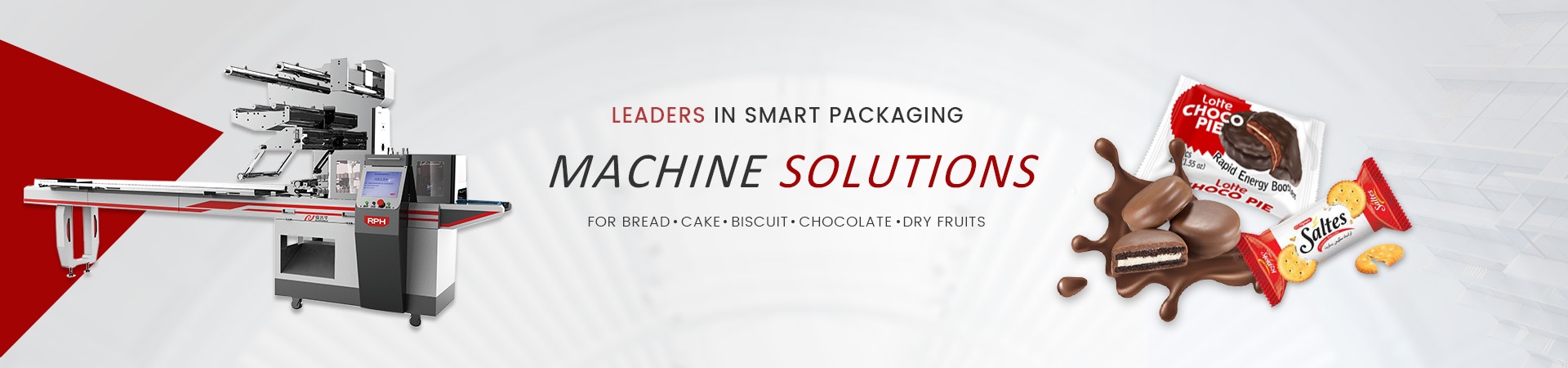
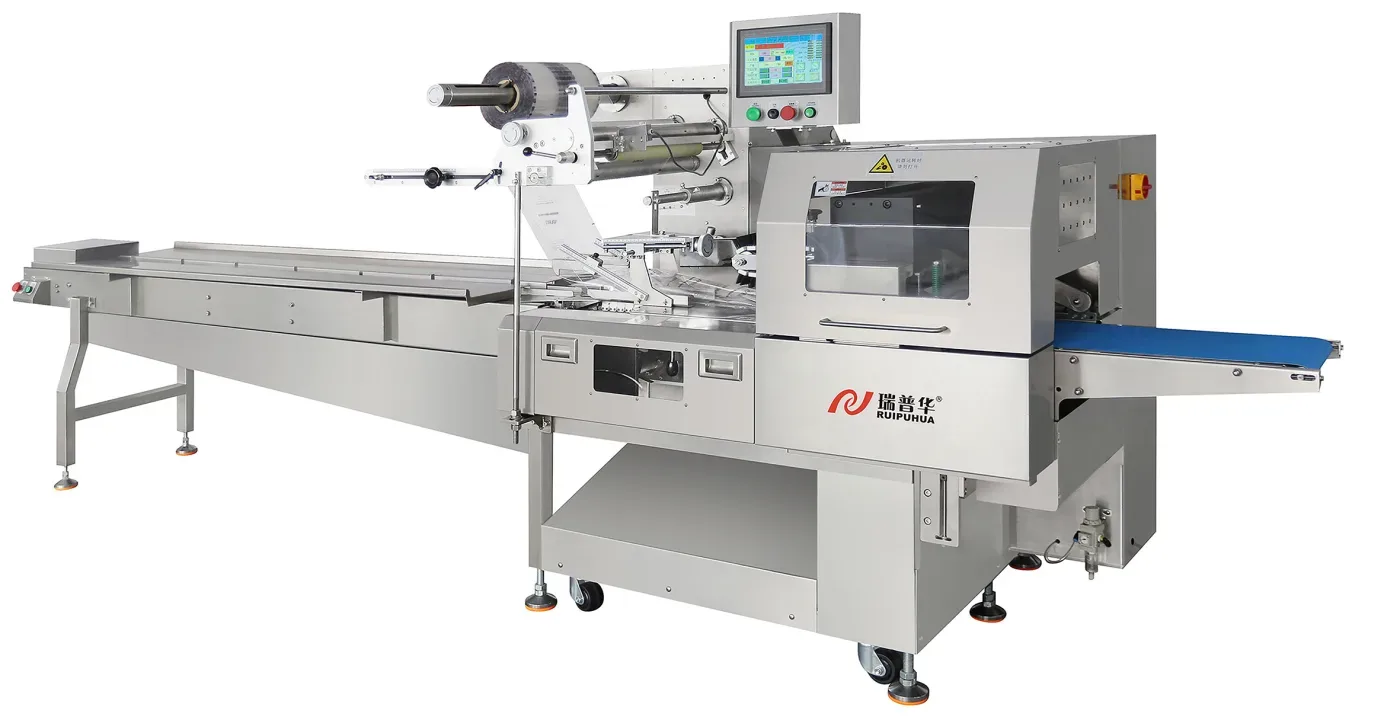
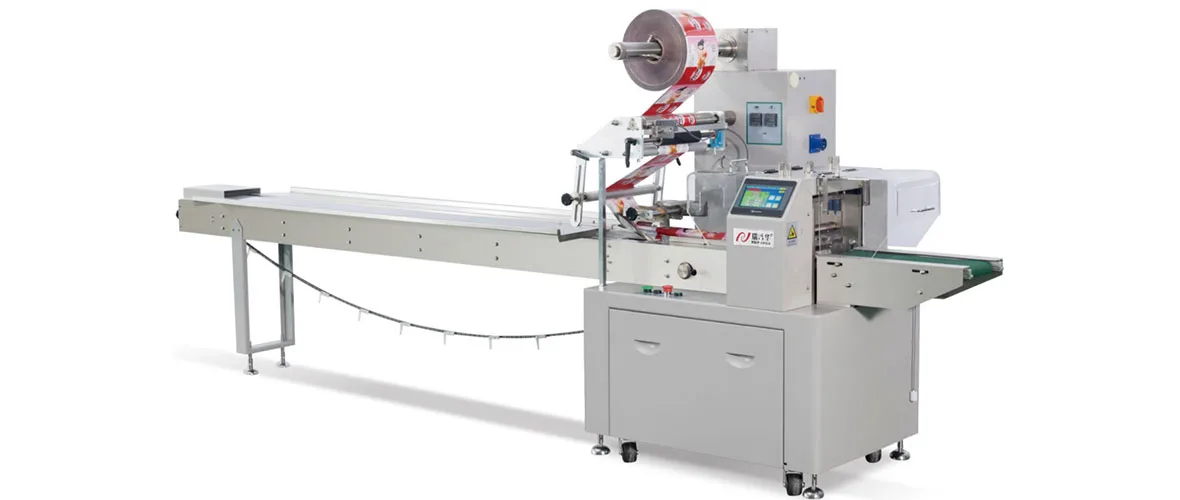
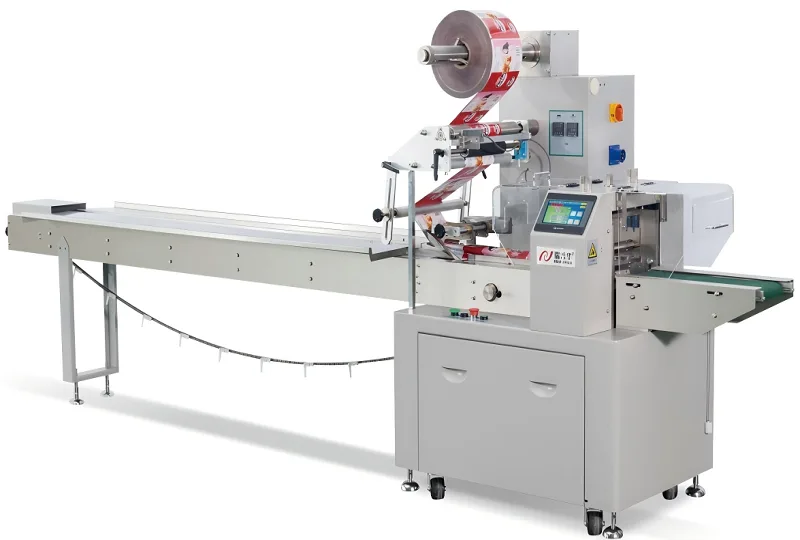
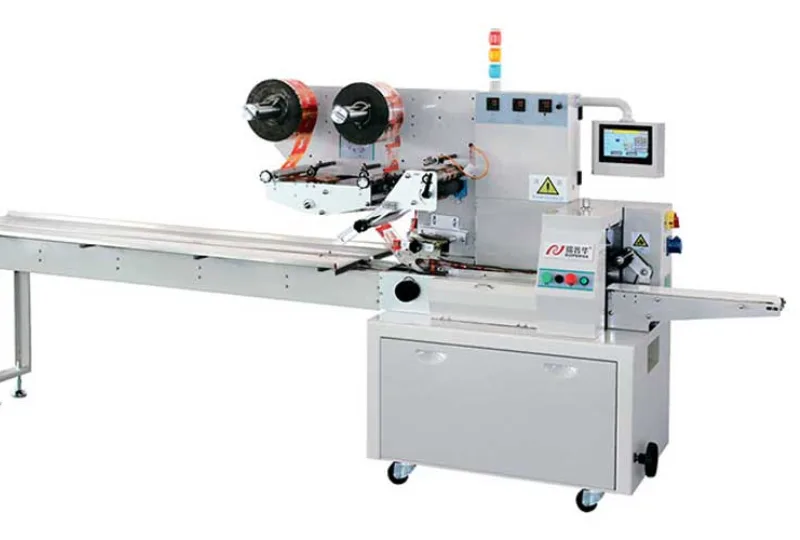
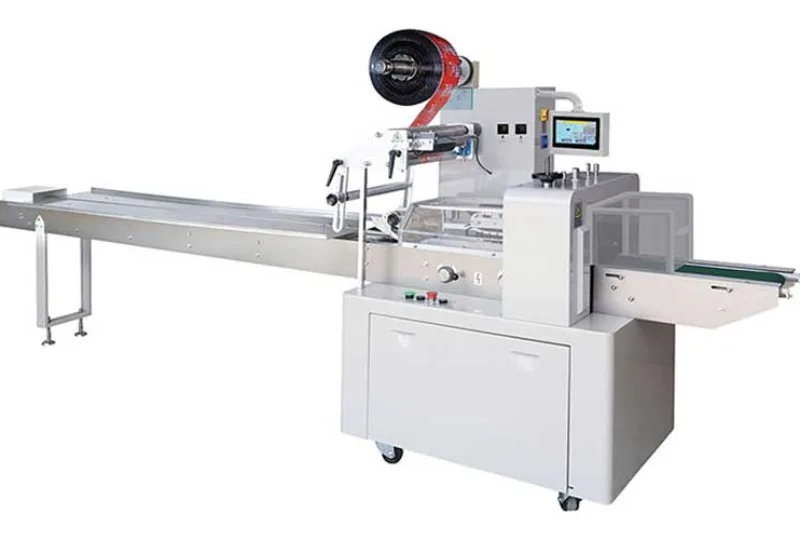
A horizontal flow wrap machine is an important component of this type of automated system. Also known as a flow wrapper or horizontal form-fill-seal (HFFS) machine, it continuously wraps products in flexible film, seals the package, and cuts individual packs.
When properly integrated into a high-speed production line, a horizontal flow wrapper can become part of a coordinated packaging system rather than operating as an isolated machine.
What Is a Horizontal Flow Wrap Machine?
A horizontal flow wrap machine uses a continuous roll of flexible packaging film to create individual packages around products. Products are delivered through an infeed system while the film is unwound, formed around the product, longitudinally sealed, and then sealed and cut at the ends.
This packaging format is widely used for products such as biscuits, bread, cakes, confectionery, noodles, vegetables, soap, and other food and non-food products.
Modern machines can incorporate servo-driven systems, touch-screen controls, product detection, film control, and recipe storage. These functions are particularly valuable when the machine must operate as part of an automated production line.
Why Integration Matters in High-Speed Production
A fast packaging machine does not automatically create a fast production line. If products arrive at inconsistent intervals, conveyors become congested, or downstream equipment cannot process the packaged products quickly enough, the packaging machine itself can become a bottleneck.
Successful integration focuses on synchronization.
A typical automated packaging line may include:
- Product processing equipment
- Product cooling or accumulation conveyors
- Automatic feeding systems
- Sorting and positioning equipment
- Horizontal flow wrapping machines
- Coding or labeling systems
- Inspection equipment
- Cartoning or secondary packaging equipment
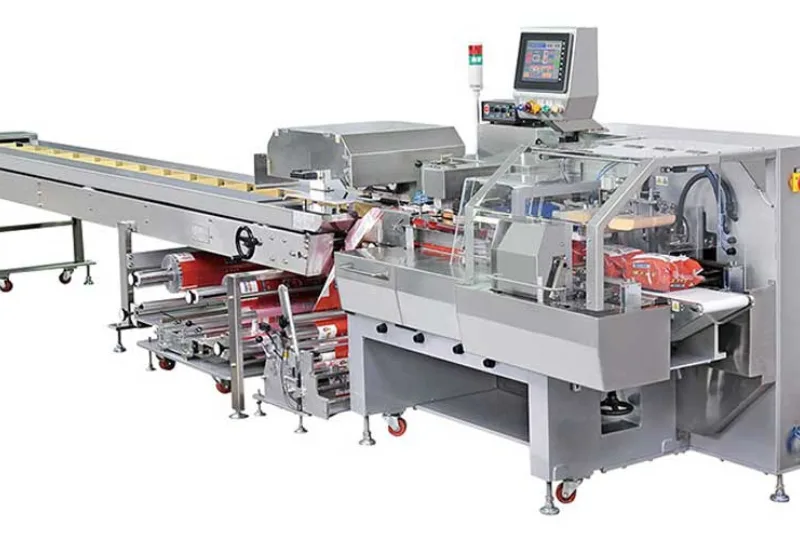
Ruipuhua’s packaging-line solutions are designed to coordinate feeding, conveying, positioning, packaging, and other operations as a complete system.
The objective is to maintain a stable product flow from one stage to the next while minimizing unnecessary manual handling.
Matching the Flow Wrapper to Line Speed
One of the first considerations when integrating a horizontal flow wrap machine is the required production speed.
For example, Ruipuhua’s ZP-530S servo HFFS machine has a stated packaging speed of up to 300 bags per minute under suitable conditions. Its control system can automatically track feeding speed when connected with the production line.
However, maximum machine speed should not be treated as the same thing as guaranteed line throughput. Actual performance depends on factors such as:
- Product dimensions and shape
- Product spacing
- Feeding accuracy
- Film characteristics
- Package length
- Sealing requirements
- Upstream production speed
- Downstream equipment capacity
- Changeover frequency
For this reason, manufacturers should design the complete line around the required sustainable throughput, rather than selecting equipment solely according to its advertised maximum speed.
Designing an Efficient Product Infeed
The infeed system is one of the most important parts of a high-speed flow wrapping line.
Before products reach the wrapping section, they need to be properly separated, aligned, and positioned. Inconsistent spacing can cause missed products, incorrect cutting, empty packages, or unnecessary machine stops.
A well-designed infeed system can use conveyors, feeders, sensors, and positioning mechanisms to deliver products at a consistent rate.
Modern flow wrappers can also use product-detection functions to reduce packaging waste. For example, Ruipuhua machines can incorporate “no product, no pack” functions, preventing the machine from unnecessarily producing empty packages when products are absent from the infeed.
This becomes increasingly important as production speed increases because even a small amount of packaging waste per cycle can become significant over a long production run.
Synchronizing the Flow Wrapper with Upstream Equipment
High-speed production lines require communication between machines.
The flow wrapper should receive products at a rate that matches its operating parameters. If an upstream baking, forming, or processing machine produces products faster than the wrapper can package them, an accumulation area may be required.
Conversely, if the packaging machine runs faster than the upstream equipment, the wrapper may frequently operate below its potential capacity.
Servo technology can help coordinate product feeding and packaging movements. Ruipuhua’s HFFS equipment uses independent servo control for functions such as product feeding and sealing, while selected models can automatically track the feeding speed of a connected line.
This type of synchronization helps create a more stable relationship between production and packaging.
Film Management and Sealing Performance
At high production speeds, packaging film becomes another critical factor.
The film must unwind consistently and pass through the forming and sealing systems without excessive tension, wrinkles, or tracking problems. Film width, thickness, material structure, package dimensions, and sealing temperature all need to be considered during machine configuration.
Different flow-wrapper models can support materials such as OPP, CPP, PET-based laminates, and other flexible packaging structures.
Proper sealing is equally important. A high-speed packaging line can produce a large number of packages in a relatively short period, so unstable sealing parameters can quickly result in defective products.
For this reason, manufacturers should test the selected film and product under actual production conditions before finalizing the line configuration.
Managing Changeovers in Multi-Product Production
Many manufacturers do not produce just one product. A packaging line may need to handle different product sizes, package lengths, or film specifications.
Frequent manual adjustment can reduce equipment utilization and increase the risk of setup errors.
Modern flow wrapping machines can simplify changeovers through recipe management. For example, the Ruipuhua RD-BM-508S can store up to 100 product recipes, allowing operators to recall saved settings when changing products.
For manufacturers with multiple SKUs, this type of functionality can make the transition between production runs more systematic and repeatable.
Integrating Downstream Packaging Equipment
Integration does not stop when the individual package leaves the flow wrapper.
The wrapped products may need to pass through additional processes such as:
- Date coding
- Labeling
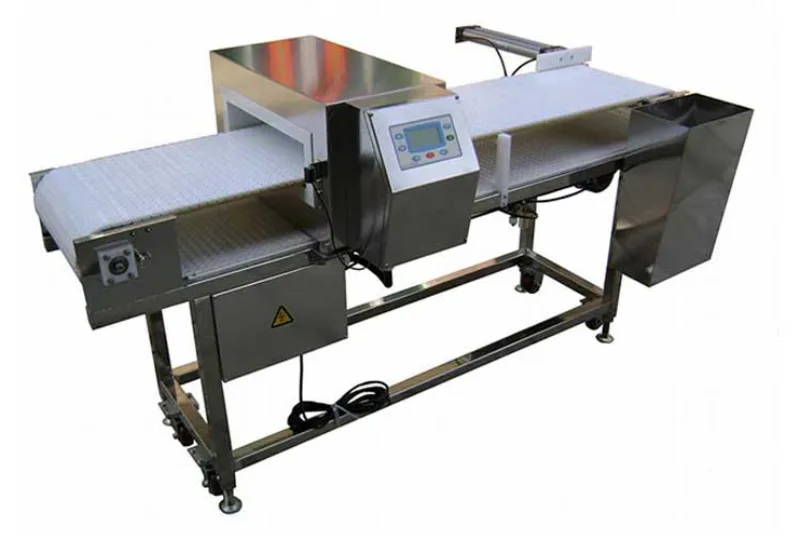
- Metal detection or inspection
- Product counting
- Collection
- Cartoning
- Case packing
- Palletizing
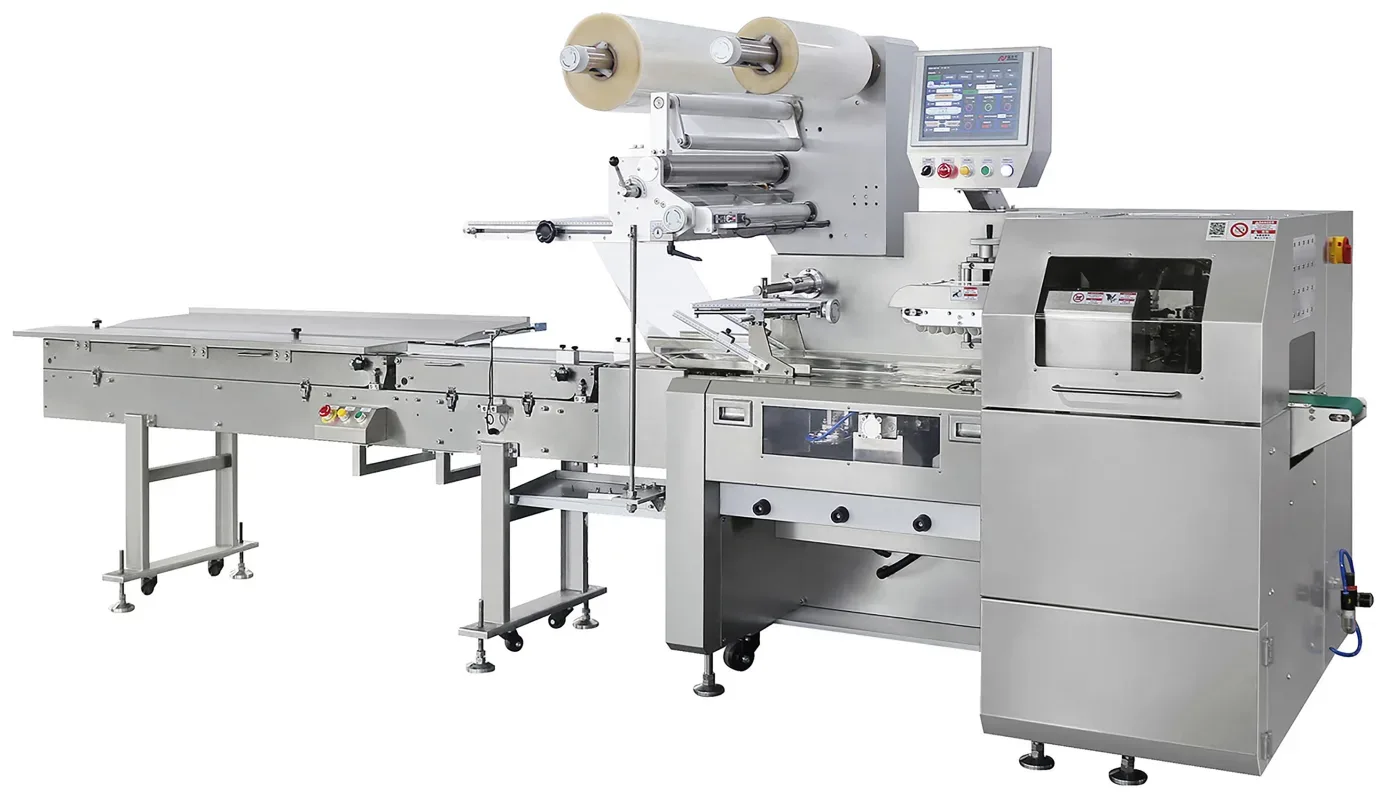
A properly designed conveyor system can connect these stages while maintaining the required product orientation and spacing.
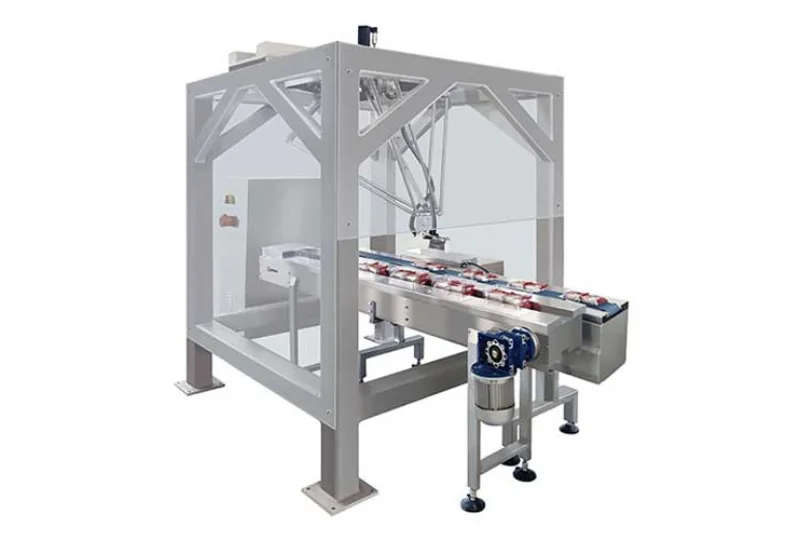
Ruipuhua’s packaging-line solutions can combine multiple packaging functions into an automated system, helping manufacturers reduce manual transfer between individual production stages.
The key is to consider the complete material flow rather than optimizing one machine independently.
Maintenance and Operator Training
High-speed equipment requires consistent maintenance. A packaging line operating for long production shifts can accumulate substantial wear if routine inspections are neglected.
Operators and maintenance personnel should understand:
- Film threading procedures
- Sealing temperature adjustments
- Conveyor and belt inspection
- Sensor positioning
- Servo and drive alarms
- Cleaning procedures
- Product changeover procedures
- Preventive maintenance schedules
Easy access to components can also reduce maintenance time. Certain Ruipuhua flow-wrapper designs incorporate removable belts and simplified structures to facilitate cleaning and maintenance.
Training should therefore be considered part of the integration project, rather than something addressed only after installation.
Choosing the Right Horizontal Flow Wrap Solution
Before integrating a flow wrapper into a high-speed production line, manufacturers should evaluate the complete application.
Important questions include:
- What are the product dimensions and weight?
- What is the required sustainable packaging speed?
- What packaging film will be used?
- How many SKUs must the machine handle?
- How frequently will products be changed?
- What upstream equipment will feed the machine?
- What downstream equipment will receive the packages?
- What level of automation is required?
- What cleaning and maintenance standards apply?
- What future production expansion should the line accommodate?
A packaging machine should ultimately be selected according to the complete production environment, not simply its individual specifications.
Build a More Connected Packaging Line with Ruipuhua
Integrating a horizontal flow wrap machine into a high-speed production line requires more than installing a high-speed wrapper. Product feeding, film handling, servo synchronization, sealing, inspection, changeovers, conveyors, and downstream packaging all need to work together.
Ruipuhua provides horizontal flow wrappers as well as complete packaging-line solutions for applications including bakery products, biscuits, food products, soap, and other manufactured goods. The company states that its packaging systems can be configured according to customer layouts and production requirements.
By approaching packaging as an integrated production system, manufacturers can create a more consistent material flow, reduce unnecessary manual handling, and establish a scalable foundation for high-volume production. The right combination of horizontal flow wrapping technology, automated feeding, intelligent controls, and downstream equipment can turn packaging from a potential bottleneck into an efficient part of the overall manufacturing process.
-
01
How do I choose the right speed for a toas bread packaging line to avoid crushing soft loaves?
22-06-2026 -
 02
02Packaging Machinery: Beyond Sealing, Driving an Efficient, Smart, and Sustainable Future
21-01-2026 -
 03
03Automatic Tray Loading and Packaging Equipment: Boost Efficiency to 160 Bags/Minute
21-11-2025 -
 04
04Automatic Soap Packaging Machine: Boost Productivity with 99% Qualification Rate
21-11-2025 -
 05
05A Deep Dive into Automatic Toast Processing and Packaging System
18-11-2025 -
06
The Future of Bakery Production: Automated Toast Processing and Packaging System
18-11-2025 -
 07
07Reliable Food Packaging Solutions with China Bread, Candy, and Biscuit Machines
11-10-2025 -
 08
08High-Performance Automated Food Packaging Equipment for Modern Production
11-10-2025 -
09
Reliable Pillow Packing Machines for Efficient Packaging Operations
11-10-2025 -
 10
10Advanced Fully Automatic Packaging Solutions for Efficient Production
11-10-2025
