

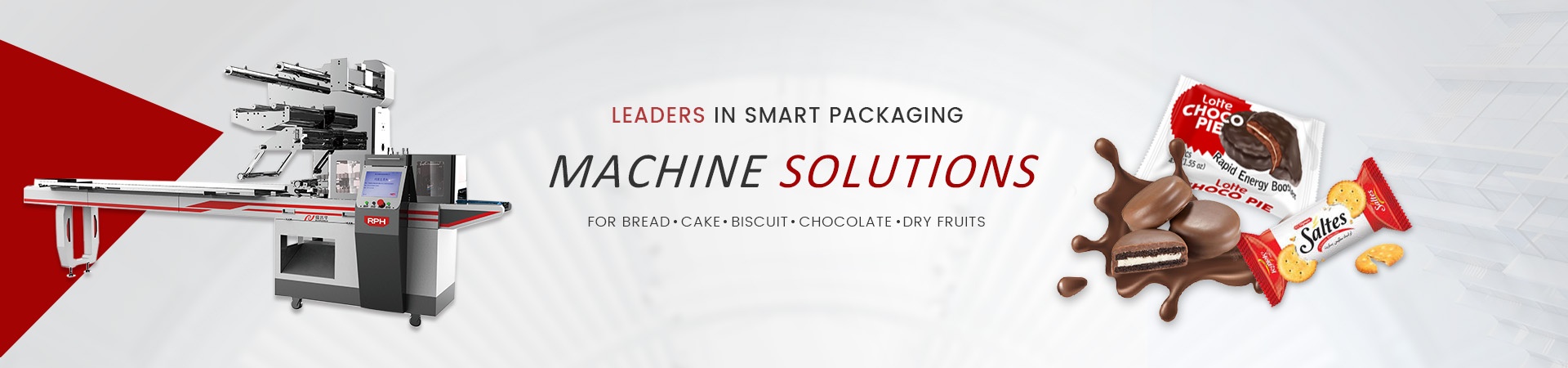
Optimizing Production Lines: How Servo-Driven Automatic Packaging Equipment Meets Modern Food Manufa
Frozen food manufacturers face a persistent challenge: balancing speed with precision while maintaining strict hygiene standards. When a production line processes thousands of items daily, even minor inconsistencies compound into waste, missed deadlines, and customer dissatisfaction. This is where servo-motor-controlled automatic packaging equipment becomes essential rather than optional.
The food packaging industry has evolved significantly. Equipment that merely seals bags no longer suffices. Today’s manufacturers demand machines that can switch between product types within seconds, detect misaligned items before they reach the sealer, and operate within clean-room standards without compromising throughput. Servo-driven systems address these demands directly.
Understanding Servo Motor Control in Packaging Systems
Servo motors differ fundamentally from conventional stepper motors in how they respond to production requirements. A stepper motor follows preset commands; a servo motor continuously monitors its actual position and adjusts in real time. This feedback loop means the machine "knows" whether the film is feeding at the correct speed or if a product has shifted unexpectedly.
When a packaging line uses five independent servo motors—one for product delivery, another for film feeding, a third for material pulling, a fourth for cutting, and a fifth for timing coordination—each component operates with high accuracy. The result is consistent bag dimensions, proper seal strength, and minimal film waste. For frozen food applications where product weight and dimensions vary, this precision prevents overpacking and the associated material costs.
Traditional fixed-speed equipment struggles when product batches change. Switching from buns to meat patties requires manual adjustments, downtime, and operator intervention. Servo systems store up to 100 product recipes in memory, allowing operators to select a new configuration from a touch screen. The machine recalibrates itself within minutes rather than hours.
Why Frozen Food Packaging Demands Precision Engineering
Frozen products present unique challenges that standard packaging cannot ignore. Buns and bread lose structural integrity if compressed; noodle packages require specific dimensions to fit retail shelves; meat patties must remain individually wrapped to prevent freezer burn and contamination during distribution.
Misalignment during packaging creates cascading problems. A shifted product can jam the sealing mechanism, cause partial seals that expose frozen items to air, or trigger production halts that disrupt entire manufacturing schedules. The financial impact extends beyond immediate downtime—retailers reject improperly sealed packages, and customer returns damage brand reputation.
Sanitary construction represents another non-negotiable requirement. SUS304 stainless steel housings resist corrosion from moisture and cleaning chemicals used in food-grade facilities. Unlike painted or coated materials that chip and harbor bacteria, stainless steel withstands daily washdowns and maintains compliance with food safety regulations without degradation.
The combination of servo precision and food-safe materials transforms packaging from a bottleneck into a competitive advantage.
Key Technical Specifications That Drive Performance
Automatic packaging equipment specifications directly correlate to production capacity and product compatibility. Understanding these parameters helps manufacturers match equipment to their operational needs.
| Specification | Value | Impact |
|---|---|---|
| Packing Speed | 40-60 bags/minute | Handles mid-range production demands for frozen goods |
| Film Width Capacity | Up to 670mm | Accommodates group packaging configurations (1×3, 1×4, 1×6, 2×5) |
| Bag Length Range | 80-400mm | Flexible for various product sizes from small items to multi-packs |
| Bag Former Dimensions | L 180-300mm × W 300mm × H 120mm | Handles volumetric range of frozen food products |
| Power Consumption | 3.5KW | Operates on standard single-phase 220V supply |
| Machine Footprint | L6000 × W1500 × H1600mm | Fits standard production floor layouts |
Speed alone doesn’t determine output quality. A 60-bag-per-minute machine running at 40 bags/minute with zero defects outperforms a competitor’s 70-bag-per-minute machine that produces 10% rejects. Servo-driven equipment maintains consistent quality at the selected speed; operators control throughput by adjusting recipe parameters rather than pushing mechanical limits.
Film compatibility matters for material costs and environmental considerations. Equipment accepting OPP, CPP, PET+CPP, PET+LLDPE, and PET+VMCPP allows manufacturers to optimize material selection based on product shelf life, cost fluctuations, and sustainability goals. PET-based films offer superior oxygen barriers for sensitive frozen products; standard CPP works effectively for less demanding applications and typically costs less.
How Misplaced Item Skip (M.I.S.) Technology Reduces Waste
Manufacturing never achieves 100% perfection in upstream processes. Products occasionally arrive at the packaging station misaligned, flipped, or damaged. Conventional equipment seals these defective items anyway, creating waste and customer complaints.
M.I.S. functionality uses detection mechanisms to identify anomalies and skips the sealing cycle for that product, diverting it from the sealed output. The machine continues normal operation for subsequent items without stopping the line. This approach eliminates manual sorting, reduces waste, and accelerates overall throughput by preventing jam-related stoppages.
For manufacturers processing 10,000 bags daily, even modest waste reduction represents fewer defective packages and associated material savings. Over a production year, these incremental improvements compound into significant cost reductions.
Integration with Modern Production Lines
Standalone packaging machines generate value; integrated systems generate exponential value. Automatic packaging equipment connects to upstream product delivery systems and downstream sorting conveyor lines, creating seamless workflows where human intervention becomes minimal.
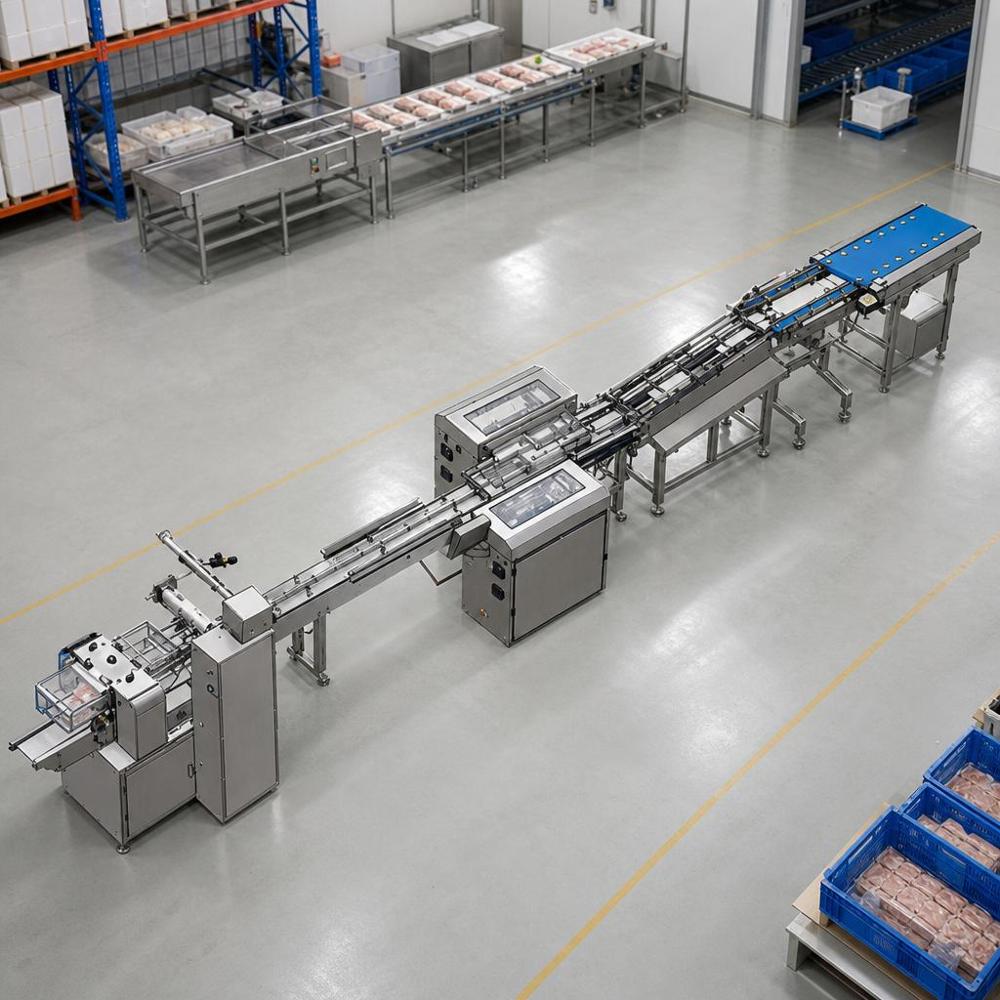
Belt-feeding designs with Film Bottom Feeding (F.B.F.) technology enable multi-product group packaging without product repositioning. Products arrive on an infeed conveyor, pass through the packaging zone once, and emerge as finished multi-packs. This single-pass approach reduces product handling damage and accelerates throughput compared to manual grouping or secondary equipment.
The 10.4-inch HMI touch screen centralizes machine control, eliminating scattered buttons and switches that confuse operators during recipe changes. Intuitive interfaces reduce training time for new staff and minimize errors from mistyped parameters. Recipe storage means returning to previously run products requires only a few screen taps rather than manual recalibration.
Choosing Between Group Packaging and Single-Unit Packaging
Not all frozen food requires identical packaging strategies. Single buns and bread loaves benefit from individual wrapping that protects freshness and simplifies retail display. Noodles and meat products often sell as multi-packs, where combining units into a single package improves shipping efficiency and reduces material consumption per unit.
Modern automatic packaging equipment handles both approaches through recipe management. A single machine can run individual bun packages at full speed during one shift, then switch to 3-pack or 6-pack noodle configurations the next shift without hardware modifications. This flexibility allows manufacturers to respond to market demand and inventory levels without purchasing duplicate equipment.
The economic calculation favors equipment that adapts over equipment optimized for single purposes. Initial investment increases slightly, but operational flexibility and reduced equipment footprint provide compelling returns over the machine’s lifespan.
Safety Considerations in High-Speed Production
Operators working around moving machinery face genuine risks. Full-cover safety guards prevent contact with rotating components, sealing rollers, and cutting mechanisms. Emergency alarm stop switches throughout the machine allow any worker to halt operation immediately if they detect anomalies or potential hazards.
Servo-driven systems reduce operator exposure because automated recipe execution eliminates manual interventions that older equipment required. Fewer hands-on adjustments mean fewer opportunities for contact with dangerous moving parts. Additionally, servo systems operate more predictably than mechanical systems, reducing unexpected movements that startled operators commonly encounter with older equipment.
Safety compliance in food manufacturing extends beyond preventing injuries. Guarding prevents product contamination from operator contact and ensures sealed packages haven’t contacted exposed surfaces. These physical barriers serve dual purposes: protecting humans and protecting products.
Maintenance and Longevity of Servo-Driven Systems
Servo motors with feedback systems detect operational changes that may indicate maintenance needs. Monitoring actual performance allows early identification of degradation patterns, enabling proactive maintenance scheduling. This capability differs from mechanical systems that fail suddenly and without warning.
Stainless steel construction minimizes corrosion-related maintenance. Unlike equipment that requires frequent repainting or protective coatings, SUS304 housings maintain appearance and functionality through years of aggressive washdowns. Yaskawa PLC controllers use established industrial standards, ensuring replacement parts and technical support remain available throughout the machine’s operational life.
Total ownership cost factors in unplanned downtime, replacement parts availability, and maintenance labor. Equipment that operates reliably and requires less intensive maintenance generates lower total cost despite potentially higher initial purchase price.
Applications Across Food Categories
Bakery operations leverage automatic packaging equipment for high-volume bun and bread production, where individual wrapping protects products from drying out and contamination during distribution. Buns typically require 80-150mm bag lengths, fitting comfortably within equipment ranges designed for frozen food applications.
Frozen food sectors including meat processors, poultry manufacturers, and prepared meal producers benefit from equipment designed specifically for these products. Meat patties require precise bag dimensions to prevent shifting during shipment; chicken fillets need tight seals to maintain freshness; multi-component meals demand accurate portioning that justifies servo-driven control.
Noodle manufacturers achieve particularly high efficiency through multi-pack configurations. A single machine can package individual servings, dual packs, or family-size quantities by adjusting recipe parameters. This adaptability allows noodle producers to serve diverse market segments without maintaining separate production lines for each package type.
Comparing Manual, Semi-Automatic, and Fully Automatic Solutions
Manual packaging requires substantial labor, limited by operator speed and consistency. Individual packers seal 8-12 bags per minute with significant variation in seal quality and dimensions. Labor costs in developed markets make pure manual packaging economically unviable for most production volumes.
Semi-automatic equipment removes labor from the sealing step but requires operators to manually place products, feed film, and remove sealed bags. Output improves to 20-30 bags per minute, but operator fatigue and inconsistent product placement still generate defects. Semi-automatic solutions work for small-volume specialty production but can’t match the efficiency of fully automatic systems at higher volumes.
Fully automatic packaging equipment like servo-driven systems achieves 40-60 bags per minute with superior consistency. Operators monitor rather than execute production tasks, reducing labor requirements and improving product quality. The efficiency gain justifies equipment investment when monthly production volumes exceed 50,000 units.
| Equipment Type | Speed (bags/min) | Labor Requirements | Quality Consistency | Suitable Volume |
|---|---|---|---|---|
| Manual | 8-12 | High | Low | <10K/month |
| Semi-Automatic | 20-30 | Medium | Medium | 10-50K/month |
| Fully Automatic | 40-60 | Low | High | >50K/month |
Implementation Considerations for Existing Facilities
Installing automatic packaging equipment requires more than placement and power connection. Production workflows must align with equipment capabilities. Upstream processes must deliver products to the packaging station at acceptable speeds and orientations; downstream systems must accept sealed packages at the machine’s output rate.
Facility layouts often require modification to accommodate infeed conveyors, outfeed systems, and maintenance access. Equipment measuring 6000mm in length needs adequate floor space and appropriate ceiling clearance for film rolls and control panels. Integration with existing conveyor systems may require additional equipment or reconfiguration of production floor arrangements.
Operator training ensures staff understand recipe management, basic troubleshooting, and safety protocols. While servo-driven equipment with touch screen interfaces simplifies operation compared to older mechanical systems, manufacturers benefit from structured training programs that prevent common errors and reduce downtime from misoperation.
Long-Term Value and Return on Investment
Equipment investment decisions balance capital expenditure against operational benefits. A 40-60 bag-per-minute machine costs significantly more than semi-automatic equipment but potentially reduces labor requirements, minimizes product waste, and generates consistent packaging quality that reduces customer complaints.
Production facilities operating 8-10 hours daily, 5-6 days per week can assess payback periods based on their specific labor costs, waste rates, and production volumes. Equipment continues generating value through reduced labor, decreased waste, and improved throughput. Over a 10-year equipment lifespan, operational savings often accumulate substantially.
Manufacturers should calculate equipment ROI based on their specific production volumes, current labor costs, current waste rates, and production floor constraints rather than relying on generic industry benchmarks. Each facility presents unique economics, and proper analysis reveals whether automatic packaging equipment represents appropriate investment for their operation.
Future Evolution of Packaging Automation
Servo-motor technology continues advancing toward faster speeds, greater precision, and enhanced capabilities. Current equipment establishes high performance standards; emerging systems will likely exceed these capabilities. Machines installed today remain functionally current for many years despite technological advancement, as servo systems age without sudden obsolescence.
Integration with broader manufacturing monitoring and control frameworks represents an emerging trend where packaging equipment connects to facility systems, enabling data collection and production insights across operations. Manufacturers preparing for this evolution benefit from equipment designed with connectivity foundations, even if immediate implementation focuses on local operation.
For frozen food manufacturers selecting automatic packaging equipment, servo-driven systems with food-grade construction and flexible recipe management address current production demands while maintaining compatibility with future enhancements. The investment extends beyond immediate efficiency gains to encompass operational scalability and long-term strategic positioning within increasingly competitive food manufacturing markets.
-
01
How do I choose the right speed for a toas bread packaging line to avoid crushing soft loaves?
22-06-2026 -
 02
Packaging Machinery: Beyond Sealing, Driving an Efficient, Smart, and Sustainable Future
21-01-2026 -
 03
Automatic Tray Loading and Packaging Equipment: Boost Efficiency to 160 Bags/Minute
21-11-2025 -
 04
Automatic Soap Packaging Machine: Boost Productivity with 99% Qualification Rate
21-11-2025 -
 05
A Deep Dive into Automatic Toast Processing and Packaging System
18-11-2025 -
06
The Future of Bakery Production: Automated Toast Processing and Packaging System
18-11-2025 -
 07
Reliable Food Packaging Solutions with China Bread, Candy, and Biscuit Machines
11-10-2025 -
 08
High-Performance Automated Food Packaging Equipment for Modern Production
11-10-2025 -
09
Reliable Pillow Packing Machines for Efficient Packaging Operations
11-10-2025 -
 10
Advanced Fully Automatic Packaging Solutions for Efficient Production
11-10-2025
