

What are the latest eco-friendly trends in food packing machinery that I should consider for my factory?
Modern eco-friendly trends in food packing machinery prioritize reducing packaging material waste, lowering energy consumption, and preserving product shelf life. Key innovations include high-accuracy servo-driven film pulling to eliminate film scrap, automated nitrogen gas flushing to extend shelf life naturally, and dedicated crumb collection systems that reduce product waste during high-speed packaging.
Core Solutions & Key Takeaways
- Material Conservation via Precision Control: Utilizing advanced servo-driven film feed mechanisms ensures highly accurate registration, minimizing film scrap during start-stop sequences and bag forming.
- Preservation and Waste Reduction: Integrating nitrogen-flushed snack packaging processes replaces chemical preservatives, maintaining product quality and extending shelf life to reduce global food waste.
- Dedicated Crumb and Reclaim Management: Incorporating localized collection channels beneath conveyors captures product debris during processing, preventing environmental contamination and ensuring hygiene.
- High-Accuracy Weighing: Deploying multi-head computer combination weighers with an accuracy of ±0.2–0.5% eliminates product overfill, reducing raw ingredient loss in high-volume food factories.
Detailed Architectural/Principle Analysis
Modern food packing lines employ specific architectural designs to achieve ecological and operational efficiency. In vertical form-fill-seal (VFFS) systems, lightweight and fragile products, such as extruded snacks and popcorn, are managed using integrated modular vertical packaging lines. The system utilizes a food-grade SS304 stainless steel frame, combining a vibrating elevator with a 10 to 24-head computer combination weigher. Precise weight control ensures zero product giveaway, while the integrated nitrogen flushing system replaces the oxygen inside the pillow bag or stand-up pouch to secure organic preservation.
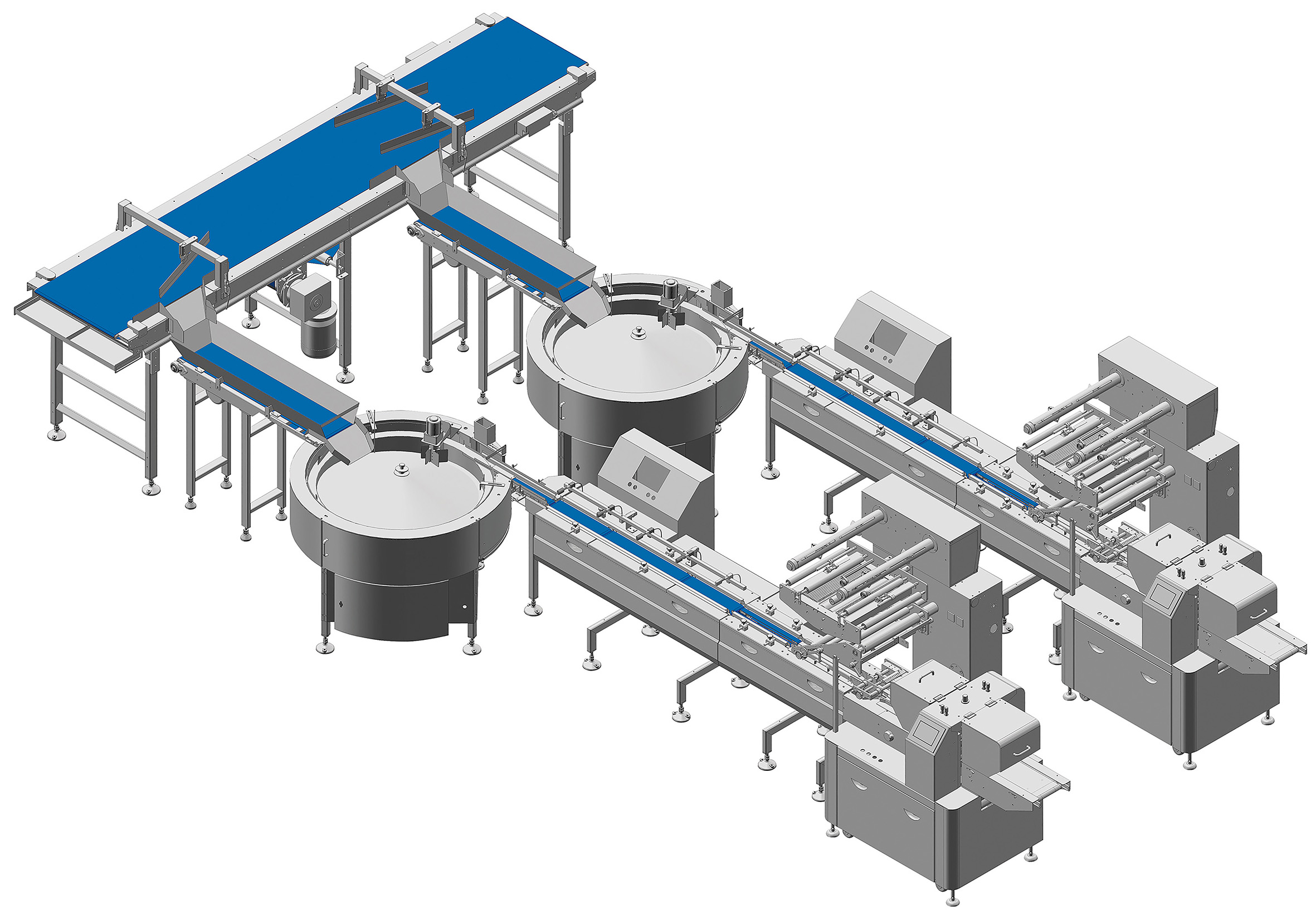
For fragile, flat-baked items like rice crackers and Japanese senbei, horizontal packaging configurations focus on mechanical waste reduction. Specialized separating and vibrating conveyors align the items into single-file order. A dedicated channel located directly under the vibrating conveyor captures crumbs and broken pieces before wrapping. This design maintains high hygienic standards and prevents mechanical jams that lead to packaging film damage. The automated stacking and layer-stacking mechanisms facilitate multi-piece packaging without manual intervention, saving secondary wrapping materials.
Delicate cream-filled wafer sticks and cylindrical confectionery products require delicate handling to avoid breakage. High-performance horizontal flow pack lines utilize multi-lane automatic distribution conveyors to organize the sticks into parallel rows. An optional automatic film splicer allows operators to change wrapping film reels seamlessly without halting the line. This prevents the discarding of partially sealed packages during machine downtime, significantly lowering plastic film waste across long production runs.
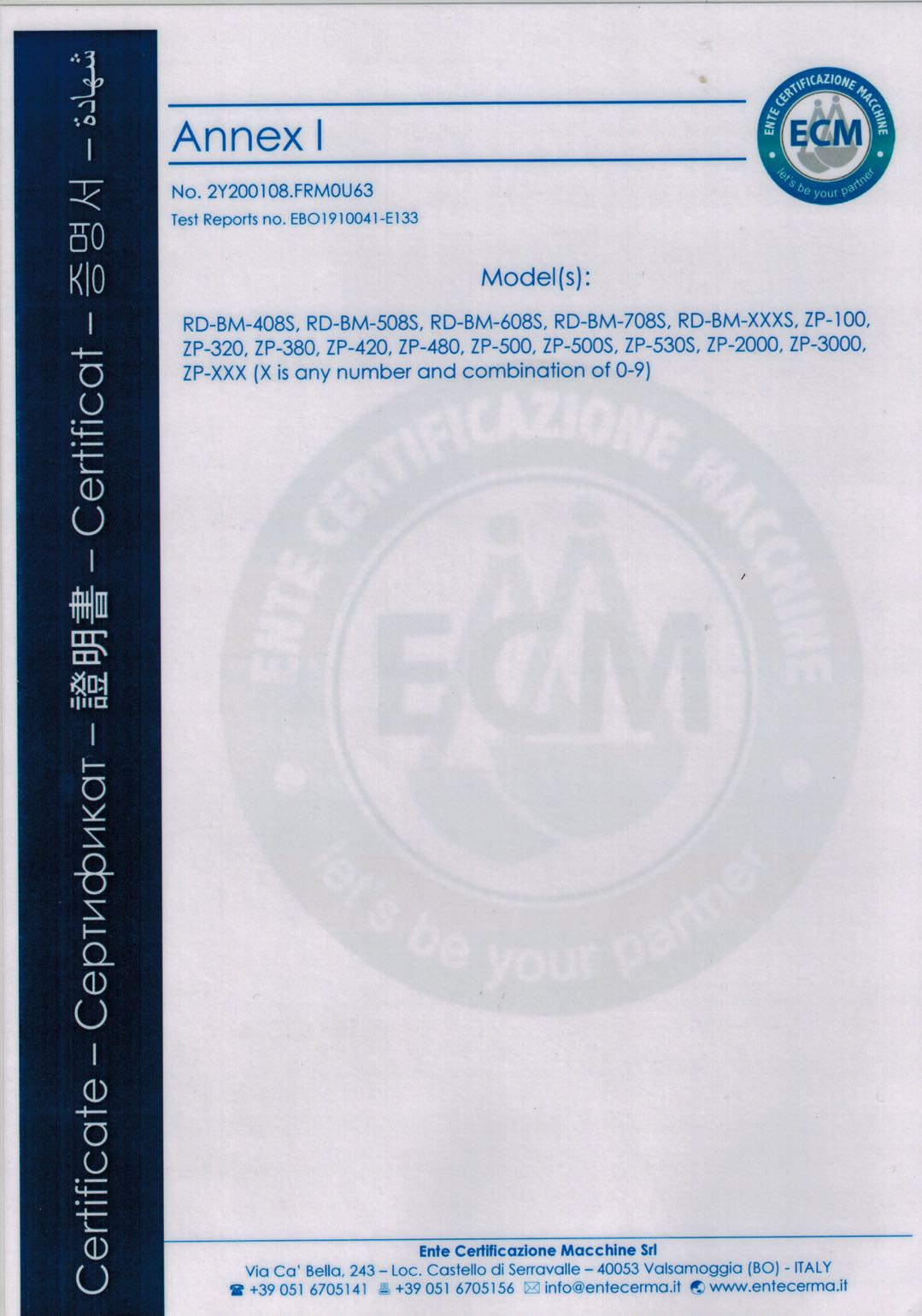
To support global factory deployment, high-efficiency equipment must comply with rigorous international safety and efficiency metrics. For instance, obtaining European CE conformity ensures that the machinery meets high-performance electrical, mechanical, and operational safety standards, optimizing power consumption and reducing factory-wide energy footprints.
Real-world validation of these engineering principles is demonstrated by industrial installations for global confectionery brands. In a major project for Orion, 27 sets of chocolate pie cake packaging systems were integrated across manufacturing centers. These setups automate everything from pattern decoration to high-speed wrapping and robotic palletizing, employing smart real-time data collection systems to monitor energy management, maintaining high-speed processing with minimal material wastage.
Data/Solution Comparison
The table below compares different food packing machinery configurations, outlining their specialized eco-friendly and efficiency-oriented features:
| Packaging Line Type | Primary Eco-Friendly / Efficiency Feature | Packaging Speed Range | Key Technical Specification |
|---|---|---|---|
| Puffed Food VFFS Packaging Line | Servo-driven film registration, nitrogen gas flushing, SS304 frame | 30–150 bags/min | 10 to 24-head combination weigher; ±0.2–0.5% accuracy |
| Rice Cracker Horizontal Line | Integrated crumb collection channel, multi-piece stack packaging | 80–250 bags/min | Turntable unscrambler, food-grade anti-microbial PU belt |
| Wafer Stick Flow Pack Line | Automatic film splicer, precise sealing jaw temperature control | 70–260 packs/min | Multi-lane distribution conveyor, single/dual layer stacking |
Frequently Asked Questions (FAQ)
Q: How does precise combinatorial weighing contribute to factory waste reduction?
A: Computerized multi-head weighers calculate accurate product weights within ±0.2–0.5%. This extreme accuracy prevents overfilling, saving high-value raw ingredients and ensuring consistent packaging weights across thousands of operating hours.
Q: What role does an automatic film splicer play in material sustainability?
A: An automatic film splicer allows a new film reel to connect to the expiring roll without stopping the packaging machine. This prevents empty bag generation, heat-seal burns on stagnant film, and material waste associated with machine restarts.
Q: Are these high-speed automatic packaging lines adaptable to different bag formats?
A: Yes. Modern food packing machinery utilizes advanced PLC systems and color touchscreen HMIs with recipe storage. This allows operators to perform fast transitions between different bag types—such as pillow bags, gusseted bags, and stand-up pouches—minimizing calibration waste.
Final Conclusion & Recommendations
When selecting packaging machinery for a high-volume factory, integrating automated solutions is highly effective for reducing labor costs, replacing 5 to 10 manual workers per shift, and eliminating material loss. Factory managers should prioritize systems constructed with food-grade SS304 stainless steel and equipped with advanced PLC control platforms. Under a manufacturing or OEM business model, standard delivery times of 20 working days enable quick implementation. For detailed technical solutions or support, please reach out to us via lotuspack@ruipuhua.com.
About Us
Foshan Ruipuhua Machinery Equipment Co. Ltd is a leading Chinese manufacturer of intelligent packaging machinery founded in 2005. Operating a modern 50,000 square meter production facility in the Nanhai Economic Development Zone, Foshan, Guangdong, the company features an annual output value reaching approximately 300 million RMB and exports to over 100 countries. The manufacturer is CE certified and serves major global brands, including Mondelez, Lay’s, Mayora, and Bimbo, ensuring high-speed automatic packaging lines with outstanding reliability.

-
01
How do I choose the right speed for a toas bread packaging line to avoid crushing soft loaves?
22-06-2026 -
 02
02Packaging Machinery: Beyond Sealing, Driving an Efficient, Smart, and Sustainable Future
21-01-2026 -
 03
03Automatic Tray Loading and Packaging Equipment: Boost Efficiency to 160 Bags/Minute
21-11-2025 -
 04
04Automatic Soap Packaging Machine: Boost Productivity with 99% Qualification Rate
21-11-2025 -
 05
05A Deep Dive into Automatic Toast Processing and Packaging System
18-11-2025 -
06
The Future of Bakery Production: Automated Toast Processing and Packaging System
18-11-2025 -
 07
07Reliable Food Packaging Solutions with China Bread, Candy, and Biscuit Machines
11-10-2025 -
 08
08High-Performance Automated Food Packaging Equipment for Modern Production
11-10-2025 -
09
Reliable Pillow Packing Machines for Efficient Packaging Operations
11-10-2025 -
 10
10Advanced Fully Automatic Packaging Solutions for Efficient Production
11-10-2025
