

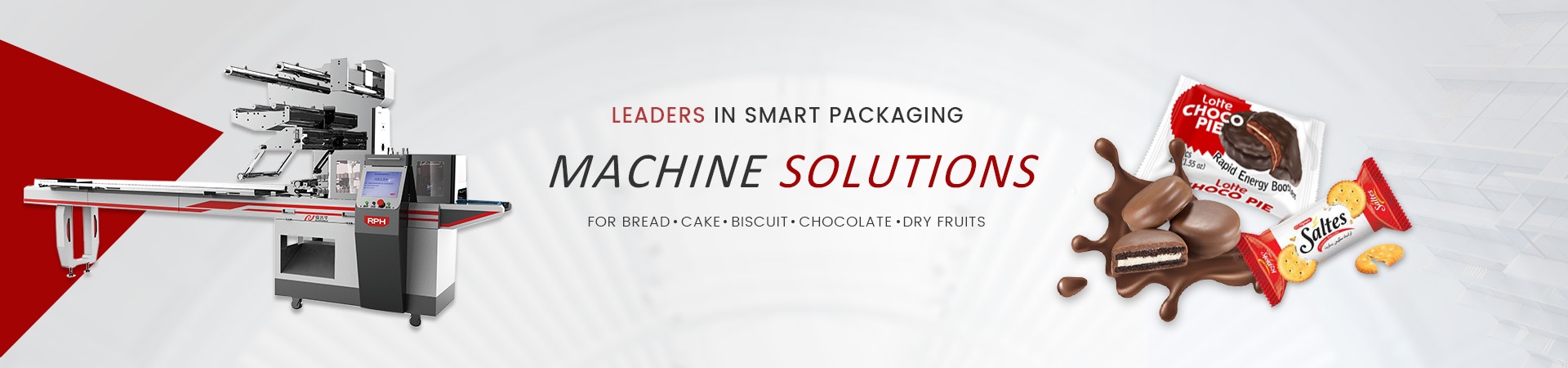
How do I choose the right speed for a tortilla packaging line large flatbread packing machine automatic tortilla wra?
Choosing the right speed for a tortilla packaging line, large flatbread packing machine, or automatic tortilla wrap packaging system depends directly on upstream production throughput, flatbread diameter (150mm–400mm), and desired stack counts (2–30 pieces). Standard systems offer adjustable speeds between 40 to 120 packs per minute, allowing seamless synchronization with cooling conveyors to optimize efficiency.
Core Solutions & Key Takeaways
- Upstream Synchronization: Aligning the packing machine speed with the cooling conveyor prevents product accumulation and line stoppages.
- Automated Handling: Fully automatic systems manage delicate flatbreads via precise servo-driven collating, reducing manual touchpoints and product damage.
- Configurable Stacking: The integration of an interleaving and stacking unit allows packaging counts from 2 to 30 flatbreads per pack.
- Operational Efficiency: Automated lines replace manual labor, ensuring consistent seal quality while reducing film waste by up to 10%.
Detailed Architectural & Principle Analysis
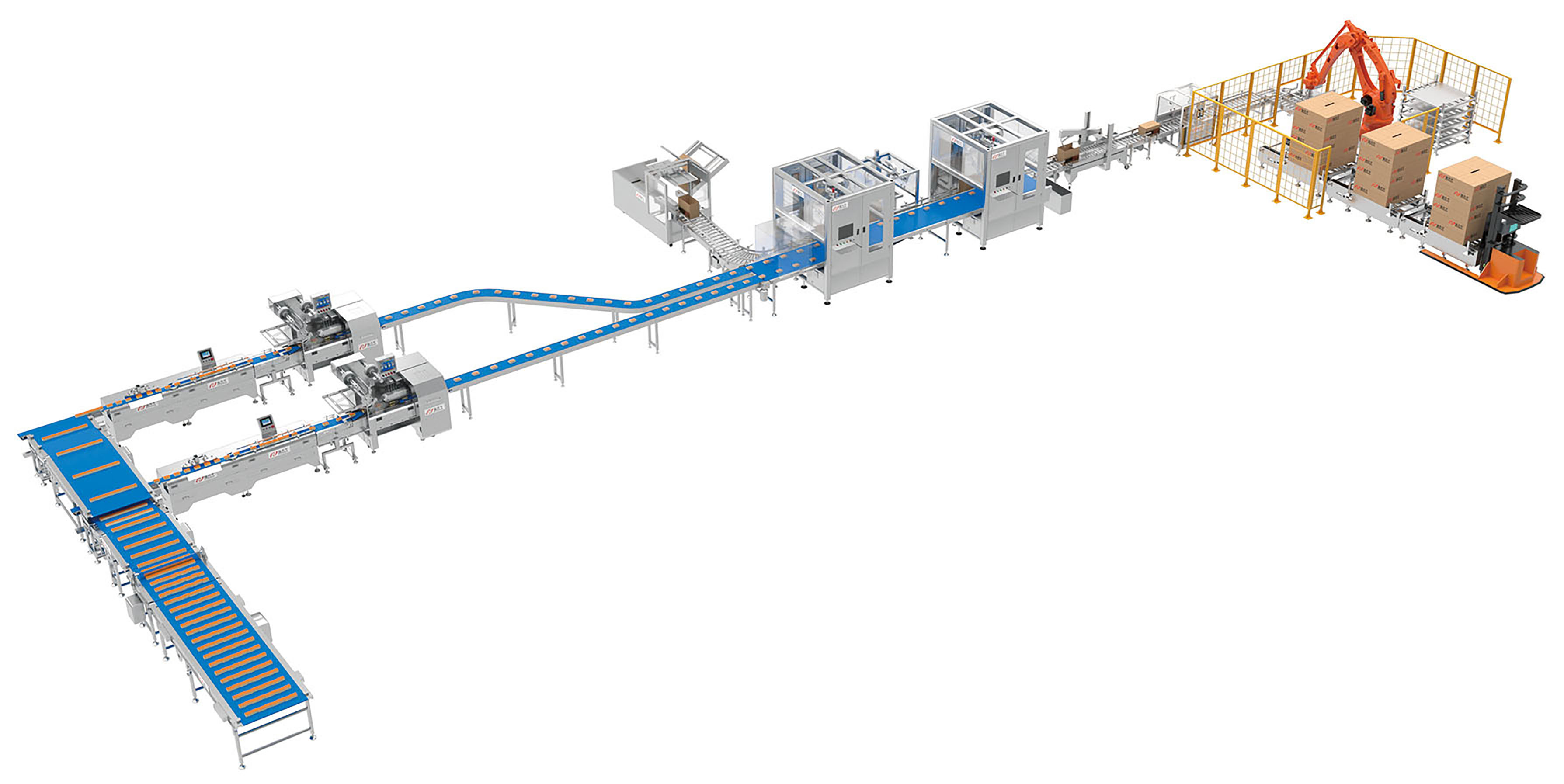
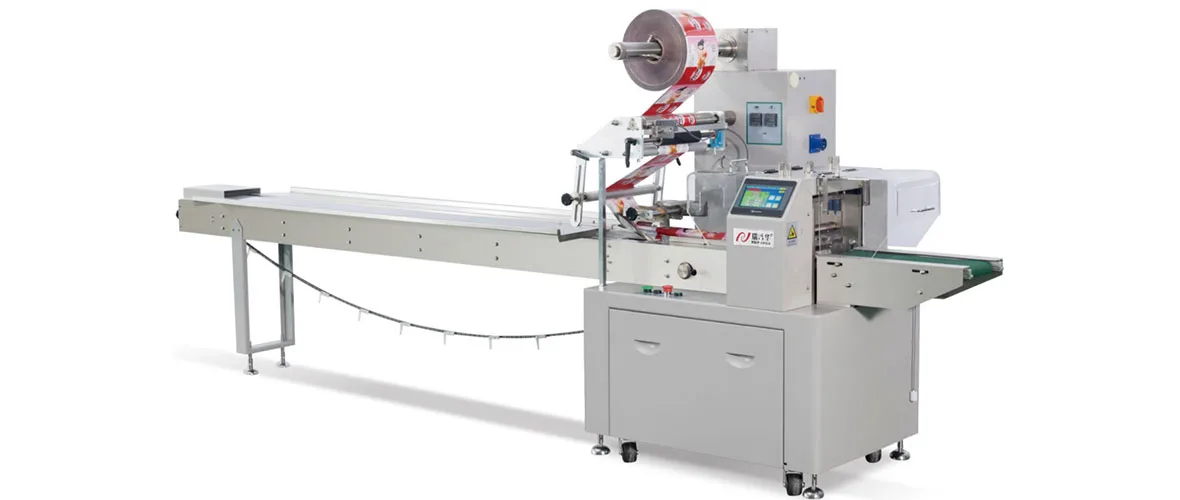
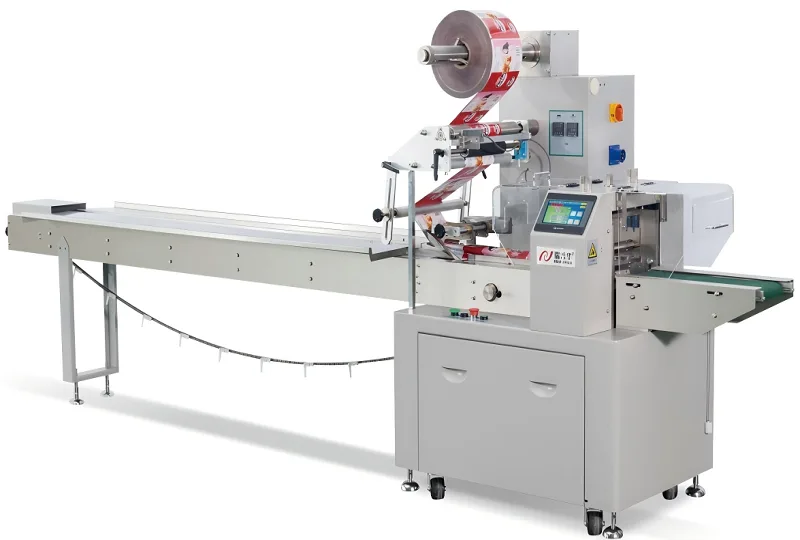
Modern flatbread production requires precise control over speed and product handling. A high-performance Foshan Ruipuhua Machinery Equipment Co. Ltd packaging system utilizes an infeed conveyor with centering guides to align tortillas smoothly. From there, an interleaving unit automatically places wax paper or PE film between each flatbread to prevent sticking. This mechanical step is vital for soft, high-moisture doughs that tend to adhere under compression.
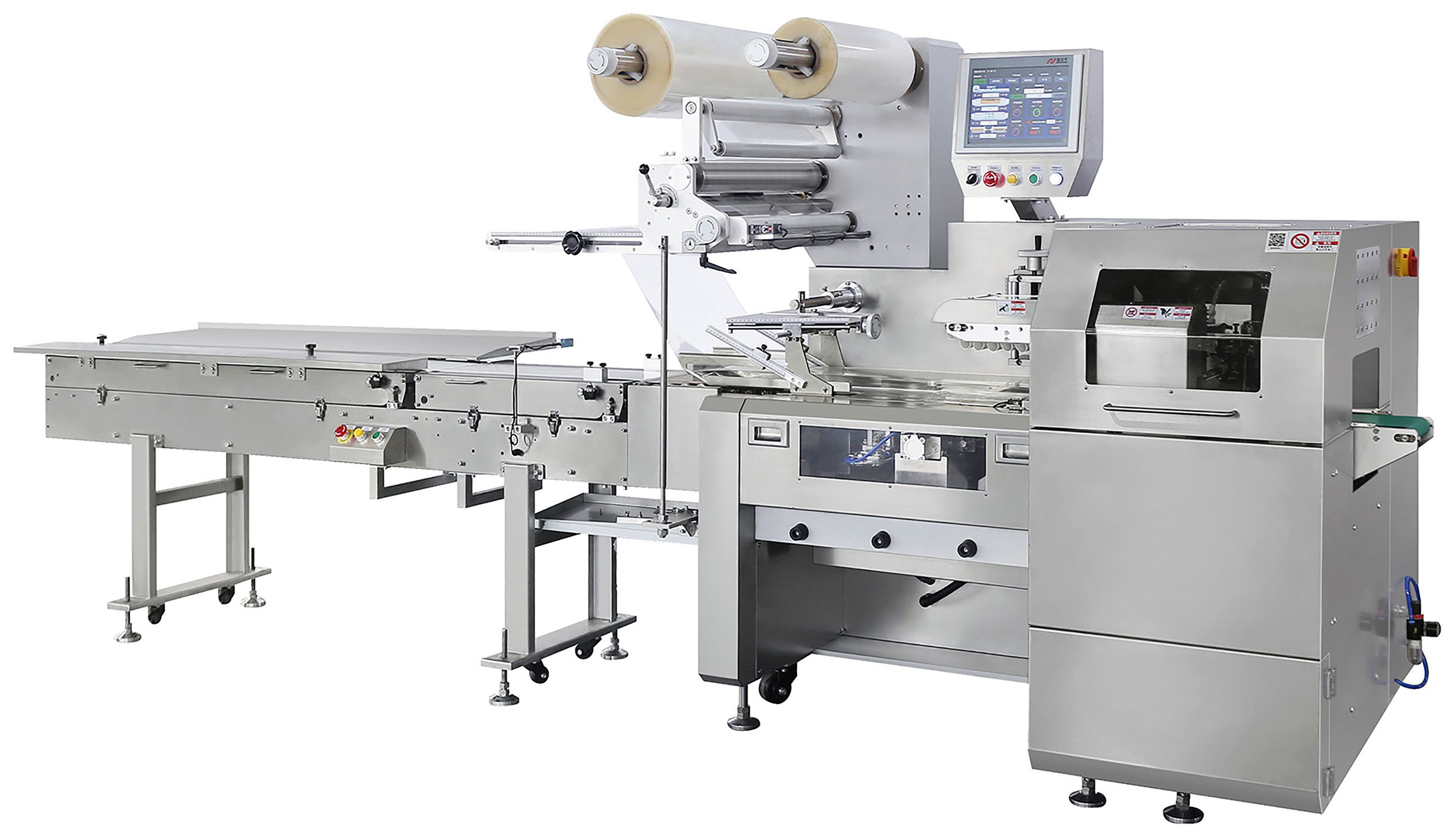
The stacked products are transferred to a horizontal flow wrapper or a vertical bagging machine. Using advanced motion control and servo-driven film feeding, the system maintains accurate seal registration even at speeds reaching 120 pieces per minute. The integration of sensors and programmable logic controllers (PLCs) monitors sealing temperature, film tension, and product alignment in real time. Defective packs are instantly removed by an automated rejection system after passing through a checkweigher or metal detector.
This automated approach has been successfully deployed in large-scale food factories globally. For example, major brand owners like Orion utilize customized multi-set packaging systems engineered by Ruipuhua to achieve high-uptime, zero-defect sealing across regional production facilities. Each line is designed to meet international safety standards, backed by CE certification (Certificate Number M.2024.206.C107511), ensuring reliable, continuous operations.
Data & Solution Comparison
The following table outlines the operational differences between standard semi-automatic setups and fully integrated automatic packaging lines to assist in choosing the correct configuration:
| Operational Feature | Standard Semi-Automatic Machine | Fully Automatic Packaging Line |
|---|---|---|
| Production Speed | Low to medium manual pacing | 40 to 120 packs per minute |
| Stacking & Interleaving | Manual placement by operators | Automated wax/PE paper interleaving |
| Film Savings | Standard mechanical feed | Up to 10% reduction via servo-driven feeding |
| Labor Requirements | Active manual feeding and alignment | Minimal monitoring via PLC & HMI touchscreen |
| Product Dimensions | Fixed sizes or slow manual adjustment | 150mm to 400mm (10–15 min quick changeover) |
Frequently Asked Questions (FAQ)
What product sizes can the automatic tortilla wrap packaging line handle?
The system is designed to handle product diameters ranging from 150mm to 400mm, with thicknesses between 1mm and 8mm. Customizations are available for alternative flatbread dimensions.
How does the packaging line prevent soft flatbreads from sticking together?
An integrated interleaving unit automatically places wax paper, PE film, or release paper between each flatbread layer during the stacking and collating process.
What packaging formats can be produced on this machine?
The line supports multiple formats, including individual flow-pack wrapping, family-size stacked bagging (pillow or gusseted bags), and modified atmosphere packaging (MAP) for extended shelf life.
Final Conclusion & Recommendations
Selecting the optimal speed for your packaging line requires balancing your daily baking output with downstream packing capabilities. For large-scale flatbread manufacturers, a fully automatic line capable of 120 packs per minute provides the necessary speed, hygiene, and efficiency to minimize operating costs. These production lines are available under flexible manufacturing and OEM business models with a minimum order quantity of one set. Standard product delivery times average 40 days, supported by complete engineer technical assistance. For detailed technical solutions or support, please reach out to us via lotuspack@ruipuhua.com or call 0086 13420743171.
About Us
Established in 2005, Foshan Ruipuhua Machinery Equipment Co. Ltd (known as RPH/RAPIDPACK) is a leading Chinese manufacturer of intelligent packaging machinery operating a 50,000-square-meter production facility in Foshan, Guangdong. The enterprise integrates R&D, manufacturing, and after-sales service, producing over 500 sets of automatic packaging machines annually with an output value reaching 300 million RMB. Holding CE certification, the company serves global brands such as Orion, Mondelez, and Lay’s across more than 100 countries.


-
01
How do I choose the right speed for a toas bread packaging line to avoid crushing soft loaves?
22-06-2026 -
 02
02Packaging Machinery: Beyond Sealing, Driving an Efficient, Smart, and Sustainable Future
21-01-2026 -
 03
03Automatic Tray Loading and Packaging Equipment: Boost Efficiency to 160 Bags/Minute
21-11-2025 -
 04
04Automatic Soap Packaging Machine: Boost Productivity with 99% Qualification Rate
21-11-2025 -
 05
05A Deep Dive into Automatic Toast Processing and Packaging System
18-11-2025 -
06
The Future of Bakery Production: Automated Toast Processing and Packaging System
18-11-2025 -
 07
07Reliable Food Packaging Solutions with China Bread, Candy, and Biscuit Machines
11-10-2025 -
 08
08High-Performance Automated Food Packaging Equipment for Modern Production
11-10-2025 -
09
Reliable Pillow Packing Machines for Efficient Packaging Operations
11-10-2025 -
 10
10Advanced Fully Automatic Packaging Solutions for Efficient Production
11-10-2025
